Downtown · About an hour and a half
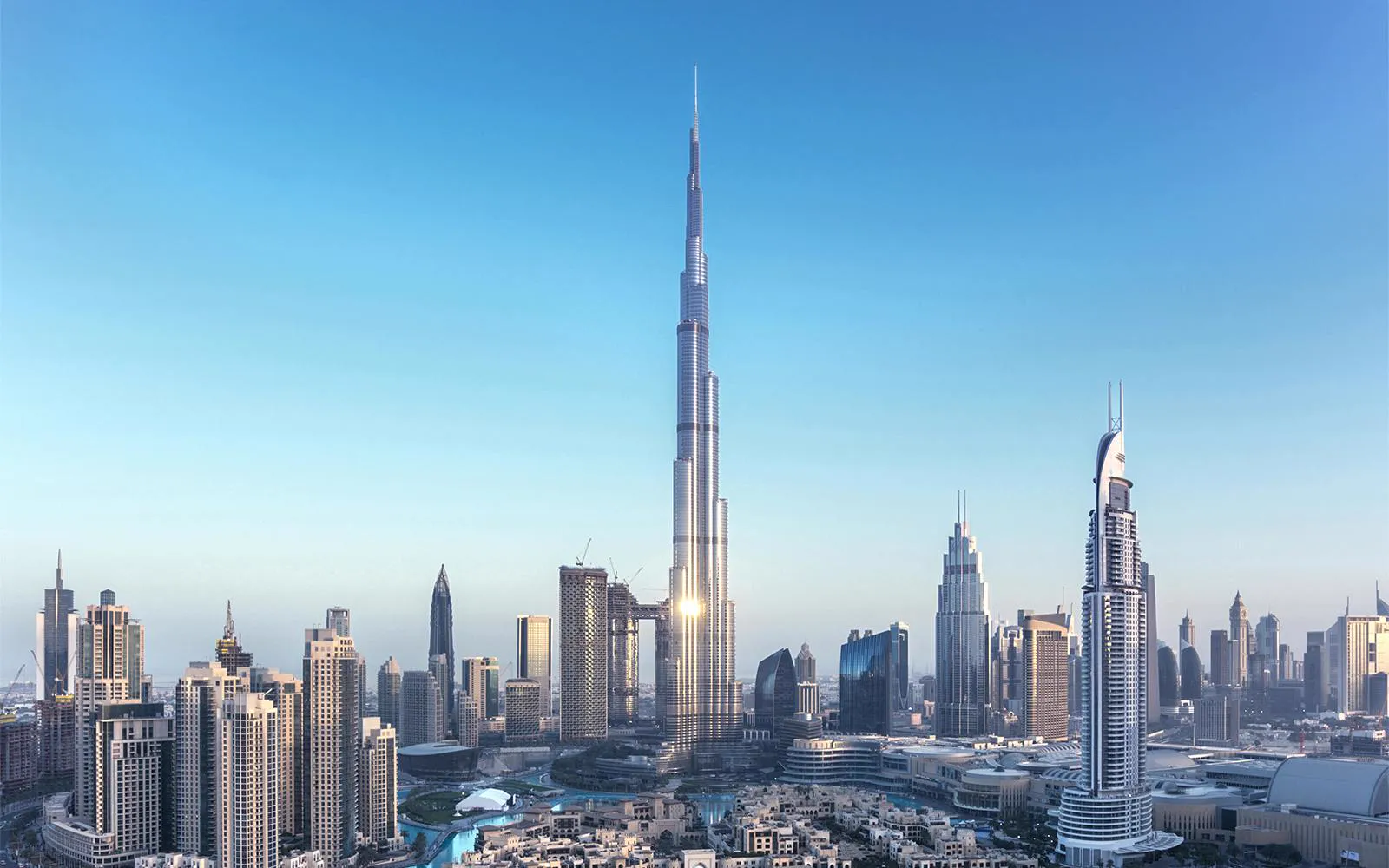
Burj Khalifa
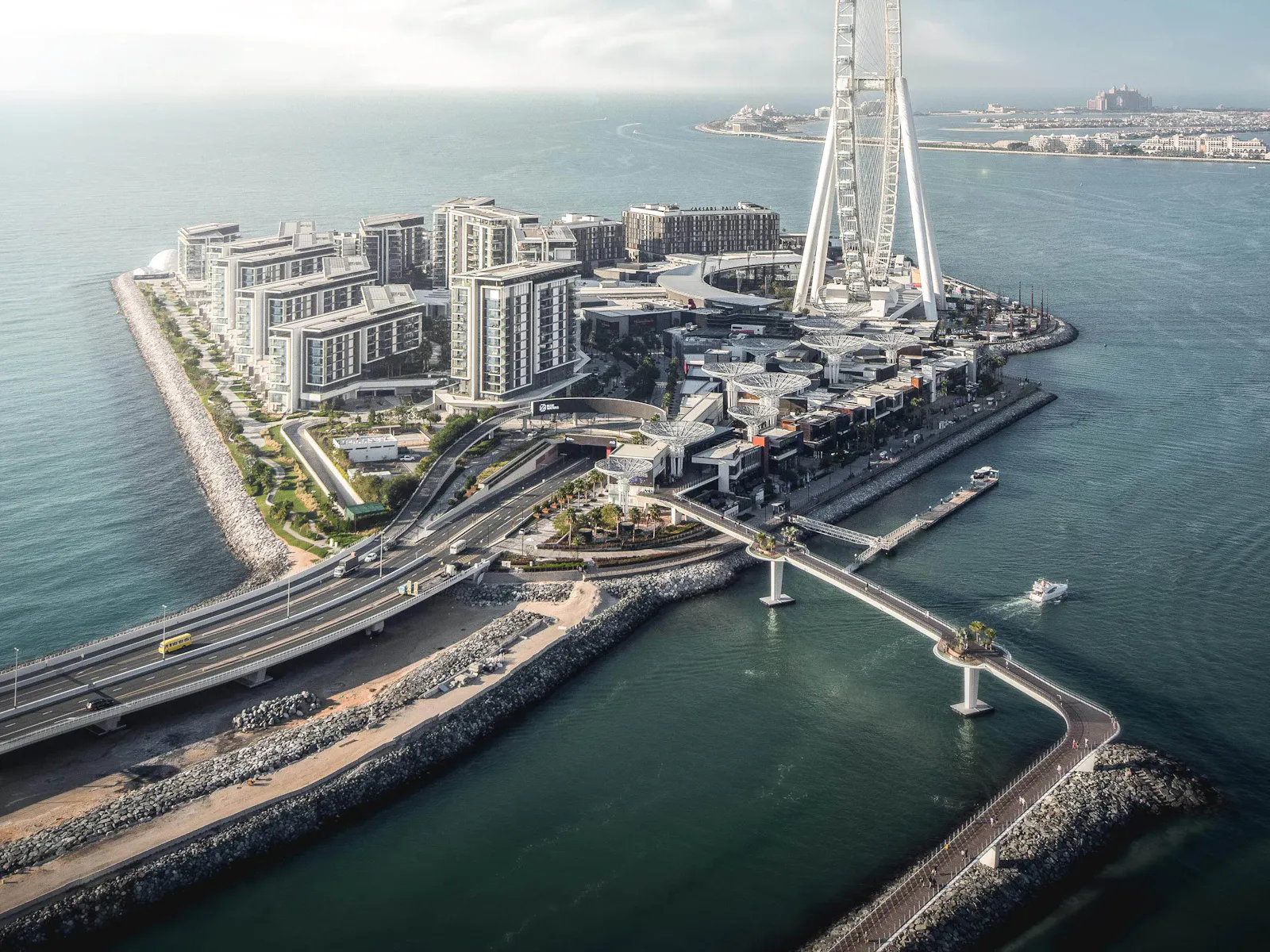
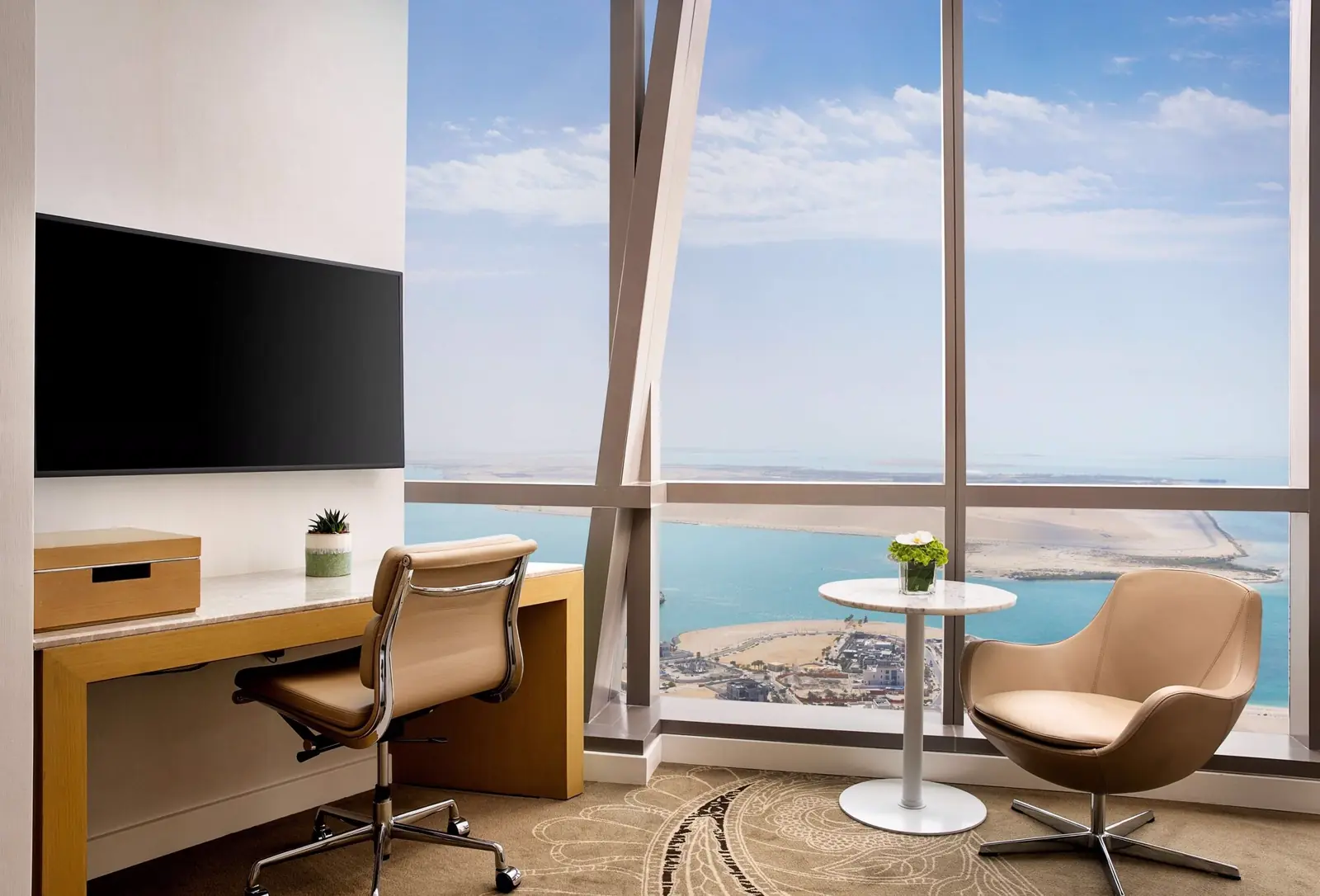
The tallest building in the world: 828 metres. An observation deck on levels 124–125, or from level 148.
From 184 AED per personDetails →
Comparison · two cities
Two cities ninety minutes apart, with completely different characters. What each one has, who each one suits, and how to combine them.
In short
Dubai and Abu Dhabi are the two largest emirates in the UAE, and they sit along the same coast. From the outside they look similar, but anyone who spends a day in each feels the difference quickly.
Dubai is a city of superlatives: the tallest building in the world, enormous malls, artificial islands and nightlife. It has the most attractions, the most hotels and the most to do in the evening. It particularly suits a first visit, young couples and anyone who wants to fit a lot in.
Abu Dhabi is the capital. It is larger in area but quieter in its streets. Its strength is culture: the Sheikh Zayed Grand Mosque, the Louvre, the presidential palace and new museums on Saadiyat Island. On top of that, several large theme parks are concentrated on Yas Island, minutes apart from each other.
The choice does not have to be either/or. For most travellers, the best plan is to base the trip in Dubai and add a day or two in Abu Dhabi. Anyone coming for theme parks or quiet beaches can do the opposite.
Head to head
| Dubai | Abu Dhabi | |
|---|---|---|
| Character | Urban, fast and glittering. Towers, huge malls and nightlife | Calmer and more spacious. Lots of green, a long Corniche and culture |
| Attractions with us | 139 | 44 |
| Museums and culture | 18 attractions, mainly old Dubai and the Creek | 16 attractions: the Sheikh Zayed Grand Mosque, the Louvre, Qasr Al Watan and more |
| Family parks | 41 attractions, spread around the city | 14 attractions, most of them concentrated on Yas Island |
| Desert | 16 experiences, close to the city | 3 experiences, including Liwa on the edge of the Empty Quarter |
| Beaches | JBR, Jumeirah and the Palm, with lots going on | Saadiyat and the Corniche, quieter |
| Hotels with us | 181 | 26 |
| Airport | DXB, inside the city | Zayed (AUH), about 30 minutes from the centre |
| Starting price for an attraction | From 36 AED per person | From 37 AED per person |
Who it suits
In detail
In Dubai, the history is concentrated around the Creek: the Al Fahidi neighbourhood, the souks of Deira and the abra ride. It is a half-day visit, beautiful and authentic, but small. In Abu Dhabi, culture is the reason to come. Sheikh Zayed Grand Mosque is one of the most impressive buildings in the region, Louvre Abu Dhabi shows art from all over the world under a huge dome, and Qasr Al Watan opens the presidential palace to visitors. Anyone who loves museums will find a full day in Abu Dhabi, and even more.
In Dubai the attractions are spread out: a water park on the Palm, an aquarium in Downtown, theme parks at Dubai Parks, and the desert outside the city. That gives variety, but it means driving. In Abu Dhabi, almost all the big parks are on Yas Island, within walking distance or a short drive of each other. Anyone planning several park days in a row will gain from staying on Yas.
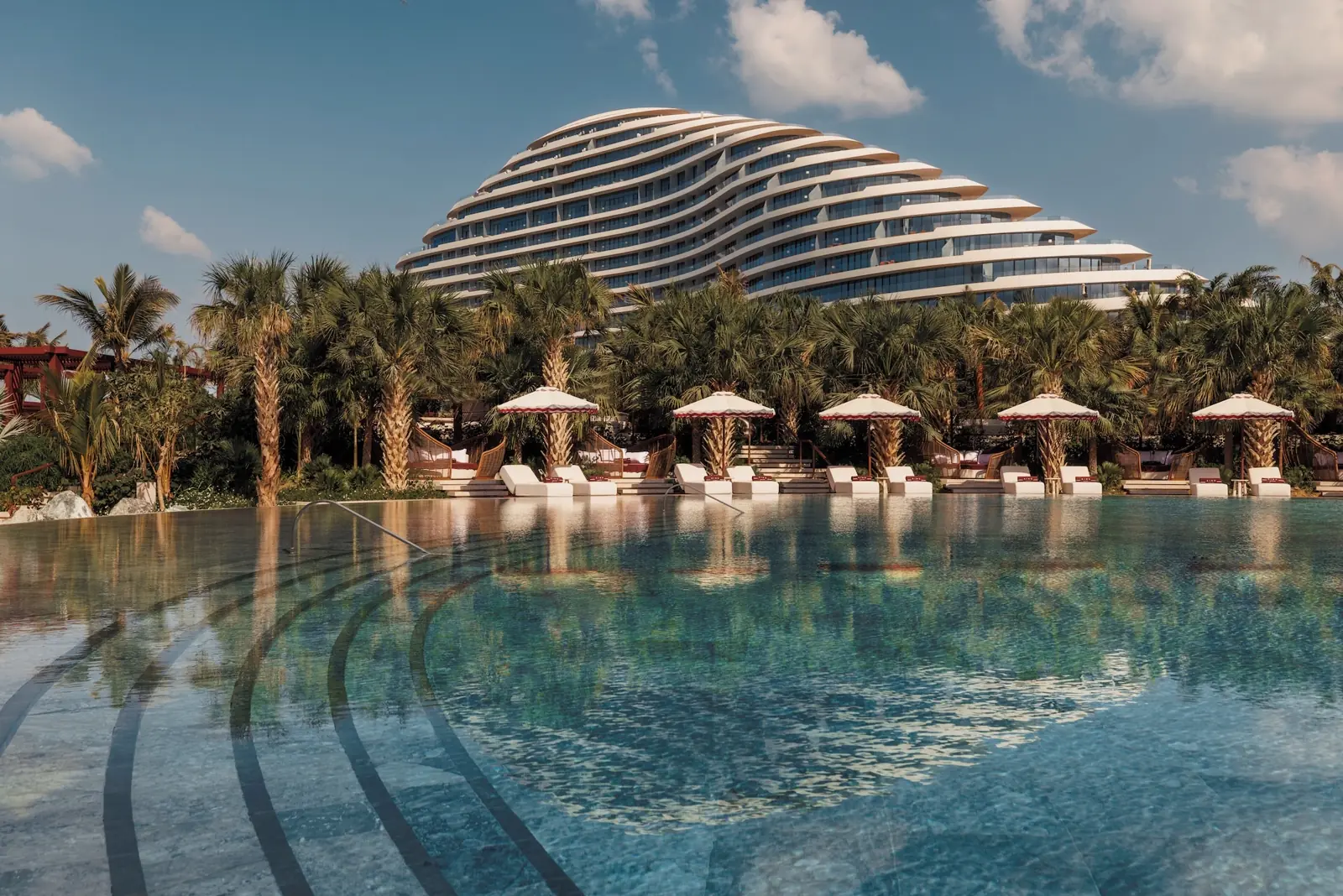
Dubai's beaches are full of life: promenades, restaurants, water sports and a view of the towers. On Saadiyat in Abu Dhabi the beach is long, wide and quiet, and sometimes you can see sea turtles. The hotels reflect this too: Dubai has a huge choice at every level and in every neighbourhood, while in Abu Dhabi the choice is smaller, with an emphasis on resorts.
Dubai is stronger in the evening: the fountain show, a cruise in the Marina, rooftop restaurants, and in season Global Village too. Abu Dhabi is quieter in the evening, with the Corniche promenade, restaurants at the marina and beautiful sunsets. For anyone who comes for the atmosphere of a big city, Dubai clearly wins.
There is no real difference. Both cities are very hot in summer and pleasant in winter, and the recommended season for both is November to March. In summer, Abu Dhabi has a small advantage thanks to the indoor parks on Yas. When to go
Dubai
The tallest building in the world: 828 metres. An observation deck on levels 124–125, or from level 148.

4x4s on the dunes, sunset and dinner at camp. In the evening, in the morning, with an overnight stay in the desert or in a private 4x4.
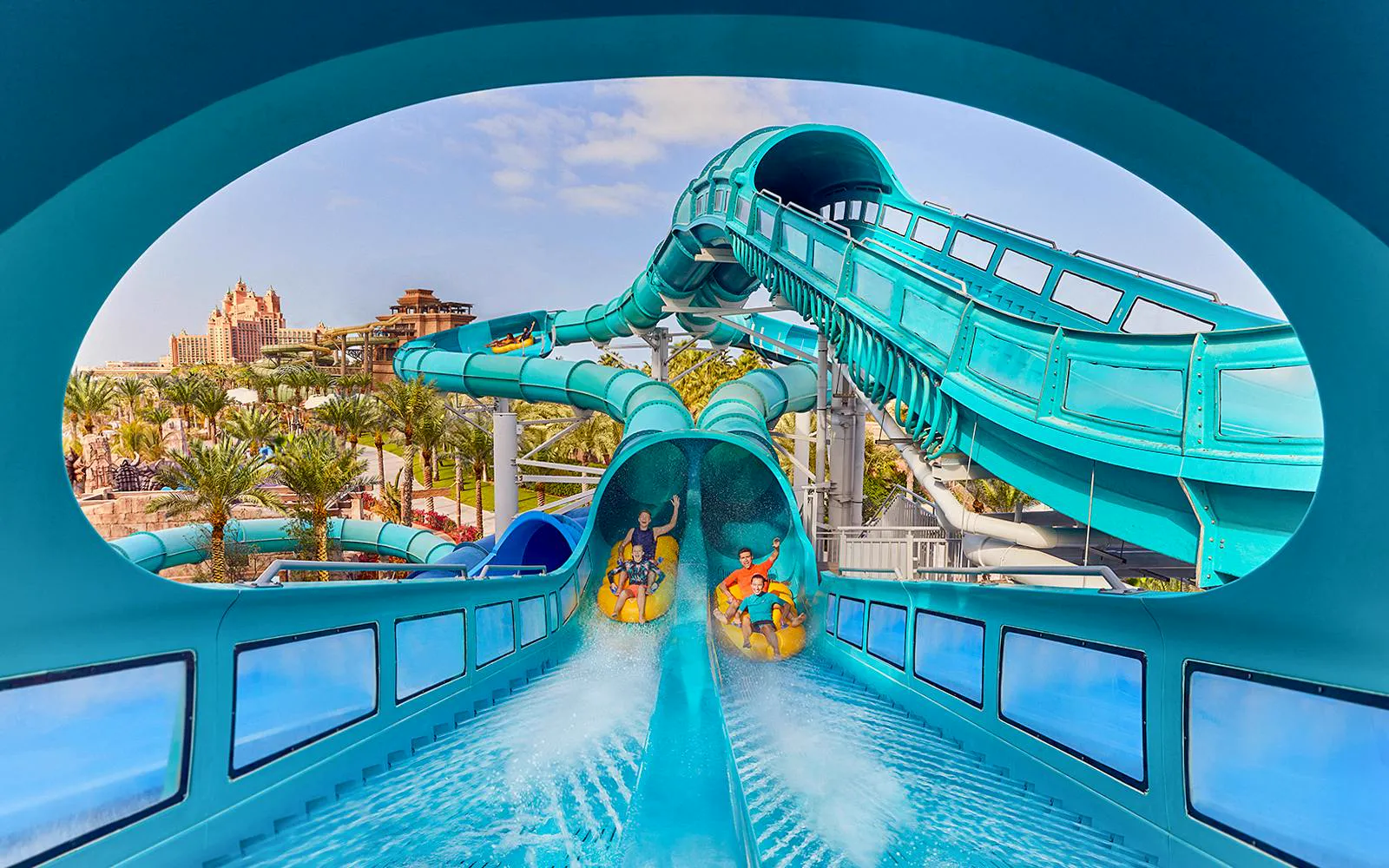
The Atlantis water park: a Guinness record for the number of slides, a beach and a lazy river.

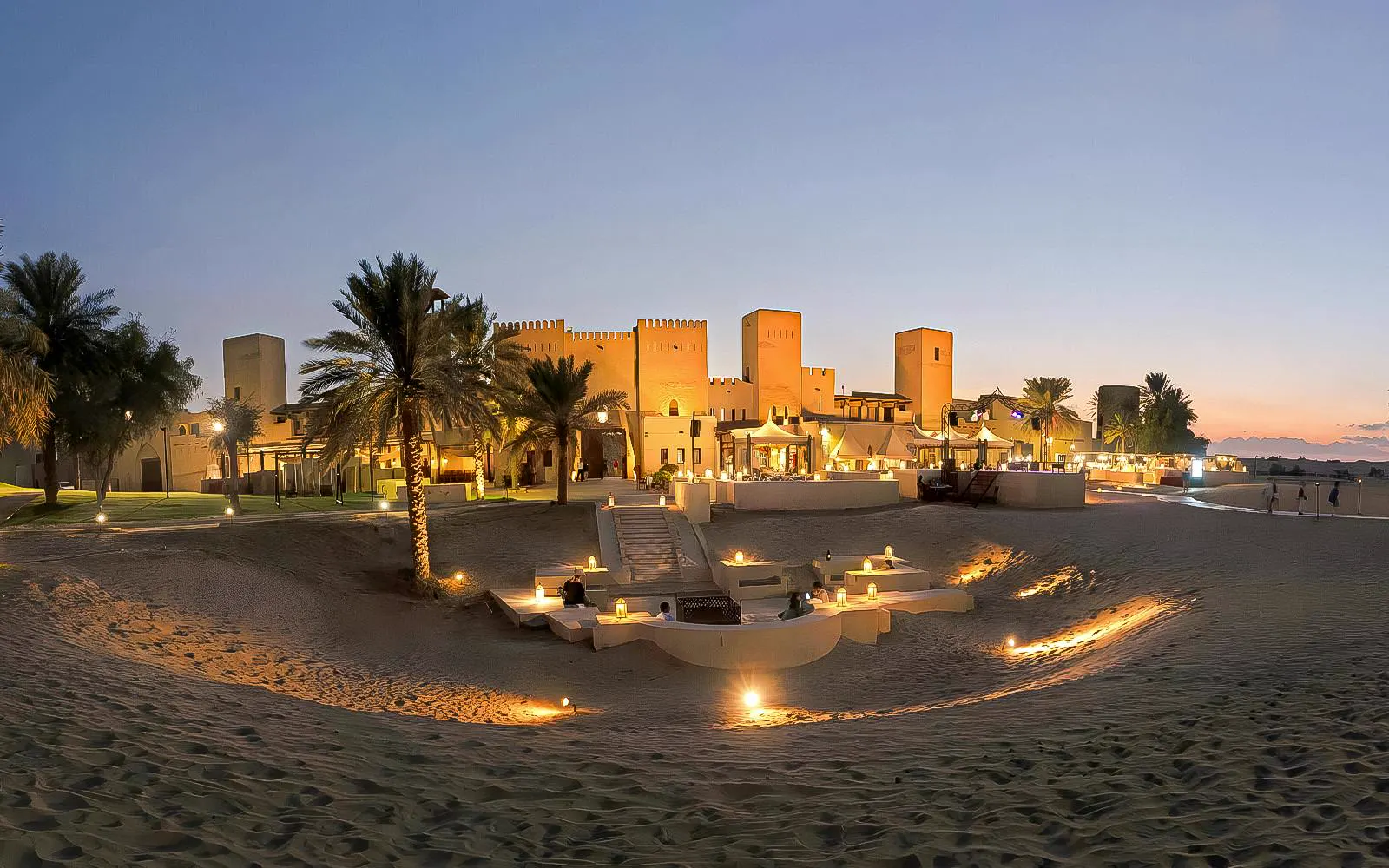
The lanes of Al Fahidi with their wind towers, the Al Seef promenade, and a crossing of the Creek in a wooden abra.

A dhow boat on the old Creek or in the Marina, dinner on the water, or a private yacht.

A seasonal evening park with pavilions from dozens of countries, food and shows. Open from October to May.
Abu Dhabi
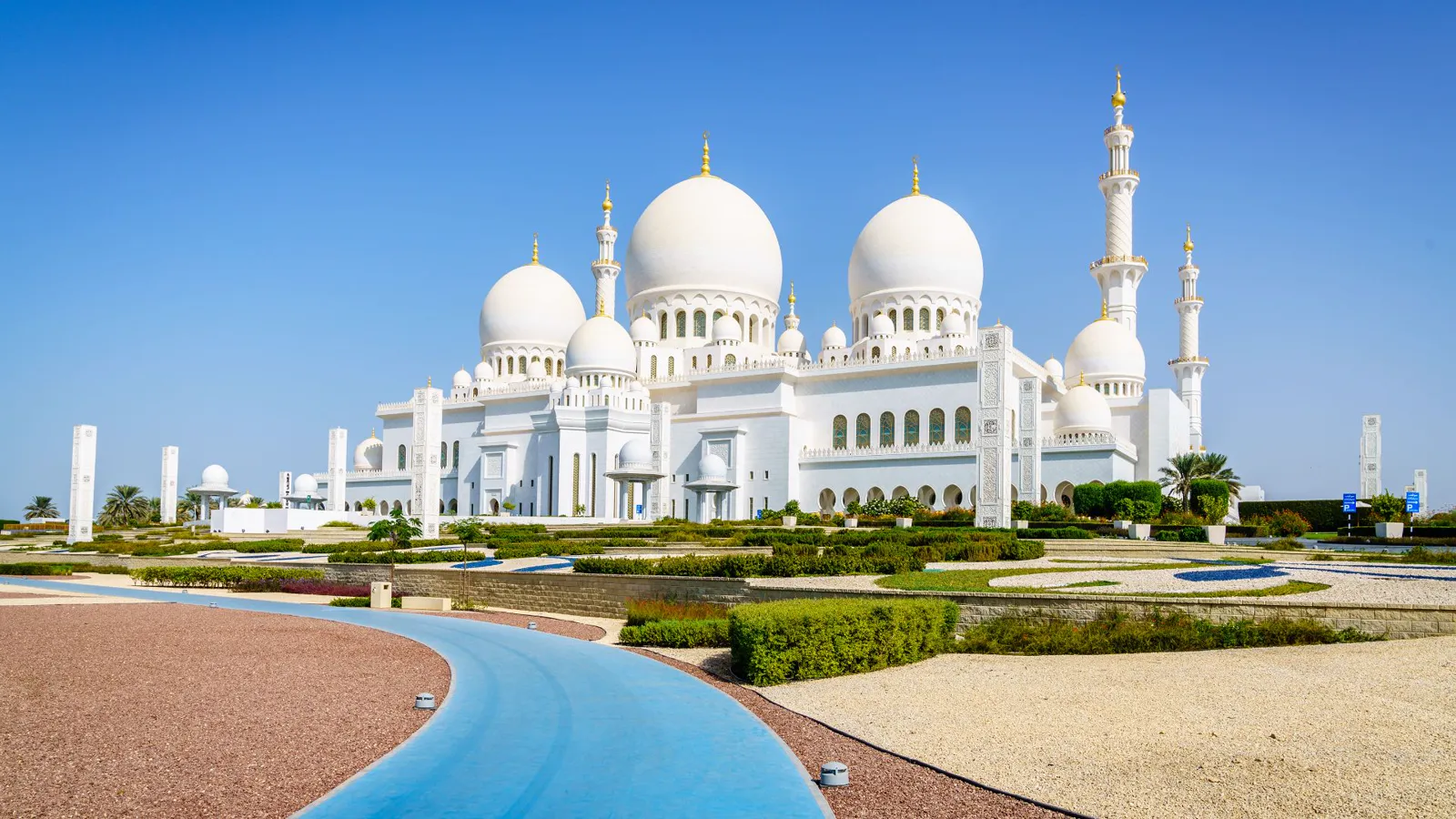
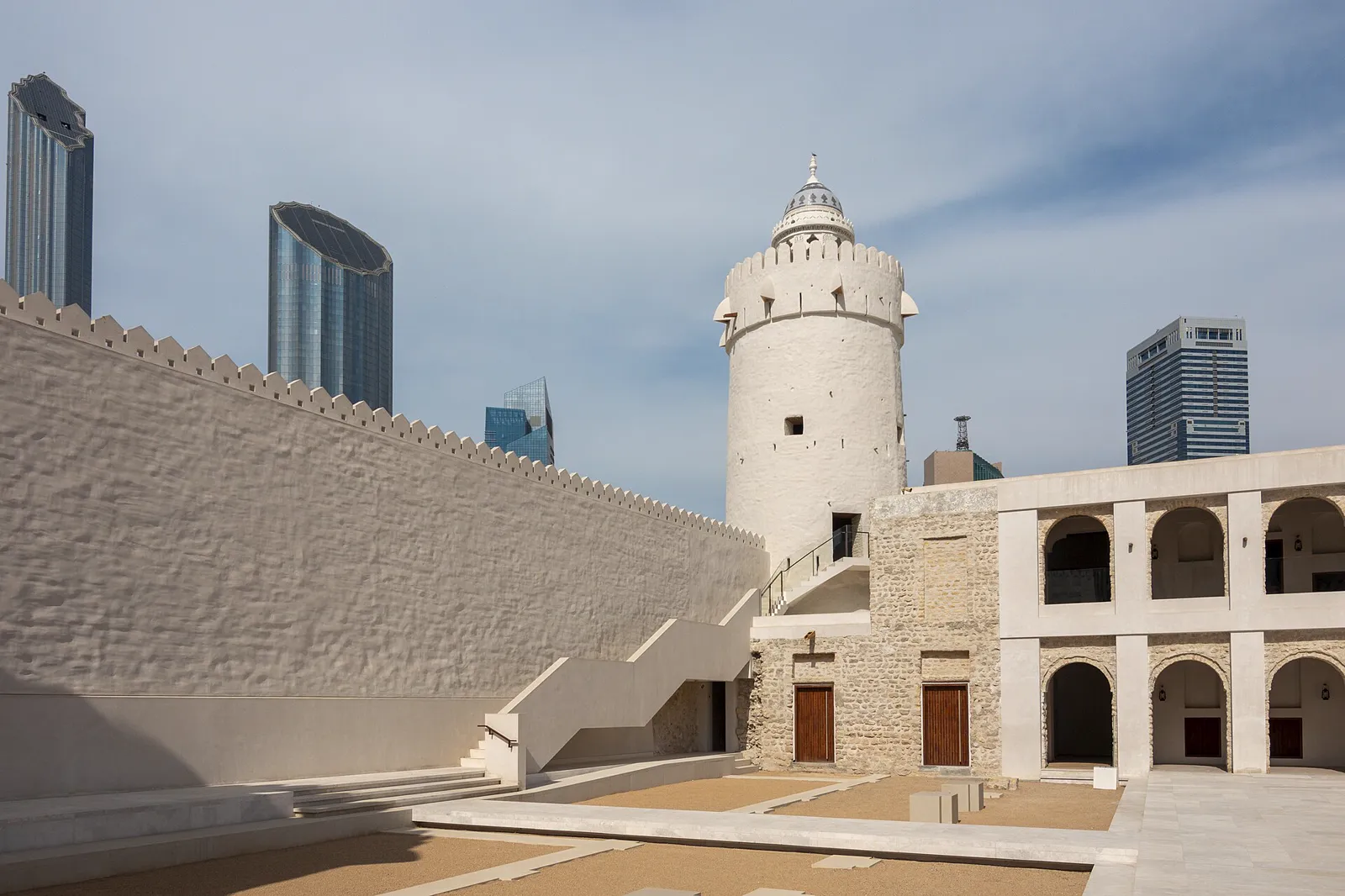
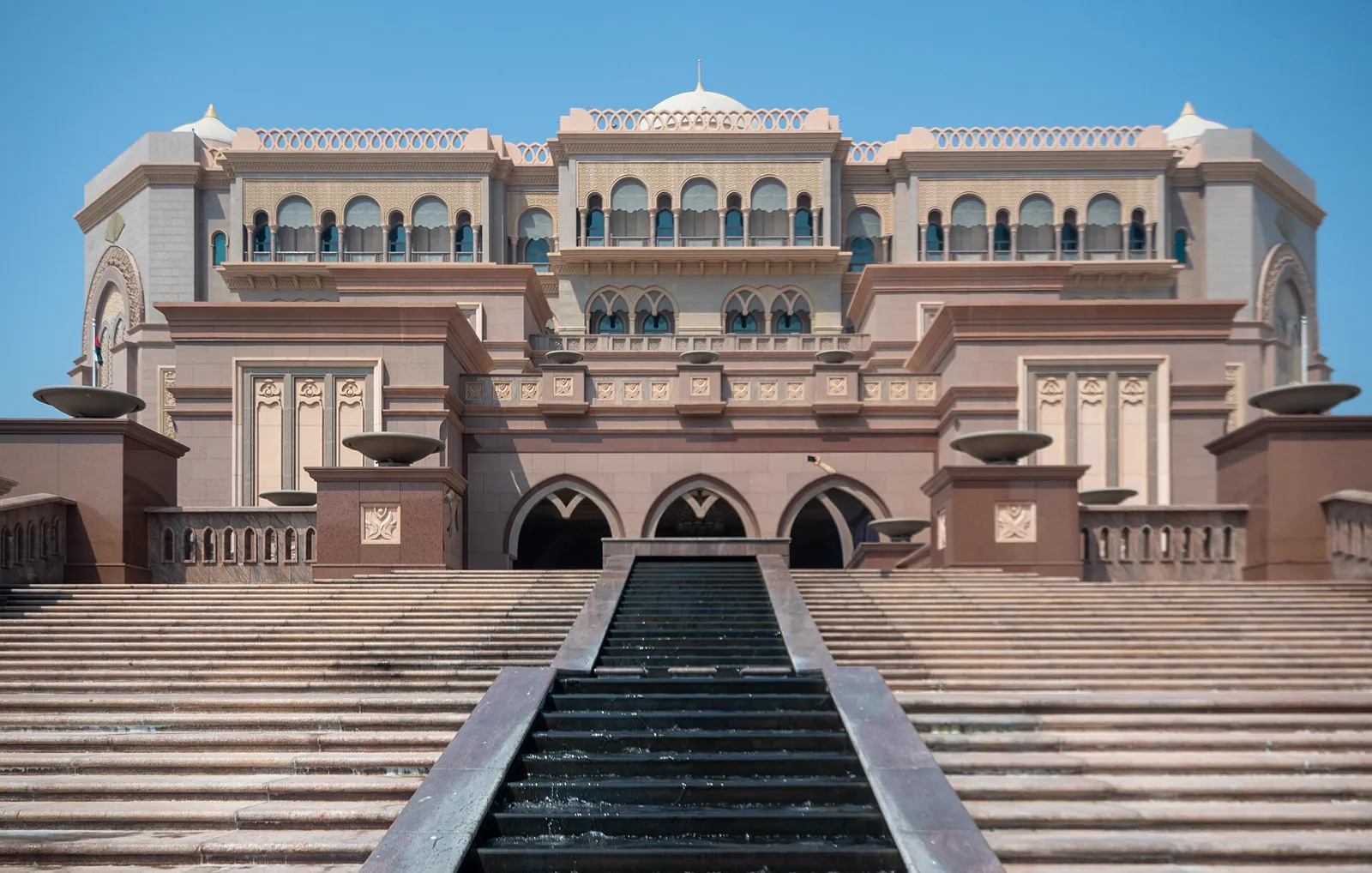
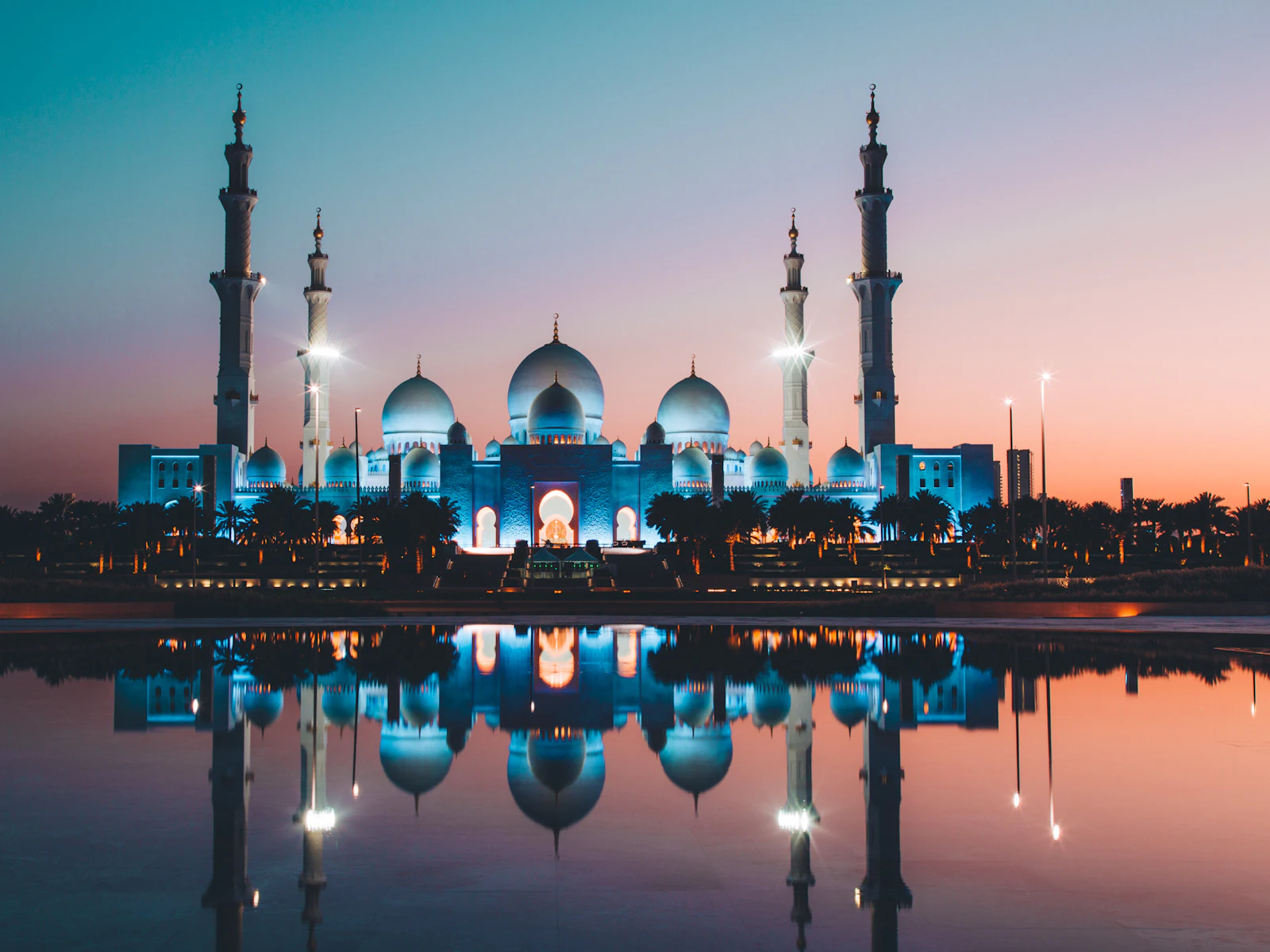
Abu Dhabi's great white mosque: marble, gold and vast chandeliers. Entry is by advance booking and in modest dress.
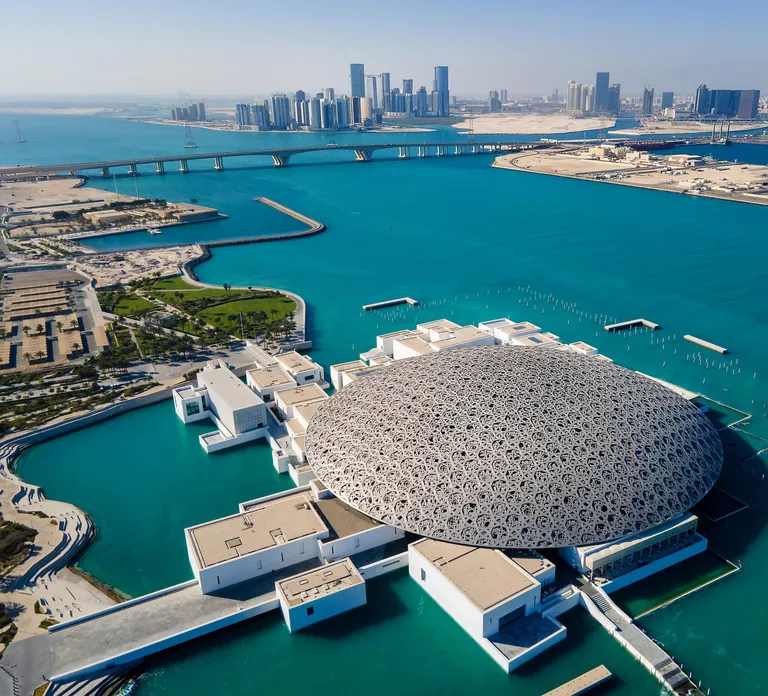
An art museum under an enormous latticed dome above the water. It also has a children's museum.

The presidential palace of the United Arab Emirates, open to visitors. In the evening there is a light show on the facade.

An indoor theme park under the sign of Ferrari, beneath the red roof of Yas Island.

The water park of Yas Island: slides, wave pools and areas for younger children.

A long boardwalk through the mangroves, with the option of paddling a kayak along the channels. Quiet nature close to the city.
Combining
A base in Dubai, and an organised day with hotel pick-up: the mosque, and depending on your choice the Louvre, Qasr Al Watan or Yas as well.
Details →Three days in Dubai, then two days in Abu Dhabi with one night there: a day of culture and a day on Yas Island.
Details →Anyone flying Etihad starts with two days in Abu Dhabi, and continues to Dubai by private transfer.
Details →How many days for each city: in Dubai, three days are the minimum for a first visit. In Abu Dhabi, one day is enough for culture, and another day for a park on Yas. On a week-long trip, five days in Dubai and two in Abu Dhabi is a good split. A 3-day Dubai itinerary
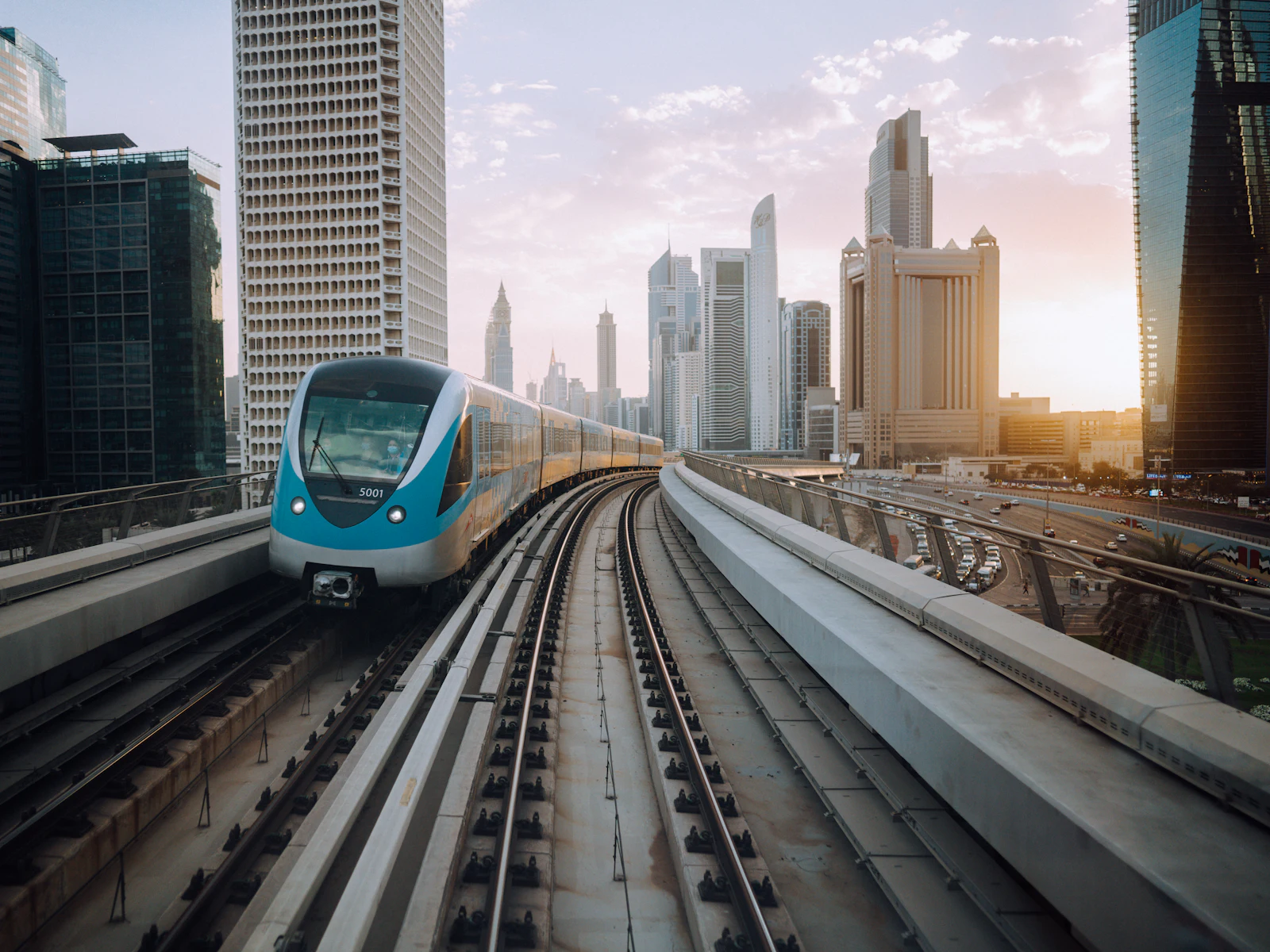
Within Abu Dhabi there is no metro, and you get around by taxi or by car. Between Yas, Saadiyat and the city centre it is 15–30 minutes. Dubai has a metro and a tram connecting the airport, Downtown and the Marina. Getting around Dubai
Where to stay: in Dubai, Downtown and the Marina for a first visit, and the Palm and Jumeirah for a beach holiday. In Abu Dhabi, Yas for families and Saadiyat for couples. All hotels · Areas in Abu Dhabi
Full guide
Once you've decided to combine the two cities, the question is how much time to give each one, and whether to change hotels. Here are splits that work, by the length of the holiday.
Sleep in Dubai the whole time, and devote one day to a day trip to Abu Dhabi. No repacking, and no wasting half a day on a hotel move. This is the simplest solution, and the one that suits most travellers on a first visit.
Five nights in Dubai and two in Abu Dhabi, or the other way round, depending on what matters to you. The big advantage: in Abu Dhabi there is time for the mosque in the evening, a full day on Yas Island, and the museums on Saadiyat Island, without going back to Dubai every evening.
Four to five nights in each city. In Dubai: the city, the desert, the Palm and the Marina. In Abu Dhabi: culture, theme parks and a quiet beach on Saadiyat. If you land in Abu Dhabi, start there, and if you land in Dubai, start in Dubai, and so save a drive on the first and last day.
An hour and a half to two hours' drive, depending on traffic and where you start. With luggage, the comfortable way is a private transfer, from 375 AED per vehicle. Tip: instead of driving straight there, stop on the way at the Sheikh Zayed Grand Mosque, and turn the transfer day into a sightseeing day.
Both cities have excellent theme parks, but they are laid out differently. The main difference isn't quality, but how spread out they are.
The advantage: you can choose a park by age and weather. The drawback: each park is in a different area, and you need to travel.
The advantage: the parks are close to one another, and a hotel on Yas lets you move between them without long drives. If you're planning two or three park days in a row, you'll gain from staying there.
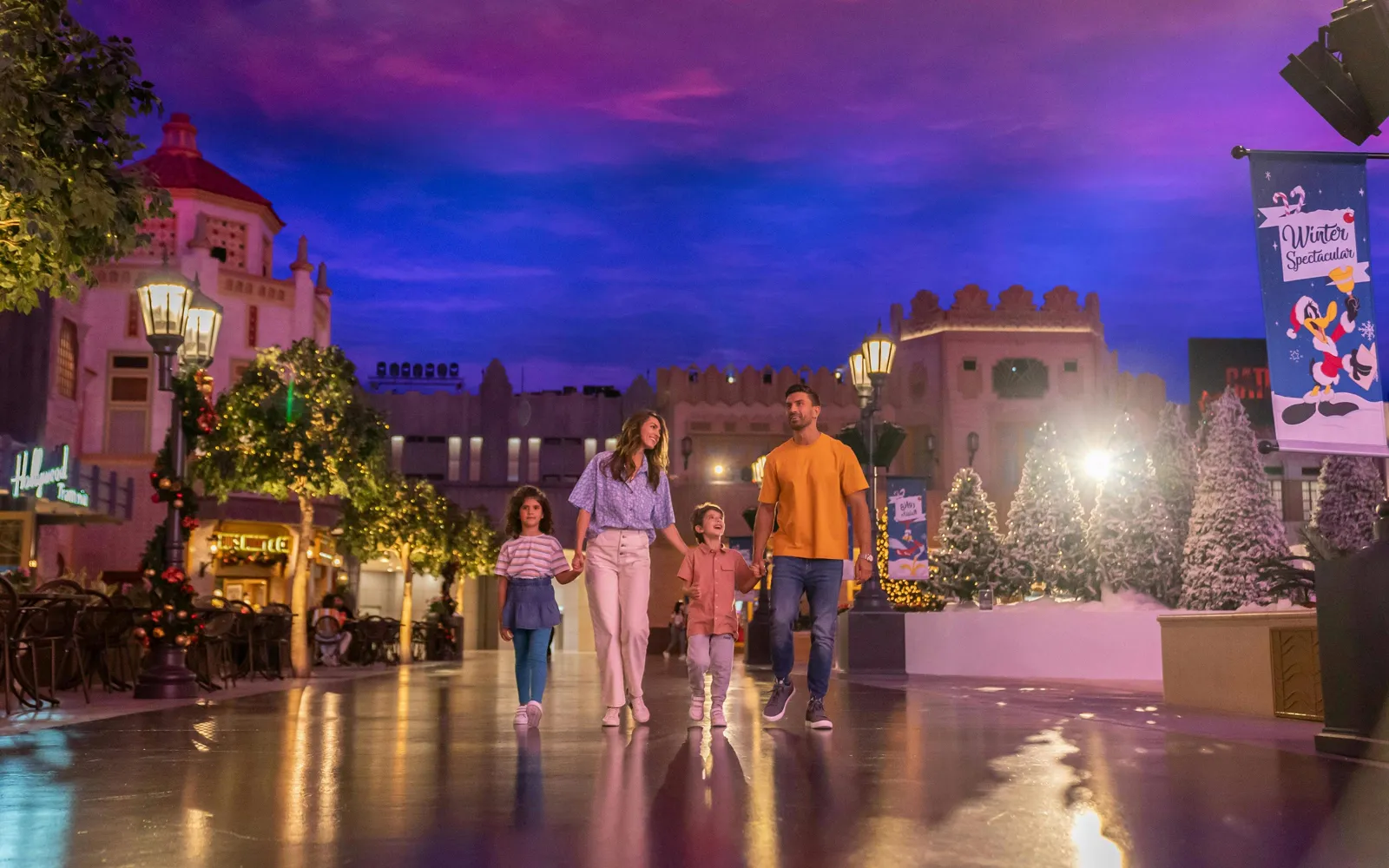
For a classic family holiday, a base in Dubai with a day or two in Abu Dhabi. For a family coming mainly for the theme parks, nights on Yas Island are worth the move. All prices are starting prices. More tips in the Dubai with kids guide.
Both cities sit on the same Gulf, with the same calm, clear water. The difference is in the atmosphere on the beach.
The beach at JBR is a lively urban beach, with a promenade, restaurants, music and lots of people. The Jumeirah beaches give you a view of the Burj Al Arab, and the resorts on the Palm offer private beaches with a view of the skyline. There is always something to do, from jet skis to cruises.
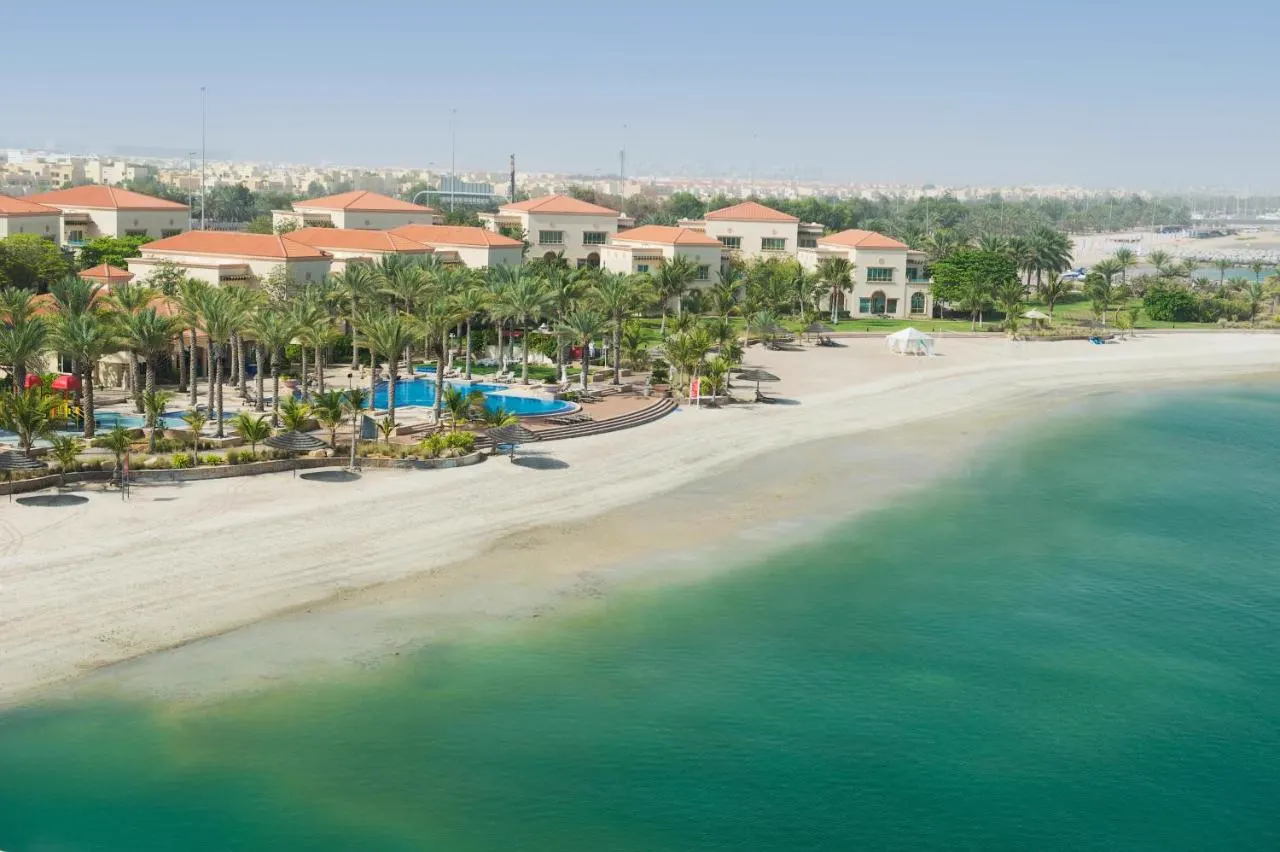
The beach on Saadiyat is known for its white sand, clear water and relaxed atmosphere, and sometimes you can see sea turtles and dolphins there from the beach. The Corniche, along the city, is a long promenade with a public, family beach. Fewer restaurants and less going out on the beach, more quiet and nature.
In both cities, swim only when there is a lifeguard, and wear something over your swimsuit when leaving the beach. The sea temperature by month is on the Weather in Dubai page.
Both cities are surrounded by desert, and both offer a safari. But the experience is different, mainly in the distance and the size of the dunes.
The classic: hotel pick-up in the afternoon, a jeep drive through the dunes, sunset, and a camp with dinner and shows. The desert is close to the city, and the whole evening takes a few hours. The desert safari starts at 165 AED per person.
Similar in character, departing from Abu Dhabi. The desert safari in Abu Dhabi starts at 259 AED per person. Especially suitable if you're already staying in Abu Dhabi.
This is the real difference. From Abu Dhabi you can head out to Liwa, on the edge of the Empty Quarter, one of the largest sand deserts in the world. The dunes there are among the highest in the region, and the landscape is wild and quiet. It is a long day, with a long drive, but a completely different experience. The Liwa desert safari starts at 3,062 AED per person.
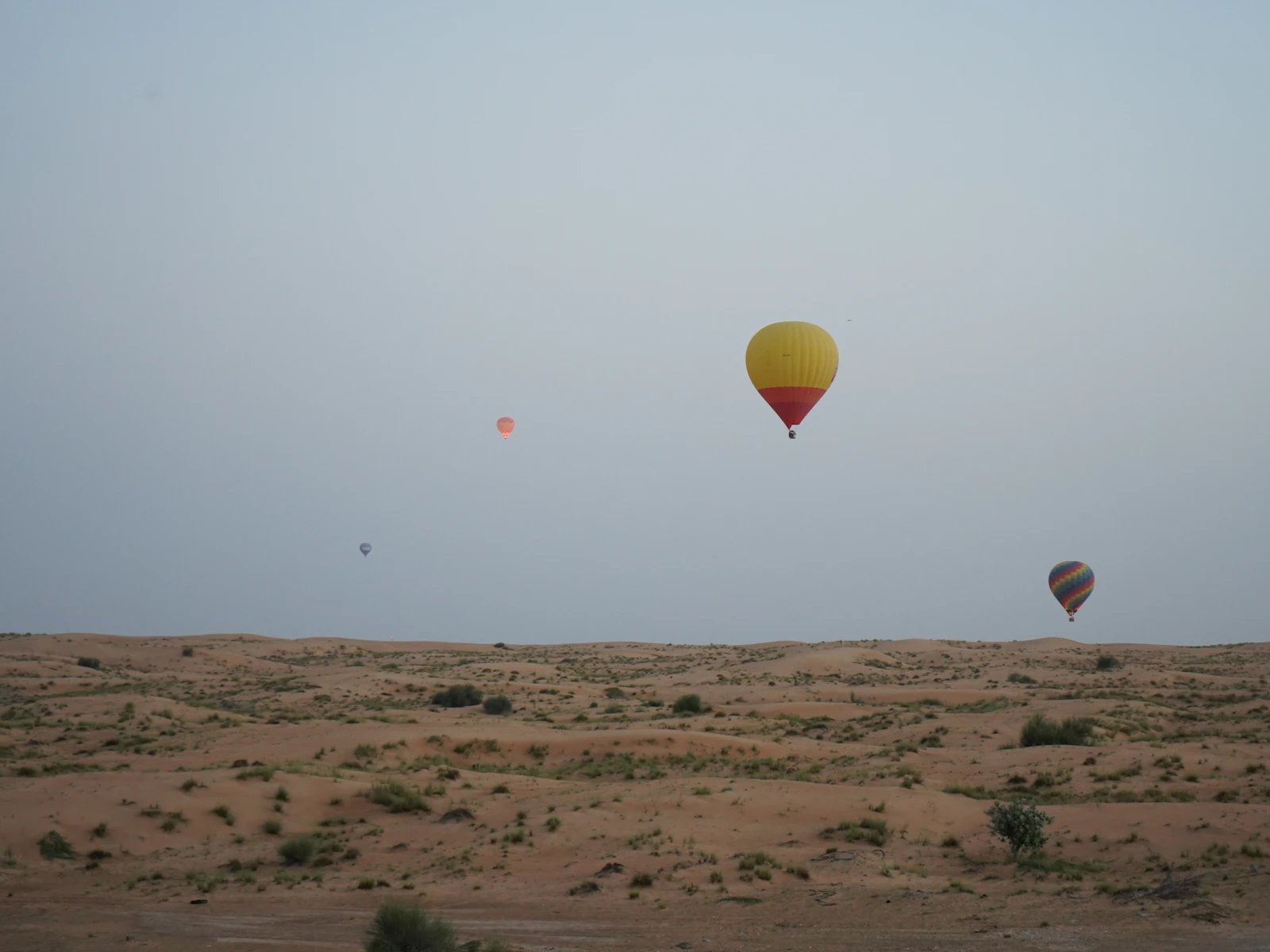
In Dubai there are also quad bikes, buggies and a hot air balloon in season. And in Sharjah, Mleiha combines desert and archaeology.
For most travellers, one evening safari, from the city they are staying in, is enough. If you're looking for the real desert, without a tourist camp, you'll find it in Liwa. All prices are starting prices.
Beyond the attractions, the big difference between Dubai and Abu Dhabi is felt in the evening hours, in the pace of the city and in what you do in between.
In Dubai, the evening is a central part of the holiday: the fountain show, the Marina and JBR promenades, a cruise between the towers, and in season Global Village. There is always somewhere to go out. In Abu Dhabi the evenings are quieter: the Corniche promenade, a good dinner, and the illuminated mosque. If you're looking for nightlife, you'll feel more at home in Dubai.
Both cities have restaurants from all over the world, at different price levels. In Dubai the choice is bigger, and the restaurants are spread across every area. In Abu Dhabi the choice is more concentrated in hotels and in areas such as Yas and Saadiyat.
Dubai is a city of huge malls, with Dubai Mall and Mall of the Emirates, and of old souks in Deira, with gold and spices. Abu Dhabi has big, pleasant malls, but if you're coming to shop, Dubai wins.
Dubai is fast, more crowded and full of tourists. Abu Dhabi is spacious, greener, and feels more like a city people live in. It isn't a question of good or bad, but of what you're looking for on holiday.
The same laws apply in both cities: modest dress at religious sites, no public displays of affection, and alcohol only in licensed venues. In Abu Dhabi, with the mosque and the palaces, this is felt a little more. All the rules are detailed on the Practical information page.
Sometimes the decision is made for you: the convenient or available flight lands in one city, and the hotel is in the other. That isn't a problem, but it is worth planning for.
The simplest. DXB airport is inside the city, and the drive to the hotel is relatively short. An airport transfer starts at 100 AED per vehicle.
You have an hour and a half to two hours' drive ahead of you. The options: the Airport Express bus to Ibn Battuta, an official taxi, or a private transfer from Abu Dhabi to Dubai, from 490 AED per vehicle. The surprising advantage: you can stop on the way at the Sheikh Zayed Grand Mosque, and save a sightseeing day later on.
Zayed International Airport is about half an hour from the city centre, and especially close to Yas Island. If you're starting your holiday on Yas, you'll reach the hotel quickly.
This is sometimes the most efficient option: start in the city you land in, move to the other in the middle of the holiday, and fly from there. That saves a drive back on the last day.
Before choosing a flight, check which airport it departs from and where it lands, and whether a last-minute change is possible. The current flight situation is on the Flights, visa and safety page.
Many travellers come back to the Emirates a second and third time, and each time they look for something new. If on your first visit you saw the Burj Khalifa, the Palm and the desert, Abu Dhabi is the natural next step.
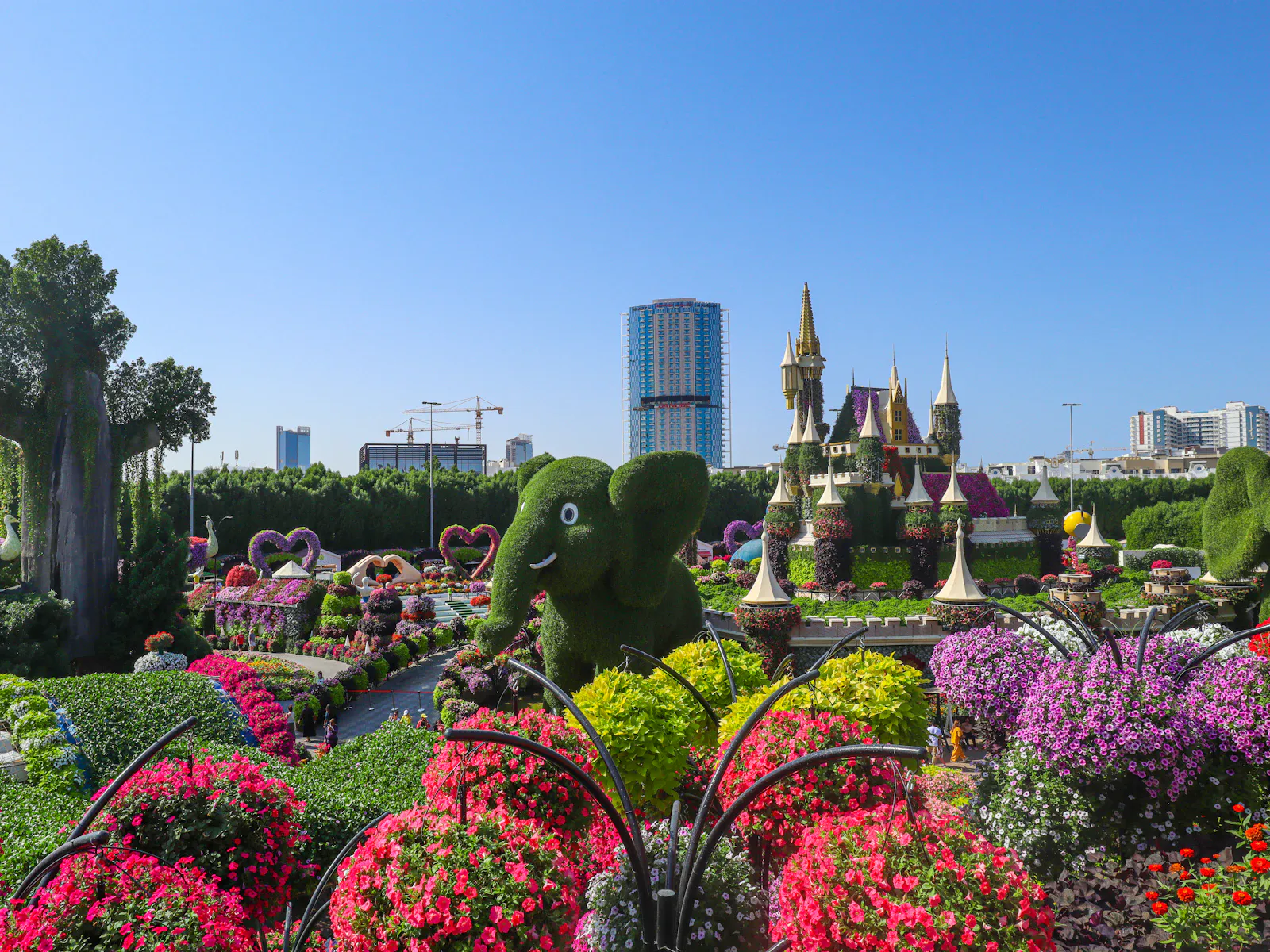
Even if you're coming back to Dubai, you'll find new things: the Hatta mountains, Old Dubai in depth, and in season, Miracle Garden and Global Village. And when the Museum of the Future reopens, in the first quarter of 2027, it is a good reason to come back.
On a return visit, a half-and-half split between the cities works perfectly: nights in Dubai for its new experiences, and nights in Abu Dhabi for culture, theme parks and quiet.
Tell us how many days you have and what interests you. We will come back on WhatsApp with availability and a price for attractions in both cities, and for the transfer between them.
Keep exploring
Where to stay
The perfect combination
Plan smart
More inspiration