
Saadiyat · 2–3 hours
Louvre Abu Dhabi
An art museum under an enormous latticed dome above the water. It also has a children's museum.
Tickets and prices
| Option | Price |
|---|---|
| Entry ticket | Not available right now |
| Entry with private transfers | Not available right now |
| Combined ticket for the three Saadiyat museums | Not available right now |
- Closed on
- Monday
- Opens
- 10:00 AM
- For children
- A children's museum on site
- Location
- Saadiyat Island
What a visit to the Louvre Abu Dhabi looks like
The museum is on Saadiyat Island and opens at 10:00. It is closed on Mondays.
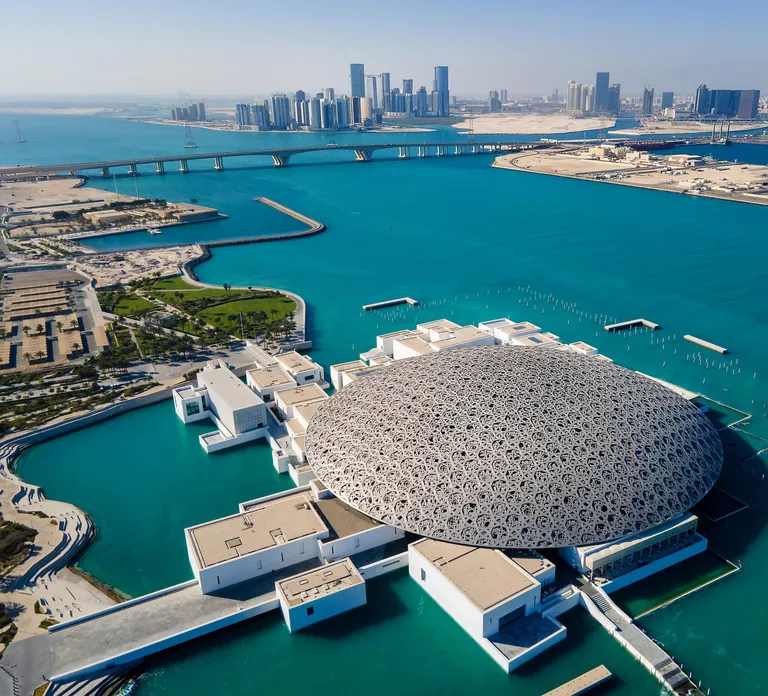
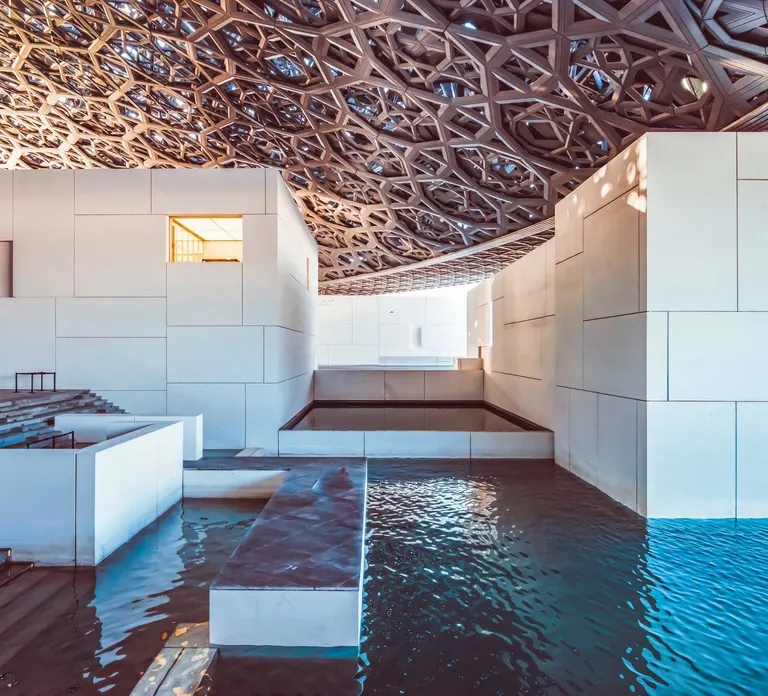
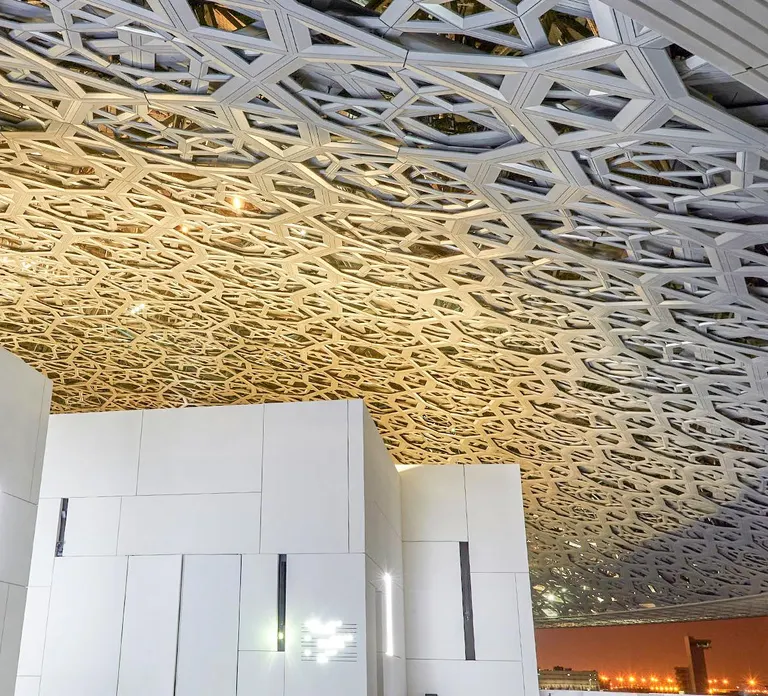
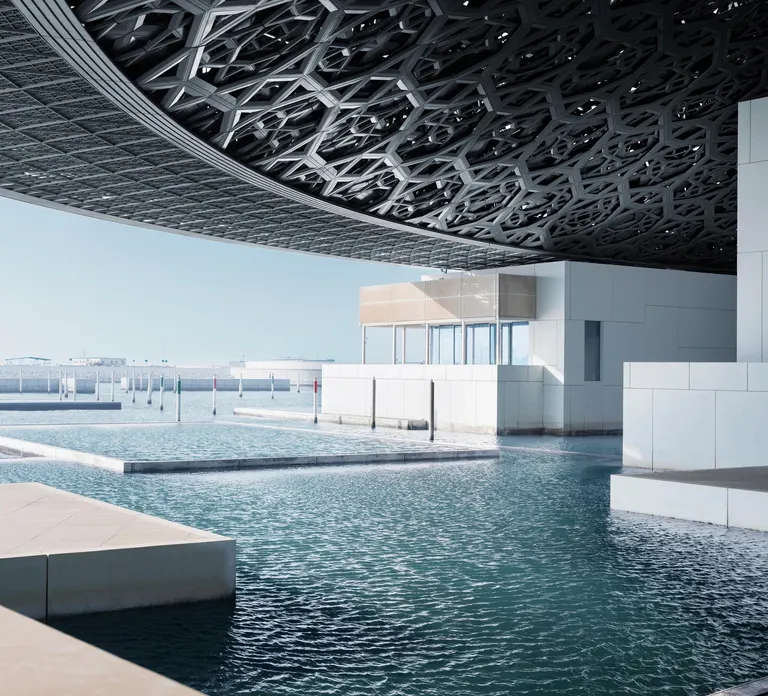
Under a dome 180 metres wide, with 7,850 metal stars and a "rain of light" on the floor, is a "museum city" of about 55 white buildings.
The permanent display: 23 galleries in 12 chapters, from the ancient world to the art of today. Most visitors spend two to three hours.
Entry to the children's museum as well.
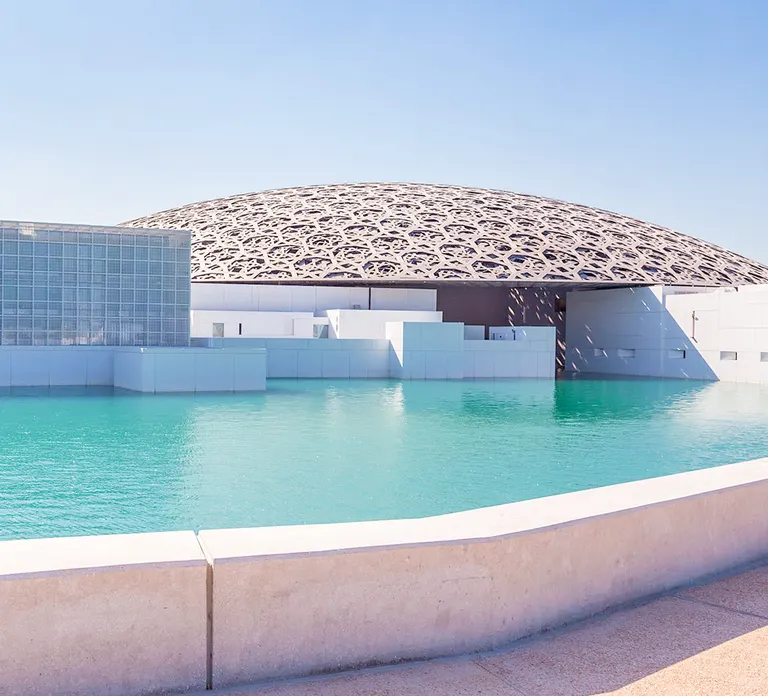
Louvre Abu Dhabi is a major art museum on the waterfront of Saadiyat Island. The building, designed by architect Jean Nouvel, is covered by a huge dome with a lace-like pattern, and the light passing through it creates an effect on the floor known as a "rain of light." Anyone looking for the Louvre museum in Abu Dhabi will find it in Saadiyat's Cultural District, alongside the Zayed National Museum and the Natural History Museum.
The museum opened to the public in November 2017, the fruit of a partnership between the UAE and France. Jean Nouvel, a Pritzker Prize winner, designed it as a kind of "museum city": about 55 separate white buildings, with alleyways and waterways running between them, all beneath a single dome. The story began ten years earlier: on March 6, 2007, France and Abu Dhabi signed the agreement to establish the museum at Emirates Palace, and at the same ceremony Jean Nouvel presented the first model. The agreement grants Abu Dhabi the name "Louvre" for 30 years and 6 months, loans of works from 13 French institutions for a decade, and rotating exhibitions from France for 15 years. French President Emmanuel Macron and Morocco's King Mohammed VI attended the opening ceremony.
The dome is 180 meters wide. It's built from 7,850 metal stars in eight layers, inspired by the geometry of Arabic domes. As the sun moves across it, patches of light shift across the floor and walls throughout the day.
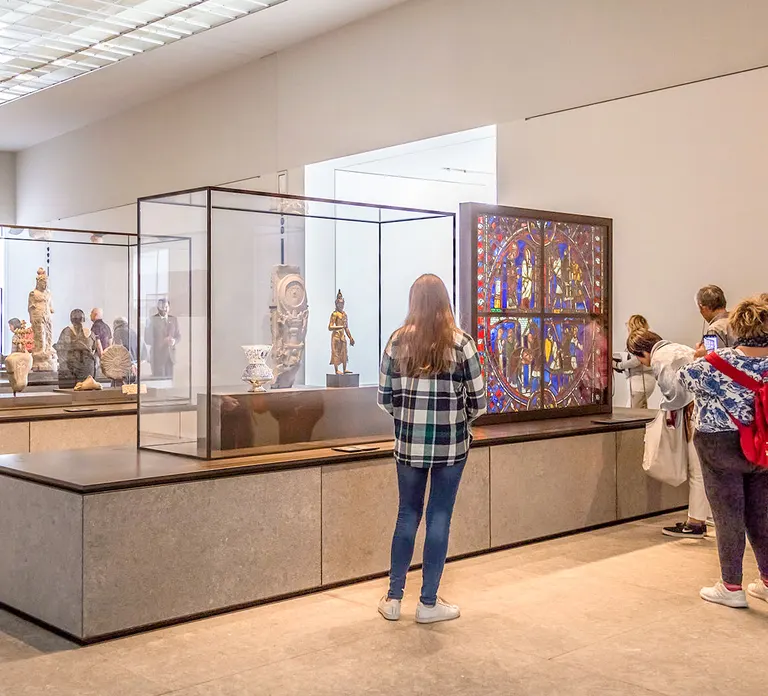
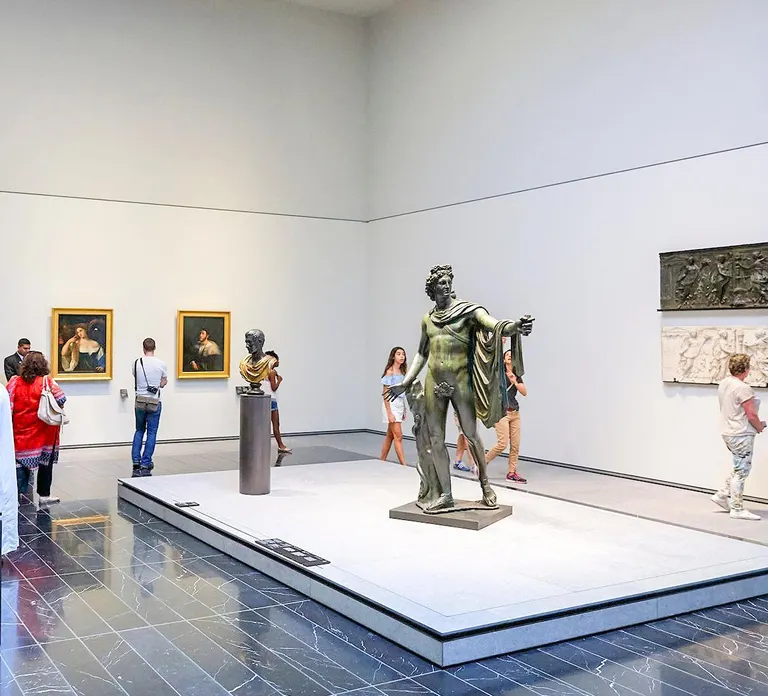
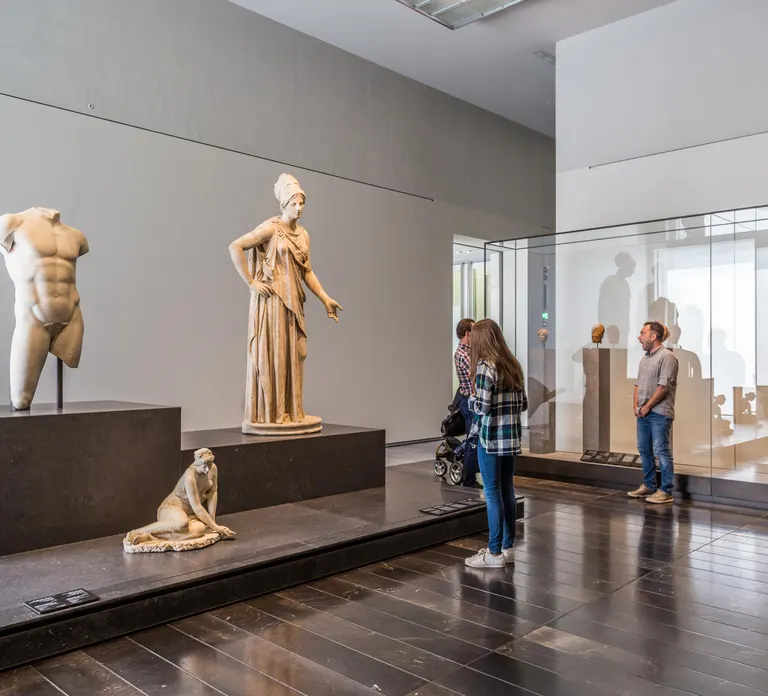
The permanent collection is arranged by period rather than by country: from the ancient world to modern art, with works from around the world, some on loan from major French museums such as the Louvre in Paris, the Musée d'Orsay and the Centre Pompidou. The 23 permanent galleries are divided into 12 chapters, so walking through them tells a single story of human history. Alongside the permanent collection there are rotating exhibitions. It's the first universal museum in the Arab world, with 9,200 square meters of gallery space. The idea behind the collection is that cultures have always had more in common than they have differences. Works displayed there over the years have included Leonardo da Vinci's "Saint John the Baptist" and Rodin's "The Thinker."
It suits anyone who loves art and history, and families too. Inside the museum there's a Children's Museum, with entry included in the ticket. Its current exhibition, A Board Game Adventure, is designed for children aged 4–12 and runs until April 2027. It traces the history of board games such as chess, ludo and mancala through 24 artworks and artefacts, with digital experiences, hands-on activities and workshops.
You can add more experiences to your visit, booked separately: a guided architecture tour that ends with a walk inside the dome, or kayaking around and beneath the dome. The museum also has a French restaurant, Fouquet's.
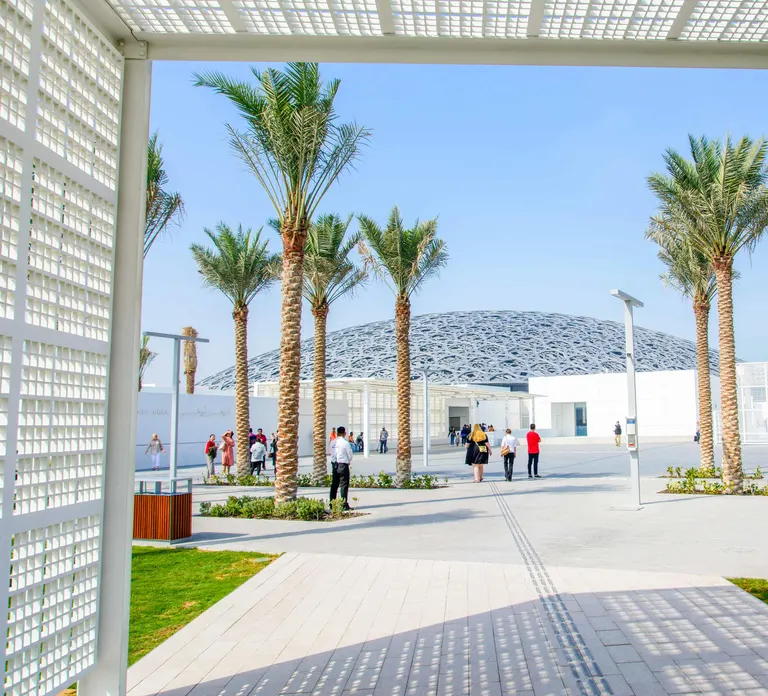
Tip: after the galleries, head out to walk beneath the dome and along the water. It's one of the most beautiful spots in Abu Dhabi for photos.
The dome is made of 85 enormous steel elements. It covers galleries, plazas and walkways, and appears to float above them. Its pattern creates a light that recalls sunlight filtering through palm fronds, as in traditional Emirati building.
The Cultural District is also home to the Zayed National Museum. It tells more than 300,000 years of human history in the region, in six permanent galleries, and shows more than 1,500 objects. Among them are a natural pearl 8,000 years old and a rare bronze lamp from the Abbasid period. The building, designed by Norman Foster, is inspired by a falcon's wing in flight, and five towers in it reinterpret traditional wind towers. The garden has native plants and a traditional falaj irrigation system.
What is included
Included
- Entry to the permanent display
- Entry to the children's museum
- Access to the dome area and the waterfront promenade
- Transfers, if the option with private transfers was chosen
Not included
- Food, drink and shopping on site
- The guided architecture tour
- Kayaking around the dome
What you will see and do
- The dome: 180 meters wide, 7,850 metal stars in eight layers, and a "rain of light" on the floor.
- A "museum city": about 55 white buildings with alleyways and waterways beneath the dome.
- The permanent collection: 23 galleries in 12 chapters, from the ancient world to contemporary art.
- Works on loan from museums in France: the Louvre in Paris, the Musée d'Orsay and the Centre Pompidou.
- The Children's Museum: the A Board Game Adventure exhibition on the history of board games, with 24 artworks and artefacts, until April 2027.
- The architecture tour: 90 minutes, seven stops, ending with a walk inside the dome.
- Kayaking around the dome: paddling on the water surrounding the museum.
- The Cultural District: Zayed National Museum, the Natural History Museum and teamLab Phenomena nearby.
Who it suits
Good for…
- Art, history and archaeology lovers
- Architecture and photography enthusiasts
- Families with children, thanks to the Children's Museum
- Anyone looking for an air-conditioned activity on a hot day
Less suited to…
- Anyone looking for action or an amusement park
- Young children who won't enjoy a long walk through galleries
- Anyone arriving on a Monday, when the museum is closed
When to go
The museum is air-conditioned, so it suits any season, including summer. To see the "rain of light" at its best, come on a sunny day when the sun is high. After the galleries you can stay for sunset under the dome, which remains open in the evening after the galleries close. The museum is closed on Mondays, so it is worth planning another day.
Getting there
- The museum is in the Cultural District on Saadiyat Island, in Abu Dhabi.
- By bus within Abu Dhabi: the electric ART line AR2 stops at the Louvre, at teamLab Phenomena and at Saadiyat Walk. It runs every 30 minutes, daily between 8:00 and 22:00, paid with a Hafilat card.
- By car from Dubai: via E11, exit to Saadiyat Island / Yas Island onto E12, then to the Cultural District.
- By bus from Dubai: line E101 from Ibn Battuta or line E100 from Al Ghubaiba to Abu Dhabi's central bus station, then by taxi.
- On a tour: there's a ticket with private transfer, and most organized Abu Dhabi tours include a stop at the Louvre.
Good to know
- The museum is closed on Mondays.
- The museum opens at 10:00. Closing time varies by day.
- Most visitors spend two to three hours in the galleries, and art lovers stay longer.
- You can combine the Natural History Museum and the Zayed National Museum on the same day — they're in the same district.
- The architecture tour departs on Saturdays at 10:30, up to 15 participants, and comfortable clothes and flat shoes are recommended.
- Accessibility: the museum is step-free, with wheelchairs available to borrow at no charge.
- The galleries are cool and air-conditioned. Bring an extra layer.
- The museum offers guided tours and audio guides, for anyone who wants commentary on the works while walking through.
- At the Zayed National Museum and at the Natural History Museum, most visitors spend two to three hours at each.
Frequently asked questions
What day is Louvre Abu Dhabi closed?
Is there anything for kids?
How much time should I set aside for a visit?
Can I combine it with other museums?
What can you see at Louvre Abu Dhabi?
Who designed the Louvre in Abu Dhabi?
Why is the museum in Abu Dhabi called the Louvre?
How big is Louvre Abu Dhabi?
Can I get to Louvre Abu Dhabi by bus?
Can I go up onto the dome?
How do I get to Louvre Abu Dhabi from Dubai?
What is in the Natural History Museum on Saadiyat?
Keep exploring
More experiences in Abu Dhabi




Where to stay
Recommended hotels in Abu Dhabi





The perfect combination
Also in Dubai


Plan smart
From the magazine
More inspiration