
Saadiyat · 1.5–3 hours
TeamLab Phenomena
A museum of digital art that you walk into: light, water and movement all around you.
Tickets and prices
| Option | Price | |
|---|---|---|
| Entry on a chosen date | Not available right now | 135 AED per person |
| Entry on an open dateEntry with no fixed date, but a reservation is needed before the visit | 142 AED per person |
- Opened
- April 2025
- Location
- Saadiyat Island
- Recommended time
- 1.5–3 hours
- Children up to 12
- Only with an adult
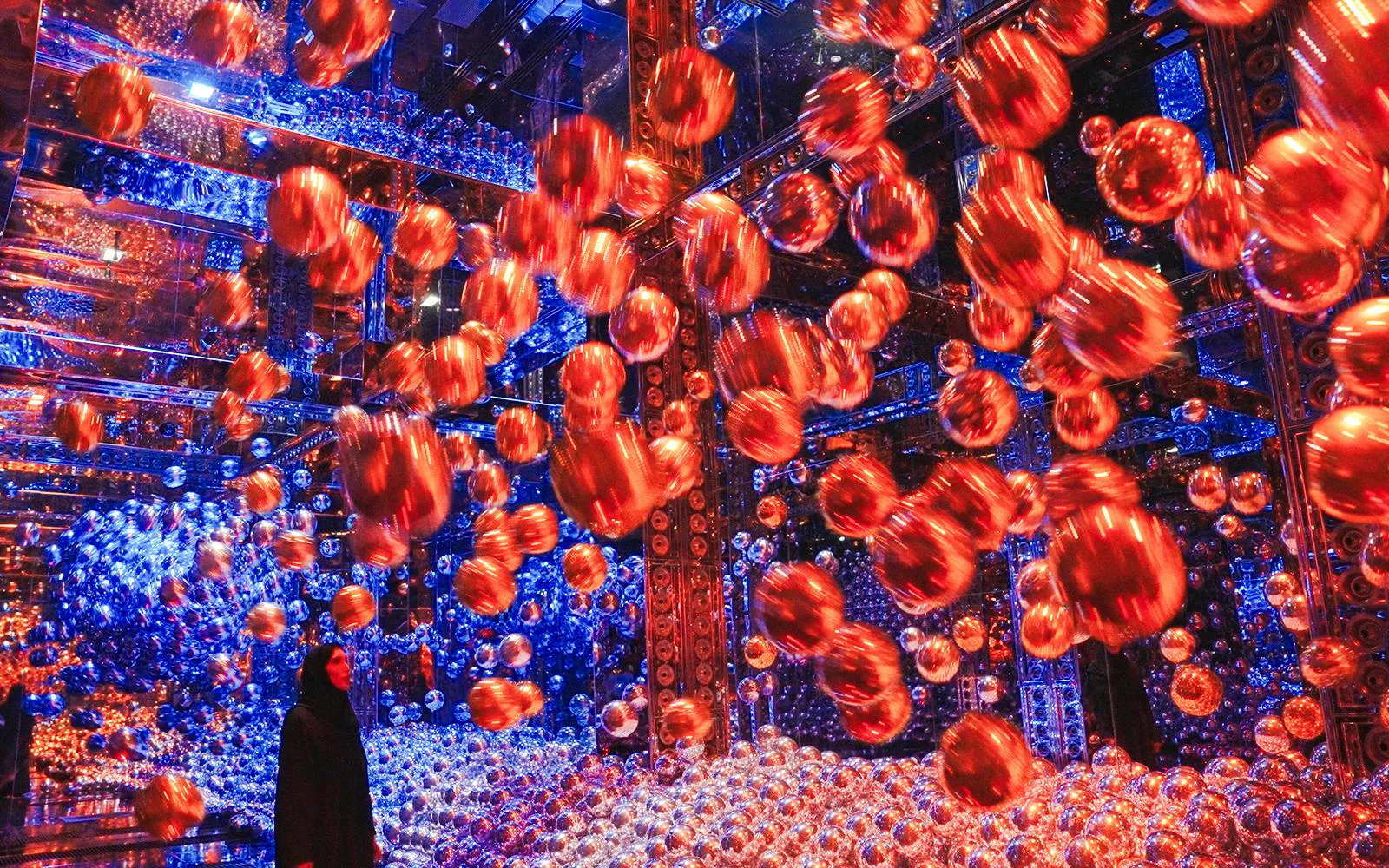
TeamLab Phenomena Abu Dhabi is a digital art museum in Saadiyat's Cultural District. Instead of looking at works from the side, you step inside them: rooms of light, colour, mist, water and movement that react to visitors' presence. Anyone searching for teamLab Abu Dhabi ends up here.
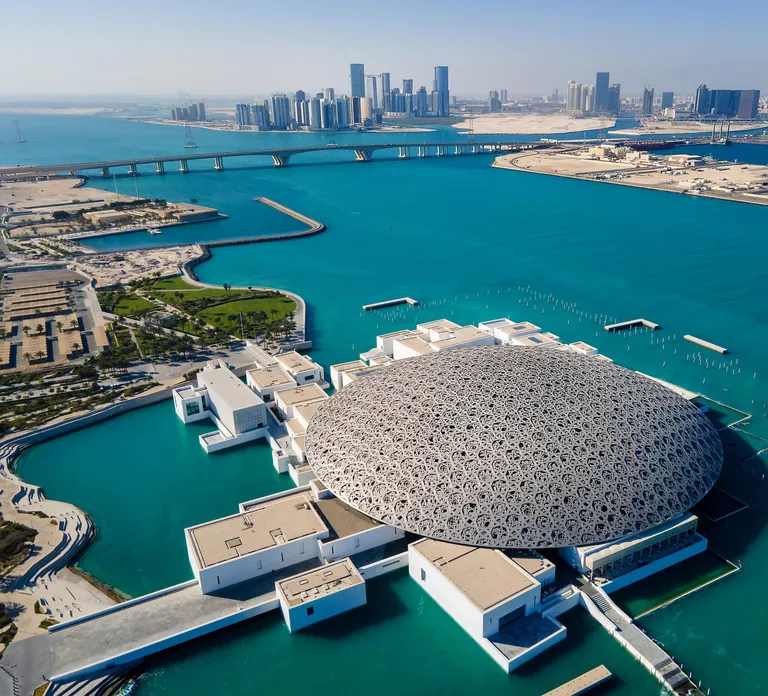
The museum opened on 18 April 2025. It is the first building in the world built specifically for teamLab, and it covers about 17,000 sq m. The building was designed by Abu Dhabi's MZ Architects, based on a concept by teamLab. It stands in the same district as the Louvre Abu Dhabi, the Natural History Museum and the Zayed National Museum.
TeamLab is an international art collective founded in Tokyo in 2001. Its members include artists, programmers, engineers, animators, mathematicians and architects. The works here explore the balance between nature, the human-built world and the environment. The central idea is 'phenomena': art created from the environment itself, from air, light and water, so it never looks the same way twice.
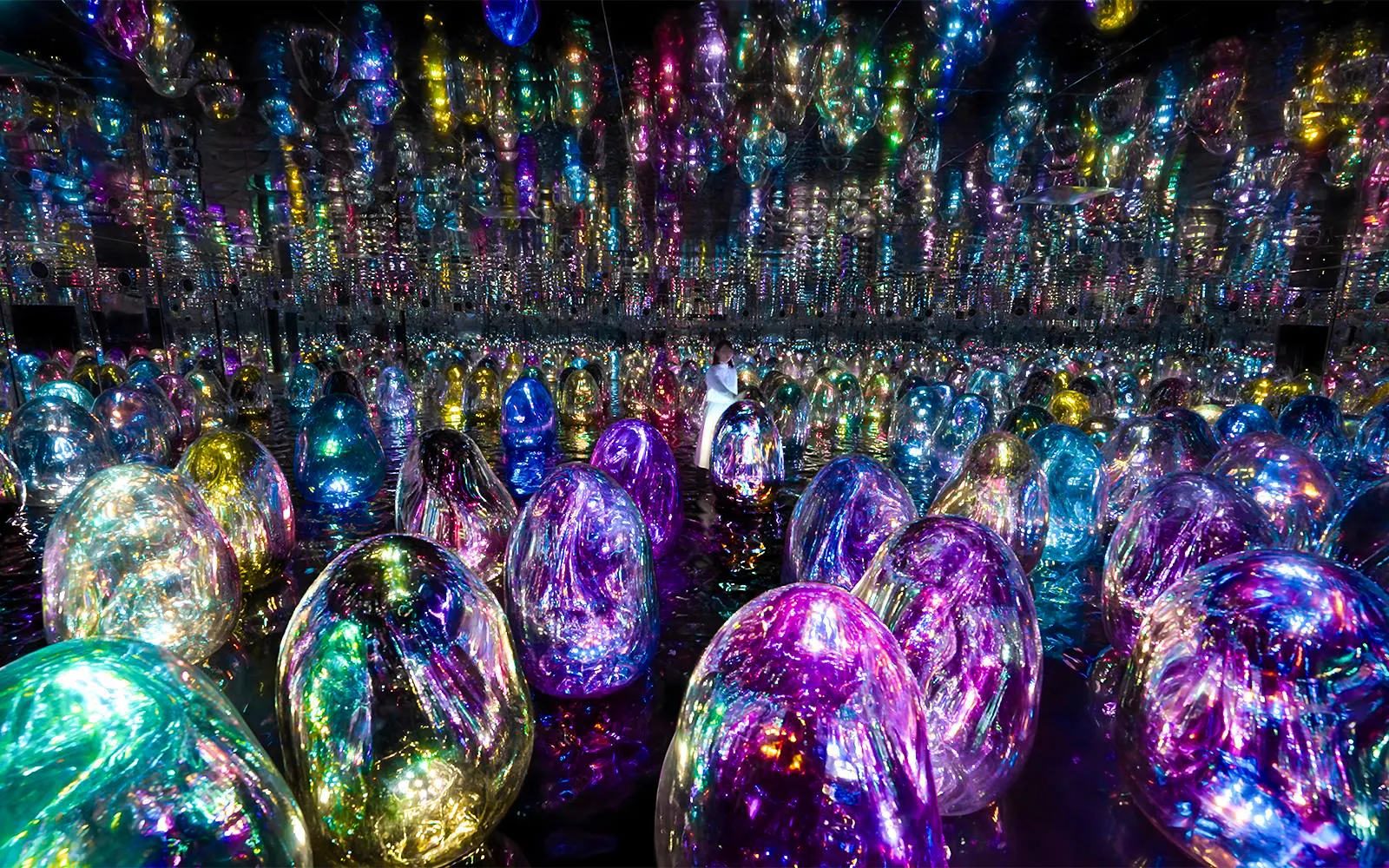
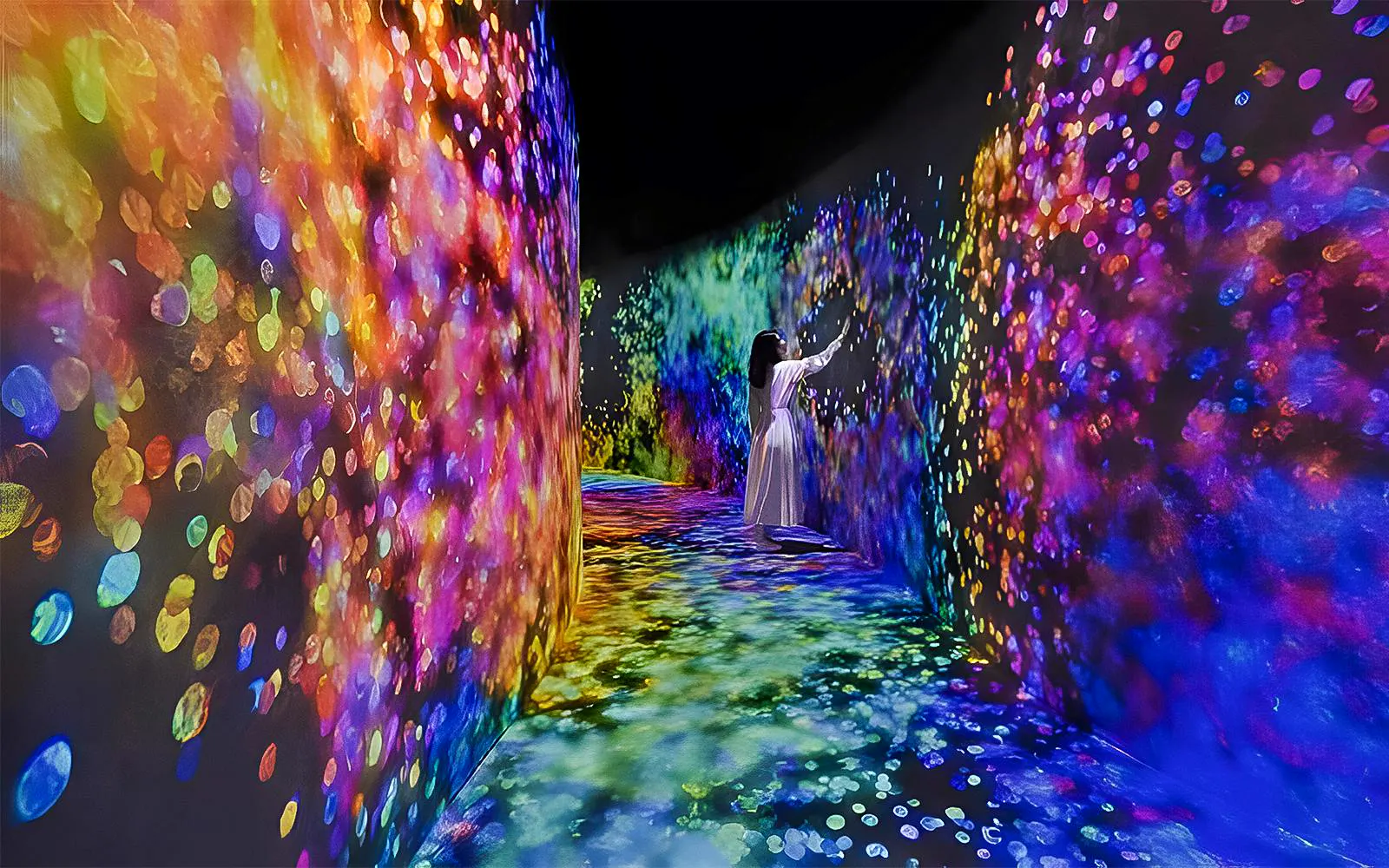
The route is free, with no fixed order. You move from space to space, touch, walk and look, and the works keep changing. The museum has more than 20 works: dry rooms, several works with shallow water, a tea house with floating lamps, and a drawing area for children. Right at the entrance, in the work Living Crystallized Light, you put your hand in the water and watch the light spread in waves. Further on there's a waterfall of light particles, soft sculptures that float in water and move as you pass, particles that show how the wind flows through the space, and butterflies that appear wherever you touch the wall.
Most of the spaces are half-dark, so the light stands out. Some rooms have uneven floors and some have water, so parts of the route are walked barefoot. The water is at most knee-deep, and passing through the wet areas is optional.
It suits all ages, especially families, couples and anyone who loves photography. Children up to age 12 are admitted only with an adult. On Monday–Thursday evenings the museum is adults-only, and it's quieter then.
Tip: there's no time limit inside, so don't rush. But there's also no re-entry, so it's worth eating and getting organised before you go in.
The museum can be divided into several areas, even though the route is free. The dry area, with no water on the floor, suits all ages, and anyone who prefers to stay dry can spend most of the visit there. A separate area has works with shallow water, where you walk barefoot. There is also a quiet tea house and Sketch Factory, the drawing workshop.
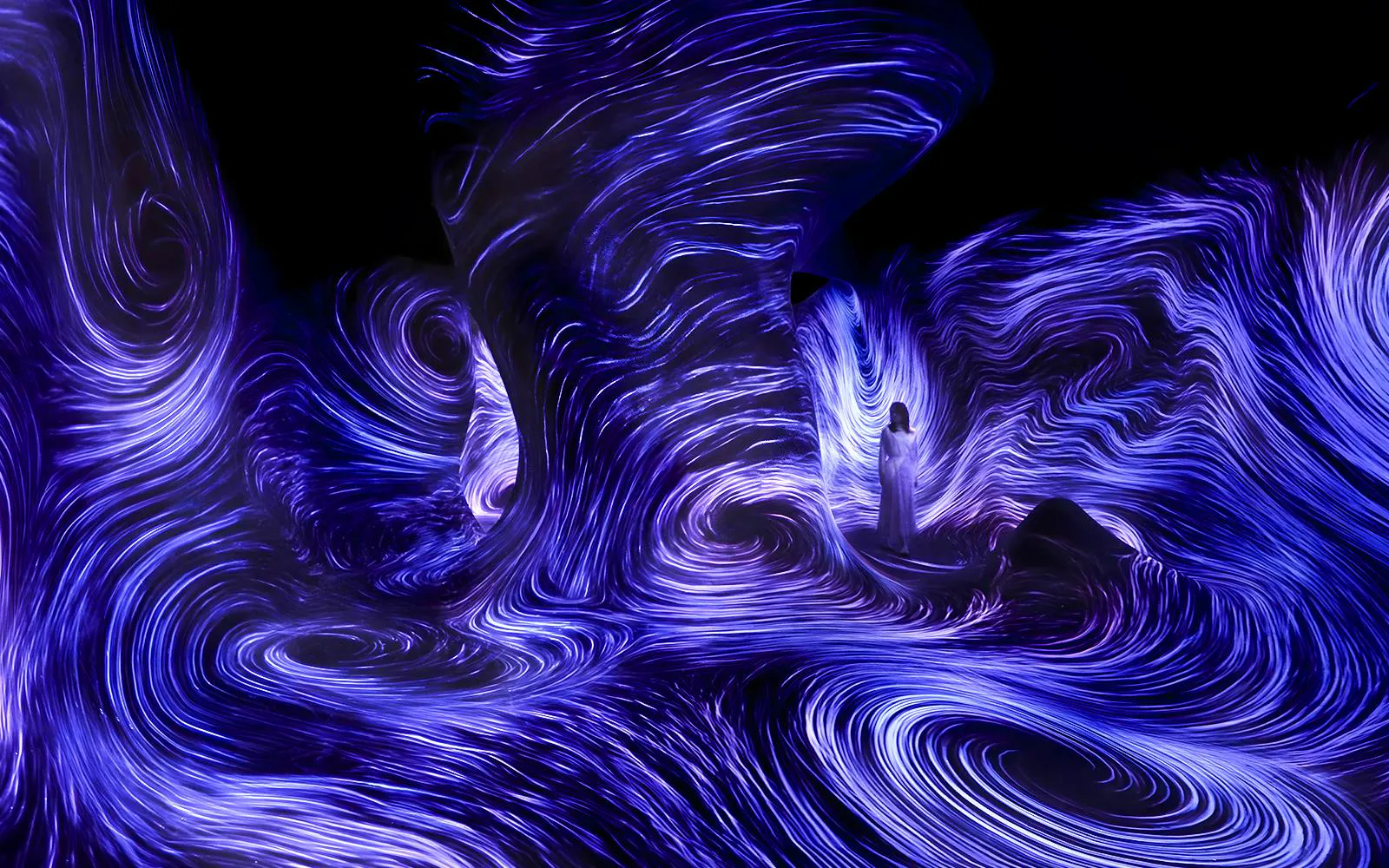
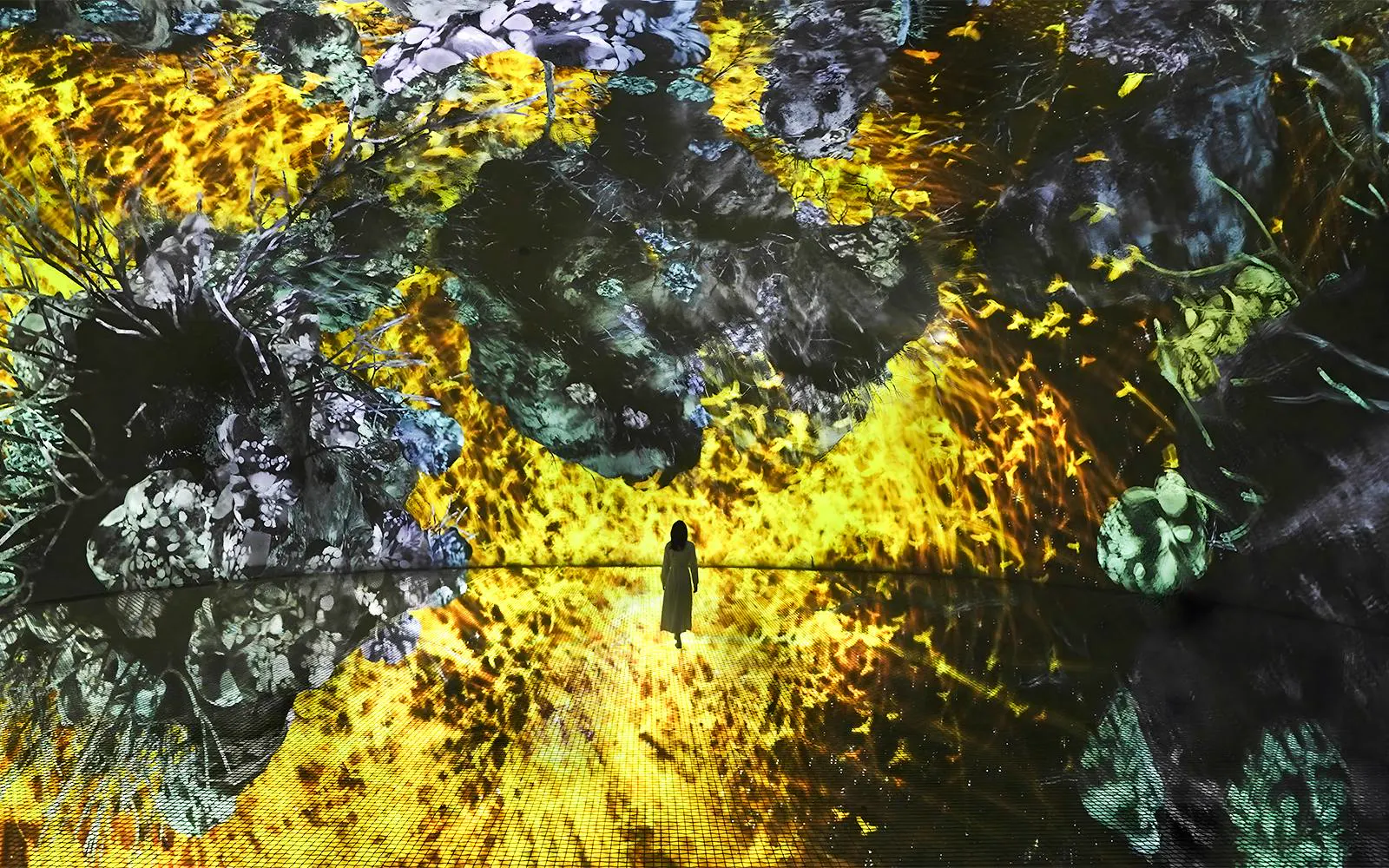
The water area has four works, including Waterfall of Light Particles, the waterfall of light particles, which is based on a waterfall in the mountains of Shikoku in Japan. In Continuous Trajectories in Flux and Form, continuous trajectories fill the space and become a changing three-dimensional form.
What is included
Included
- Entry to all the installations and spaces of the exhibition
- Access to the children's activity areas
- Lockers for personal belongings
- Wi-Fi in the museum
- Parking on site
Not included
- Transfers
- Food and drink
- Valet parking
What you will see and do
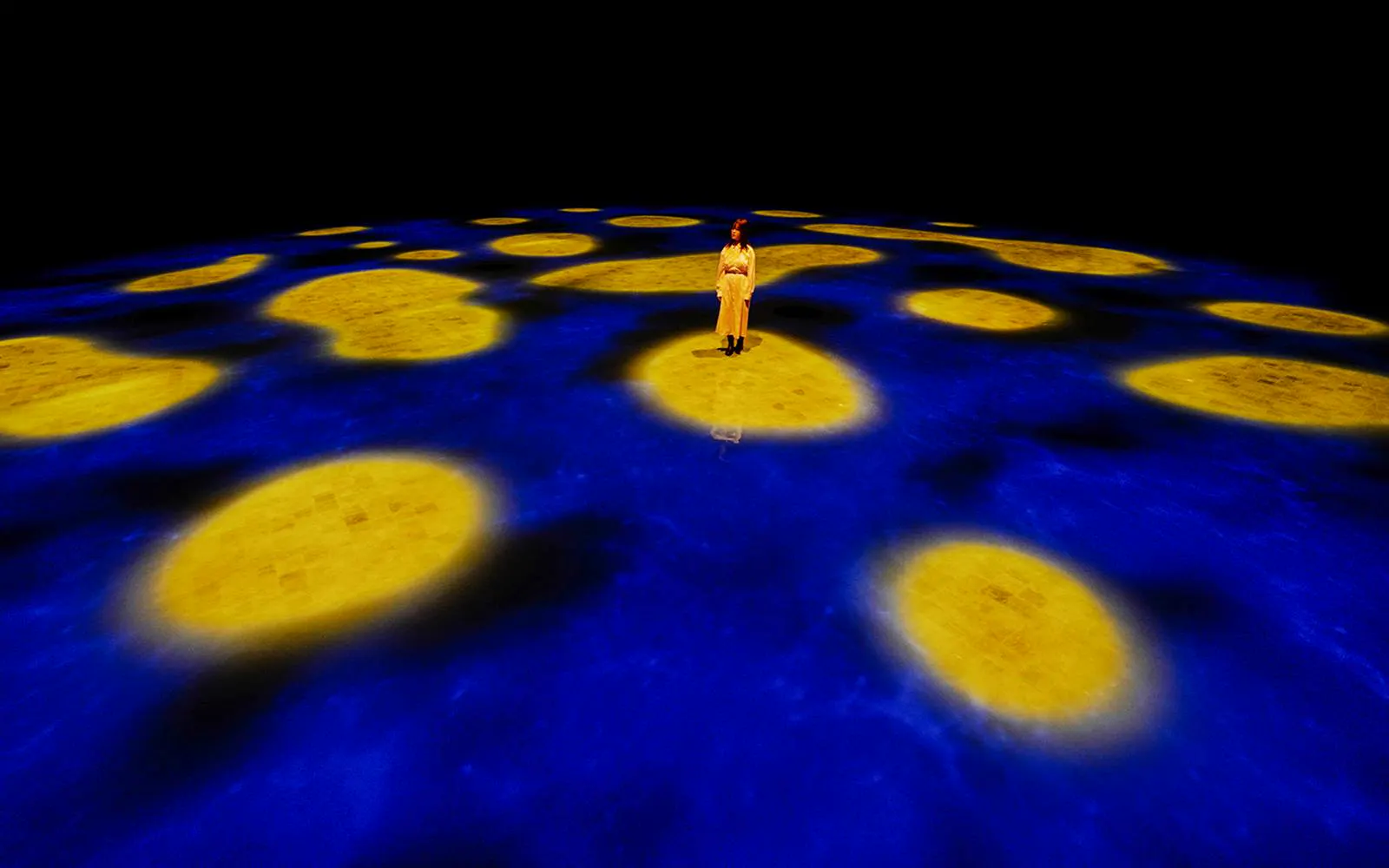
- Levitation Void: a space centred on a black sphere that appears to float in mid-air and reacts to visitors' presence.
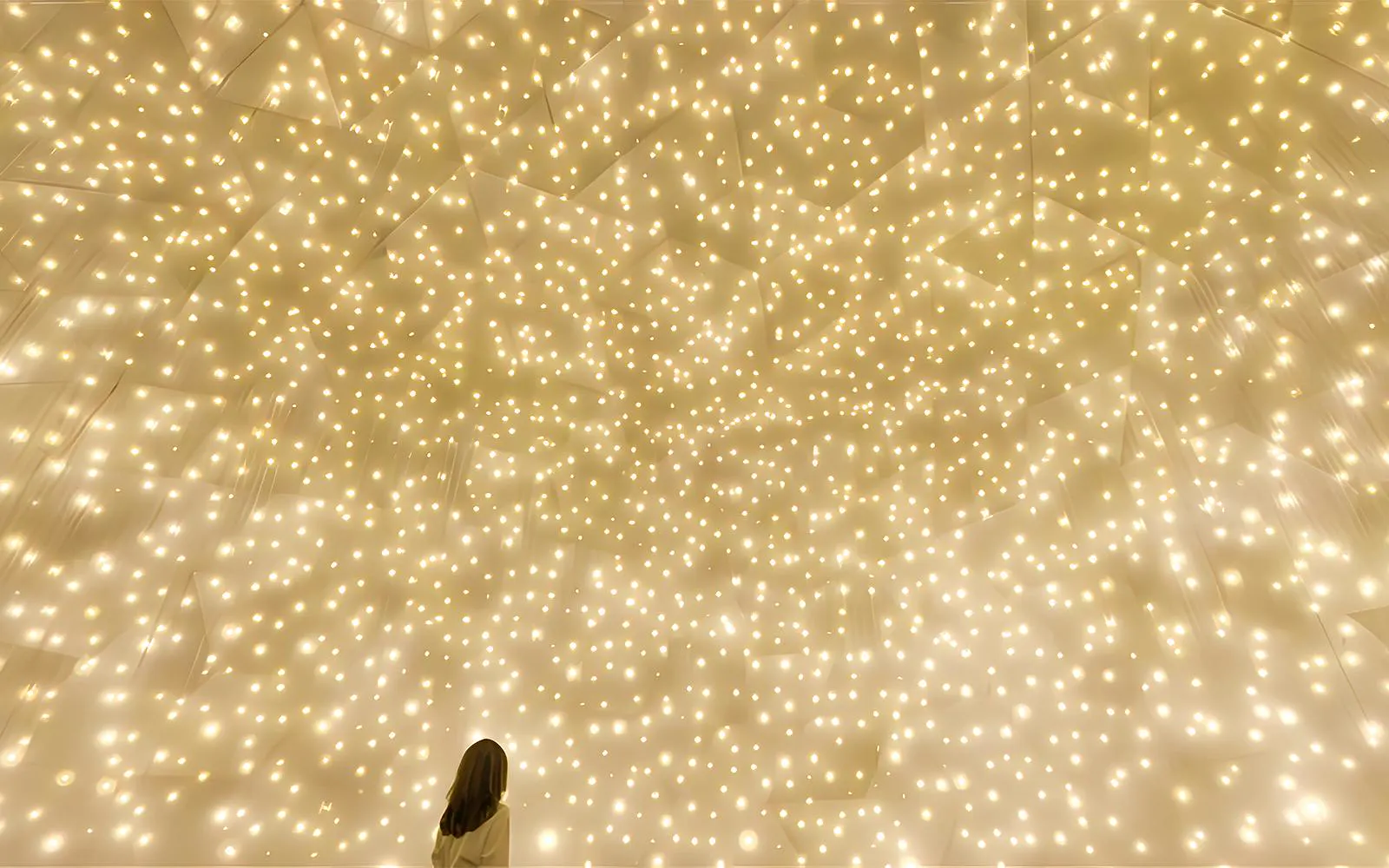
- Massless Suns and Dark Suns: a dome-shaped room filled with points of light that move across the walls and ceiling. Visitors enter in small groups.
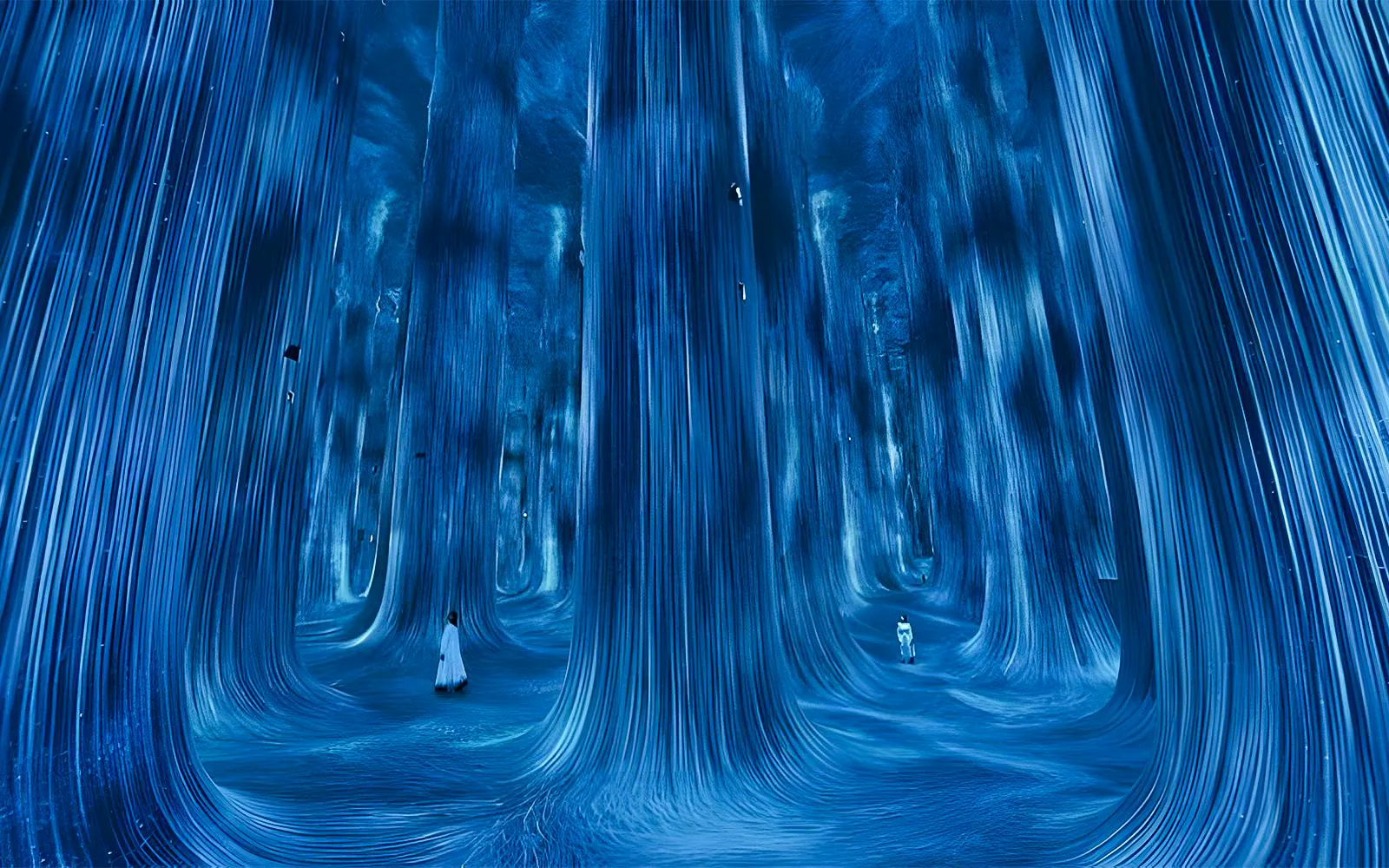
- Megaliths in the Roots Garden: a two-level work. Upstairs, screen pillars like trees and mirrors; downstairs, low mist and roots hanging in the air. You walk through it barefoot.
- Light Vortex and Light Sculpture – Flow: swirls of laser light that fill the space, and you can stand inside them.
- Biocosmos: hundreds of thousands of animated birds flying together across the walls, like a real flock.
- Graffiti Nature: children draw an animal on paper, and it 'comes alive' on the walls, alongside everyone else's creatures.
- Sketch Factory: an area where your drawing becomes an animated object you can take home as a souvenir.
- The Tea House: a room with floating lamps that light up at their own pace, and tea that reacts in the cup with light and sound.
- Morphing Continuum: scattered points that unite into one whole the moment an order forms between them.
- Order in Chaos: strokes of colour that organise themselves through their encounter with visitors, with no central guidance and no outside influence.
- Obverse and Reverse: a colourful circular opening that, seen from behind, looks like a white, colourless membrane of light.
- Absolute Front Torus: a ring-shaped form that always faces forward, whatever angle you look at it from.
- Waves: a room enveloped by waves. It is not a spatial illusion.
- Autonomous Abstraction: points of light that each blink and change colour on a cycle of their own.
- Cognitive Solidified Spark: a work inside Sketch Factory, with a red glow and streaks of light.
Who it suits
Good for…
- Families with children, toddlers included, during the day
- Anyone who loves photography, taking pictures and being in them
- Anyone looking for an indoor activity in summer
- Couples, especially on the adults-only evenings
- Anyone visiting the Cultural District who wants to combine it with the Louvre
Less suited to…
- Anyone bringing a pushchair. Pushchairs are not allowed inside
- Anyone who dislikes darkness, flashing light or wet floors
- Anyone looking for a museum with explanations and labels beside every exhibit
When to go
The museum is indoors and air-conditioned, so it suits any season and any hour of the day. Entry is by time slot and places are limited, so it is worth booking in advance. Anyone coming with children should plan the visit for daytime hours: from Monday to Thursday, after 18:00, entry is for adults only, and the last entry for children is at 16:30. Adults looking for a quieter visit can choose precisely those evening hours.
Getting there
- The museum is in the Cultural District of Saadiyat Island, in Abu Dhabi, next to the Louvre Abu Dhabi.
- From Dubai: about 130 km from Downtown Dubai and about 110 km from the Marina, via the E11 road. By rental car, taxi or organised transfer.
- From Abu Dhabi city: by car, taxi or Careem. A driverless Robo Taxi is also an option.
- Free transfer: the Experience Abu Dhabi shuttle stops in the district. There is also an on-demand Abu Dhabi Link bus, booked through an app.
- Parking: there is parking near the entrance, and valet parking too. When it's full, there are additional car parks in Saadiyat with a shuttle to the entrance.
Good to know
- There is no time limit inside, but there is no re-entry.
- On Monday–Thursday, after 18:00, entry is adults-only (18+). The last entry for children on those days is 16:30.
- Children up to age 12 are admitted only with an adult. Some works have a height limit, for safety reasons.
- Clothing: flat shoes or trainers are best, and heels are not allowed inside. White or solid-coloured clothes photograph best against the projections.
- In some works you walk barefoot through shallow water, at most knee-deep. Trousers you can roll up will help. The wet areas can be skipped.
- Photography for personal use is allowed, without flash or external lighting. Tripods, selfie sticks and monopods are not allowed in the exhibition areas.
- Pushchairs are not allowed inside, and there isn't much space to store them. There are free lockers and a nursing room.
- Arrive about a quarter of an hour before your chosen time, with your voucher and ID.
- Some works include flashing lights, flash effects, ultraviolet light and fog. Some spaces are dark and enclosed, and sometimes crowded. Anyone sensitive to an intense sensory environment, or with a respiratory condition such as asthma, should take this into account.
- In areas with uneven flooring and in the water works, personal belongings are not allowed, for hygiene and safety reasons. Leave them in the free lockers.
- Most of the wet areas have only a little water. Only one experience, on the first floor, reaches knee height.
- Opening hours may change, so it is worth checking them close to the date of your visit.
Buy online
Book and pay right here on the site · secure paymentFrequently asked questions
How long should I plan for a visit to teamLab Abu Dhabi?
Can I bring children?
Can I leave and come back?
What's the difference between the tickets?
Do I have to get wet at teamLab?
What's the difference between teamLab in Abu Dhabi and teamLab in Dubai or Japan?
What should I wear to teamLab?
Is photography allowed?
What are the adults-only hours?
Where is teamLab Abu Dhabi located?
What if the main car park is full?
Is the free shuttle to the district wheelchair accessible?
Is commercial photography allowed?
Keep exploring
More experiences in Abu Dhabi




Where to stay
Recommended hotels in Abu Dhabi



The perfect combination
Also in Dubai




Plan smart
From the magazine
More inspiration