

Ras Al Akhdar · The presidential palace
Qasr Al Watan
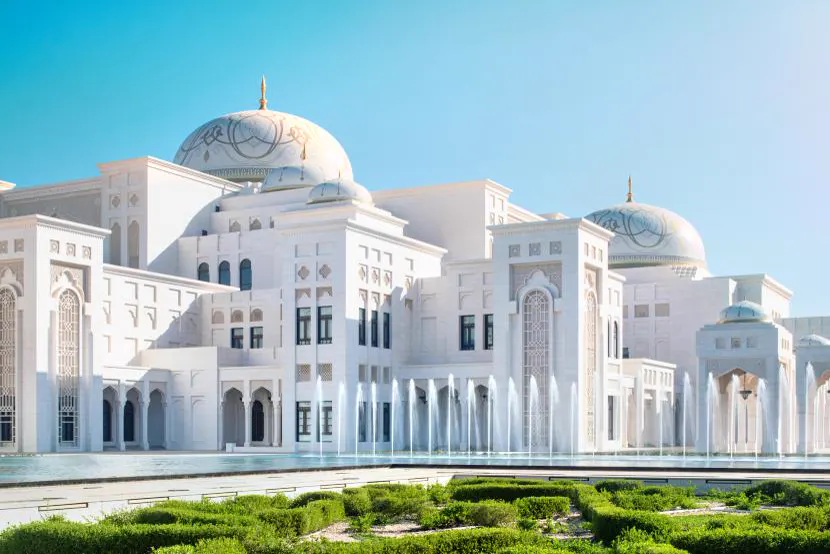
The presidential palace of the United Arab Emirates, open to visitors. In the evening there is a light show on the facade.
Tickets and prices
| Option | Price |
|---|---|
| Entry to the palace and gardensEntry to the palace and gardens only | 55 AED per person |
| Entry + Louvre Abu Dhabi | Not available right now |
| Skip-the-line admissionEntry that skips the queue | 51 AED per person |
- What it is
- A working presidential palace
- Location
- Next to Emirates Palace
- In the evening
- The Palace in Motion light show
- Opened to the public
- March 2019
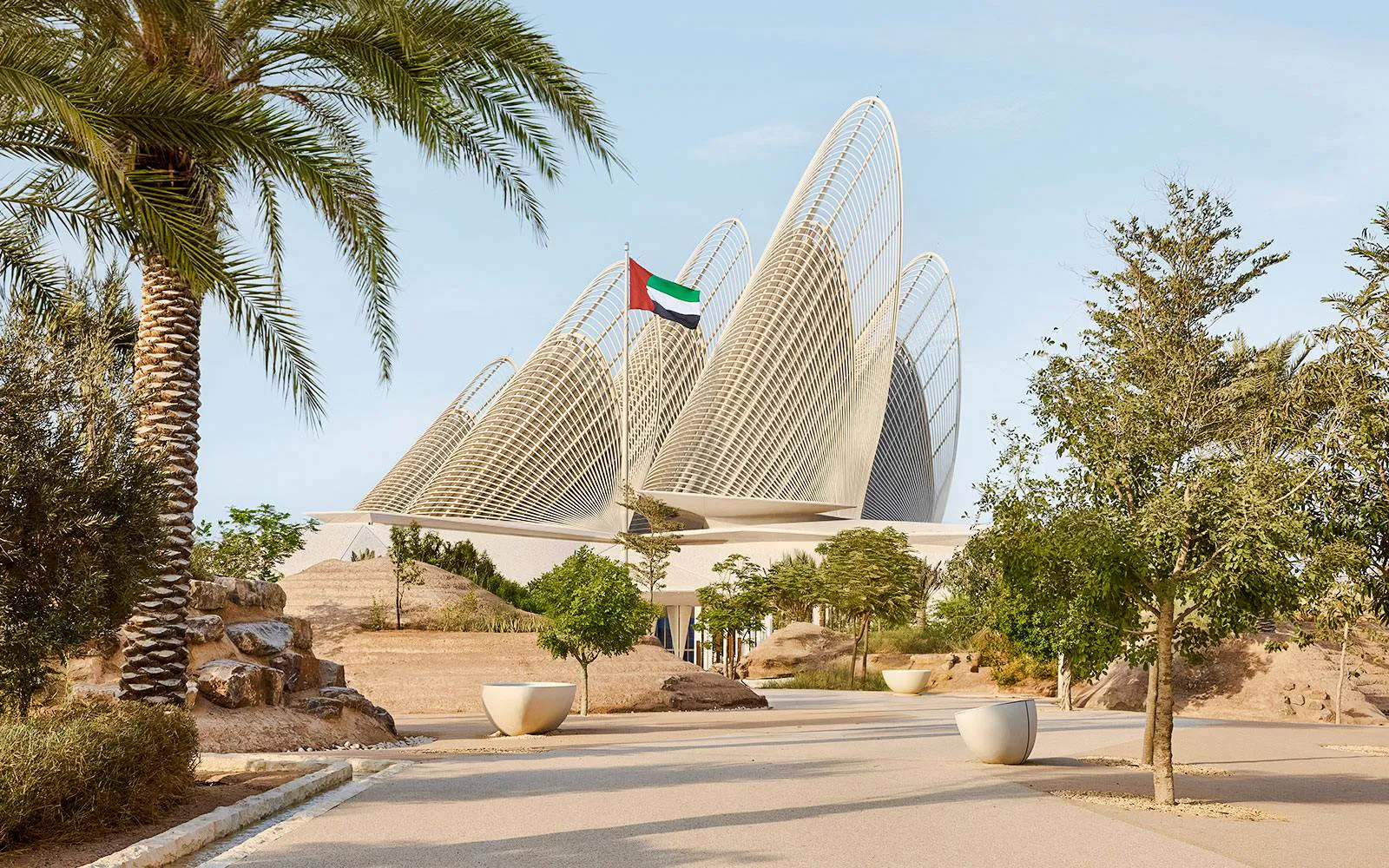
Qasr Al Watan ('Palace of the Nation') is the UAE's presidential palace in Abu Dhabi, open to the public. It's a working palace, also used for meetings and official visits. Anyone looking for the presidential palace in Abu Dhabi, or searching for Qasr Al Watan, arrives at the same place: one of the city's most striking buildings.
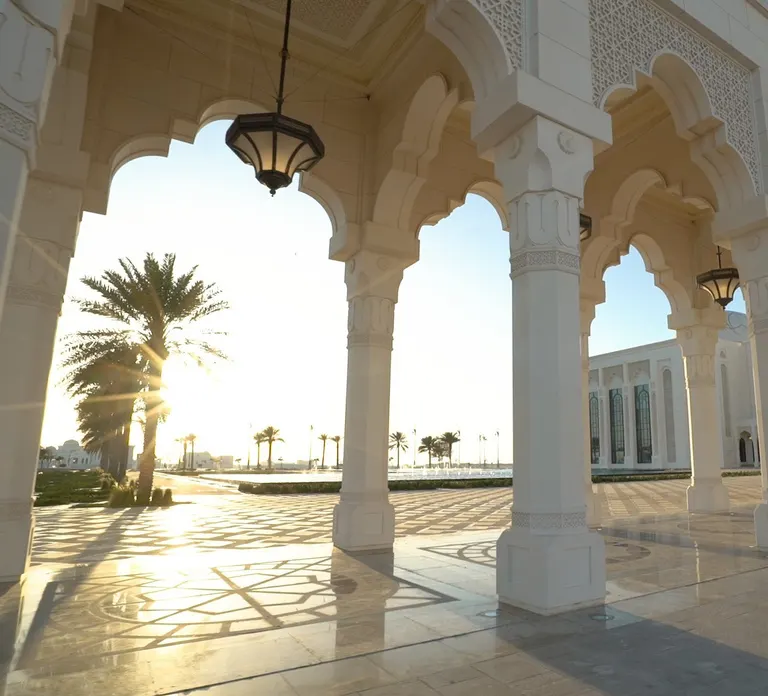
The palace sits on the Ras Al Akhdar peninsula, next to the Emirates Palace hotel, and is part of the Presidential Complex. The complex houses the official offices of the President, the Vice President, and the Crown Prince of Abu Dhabi. Construction took 63 months and finished in 2015, and the palace opened to visitors on 11 March 2019. The whole area, including the gardens, spans about 150 hectares. The façade is built of white granite and limestone, and the design draws on Arab tradition: domes, inner courtyards and geometric ornamentation. In August 2026, the palace was named to a list of the world's top 100 attractions for 2026, compiled from traveller reviews.
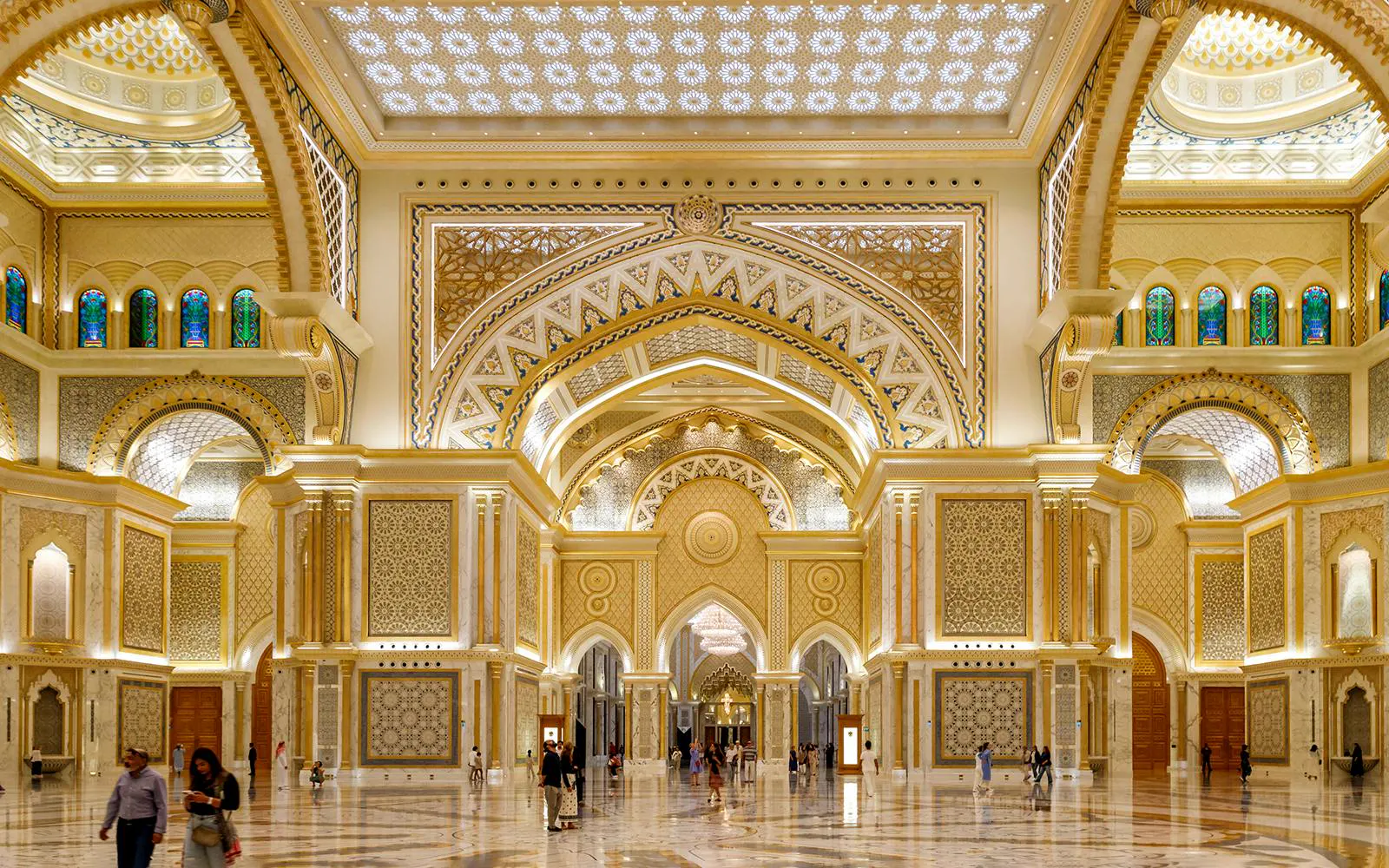
The visit passes through white and gold halls with huge domes, through the palace's grand library, and through exhibitions on the country's governance, culture and history. Afterwards you can stroll through the surrounding gardens. Visitors enter halls usually reserved for summits and official events. This is also where the Cabinet and the UAE's Supreme Council convene. Along the route there are many examples of Arab art and craftsmanship, displays on the rulers and the country's institutions, and interactive screens where you can try writing in Arabic calligraphy.
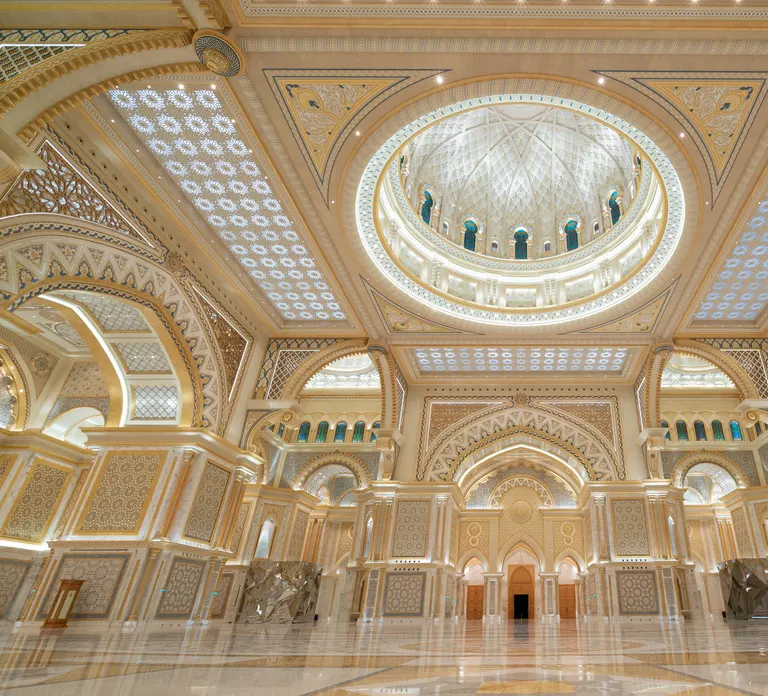
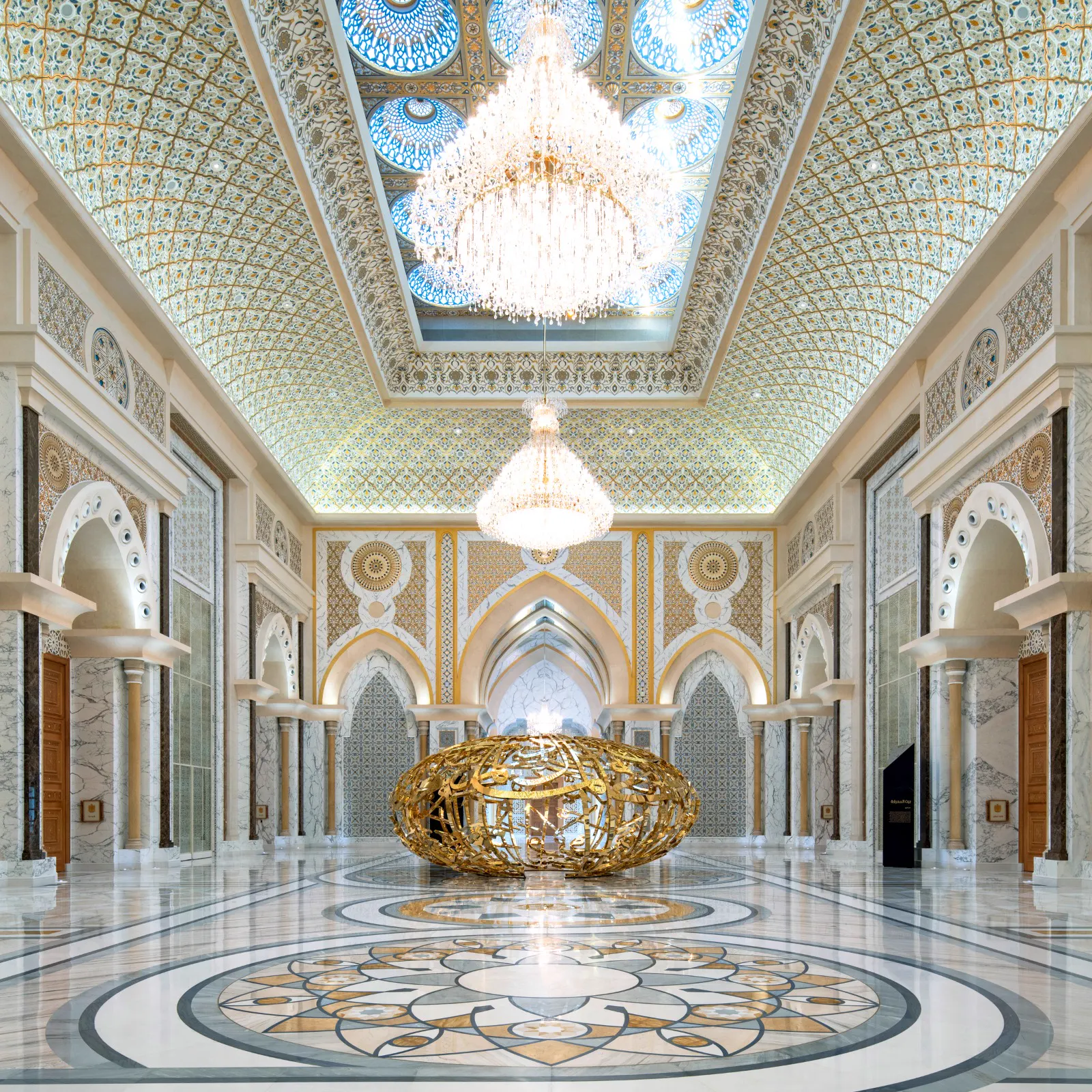
The visit begins at the Great Hall. Its central dome is 37 metres wide and 60 metres high. The hall is painted in the palace's three colours: blue like the waters of the Gulf, white like purity, and yellow like the desert sands. In the corners stand mirrored cubes you can step into to see the decor from another angle.
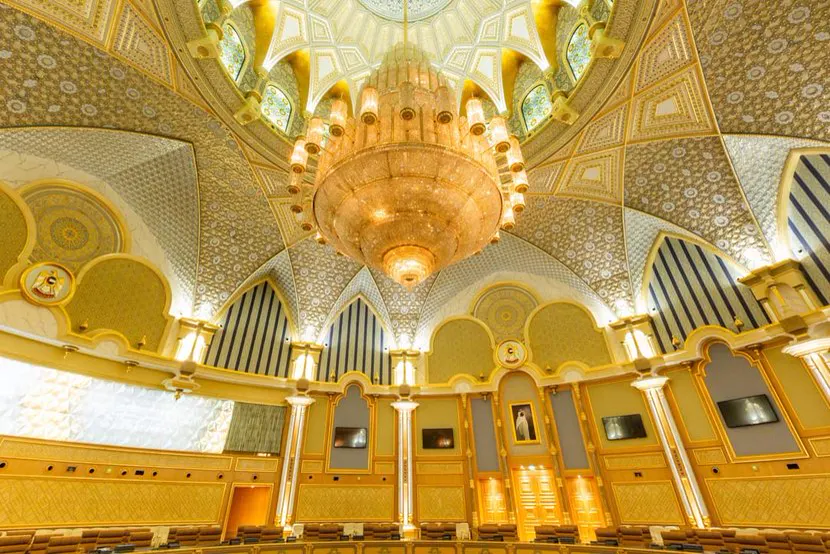
From there you continue to the Spirit of Collaboration hall, where the UAE's Supreme Council convenes. A chandelier with about 350,000 crystal pieces hangs there. In another wing is Al Barza, a traditional majlis that holds up to 300 guests, and the Presidential Gifts hall, with gifts brought by leaders on official visits.
The palace's House of Knowledge and library display rare manuscripts and books on the region's history. The library holds more than 50,000 books. It also offers a digital collection of millions of items, accessible from within Abu Dhabi. In the evenings, a light and sound show called Palace in Motion is projected onto the palace's façade, telling the country's story in three acts: past, present and future.
Suited to anyone who loves architecture and grandeur, and pairs well with a visit to Sheikh Zayed Mosque on the same day. Tip: if you can, stay until evening, and end your day with the light show.
The visit to Qasr Al Watan also explains how the United Arab Emirates was formed, what its principles of governance are and which values guide it. It includes displays on the contribution of the Arab world to various fields of knowledge. The palace was built to host leaders and dignitaries.
The Great Hall is the first introduction to the palace interior, and from there visitors move on to the other zones. It is worth noticing the details: arches, mosaic and arabesque patterns, symmetrical marble panels and curved glass, and geometric shapes that repeat throughout the construction.
Spirit of Collaboration is a wide circular room with large gold doors and a high dome in blue, white and gold. Its design symbolizes the country's commitment to illumination and equality. The room is tied to the legacy of Sheikh Zayed bin Sultan Al Nahyan, the founder of the country, and to his emphasis on cooperation and unity. Bodies such as the Federal Supreme Council of the Union, the Arab League and the Gulf Cooperation Council meet there.
Al Barza is a space for cultural, political and social gatherings. It presents a multimedia display on the tradition of Emirati leaders who govern with the consensus of the people.
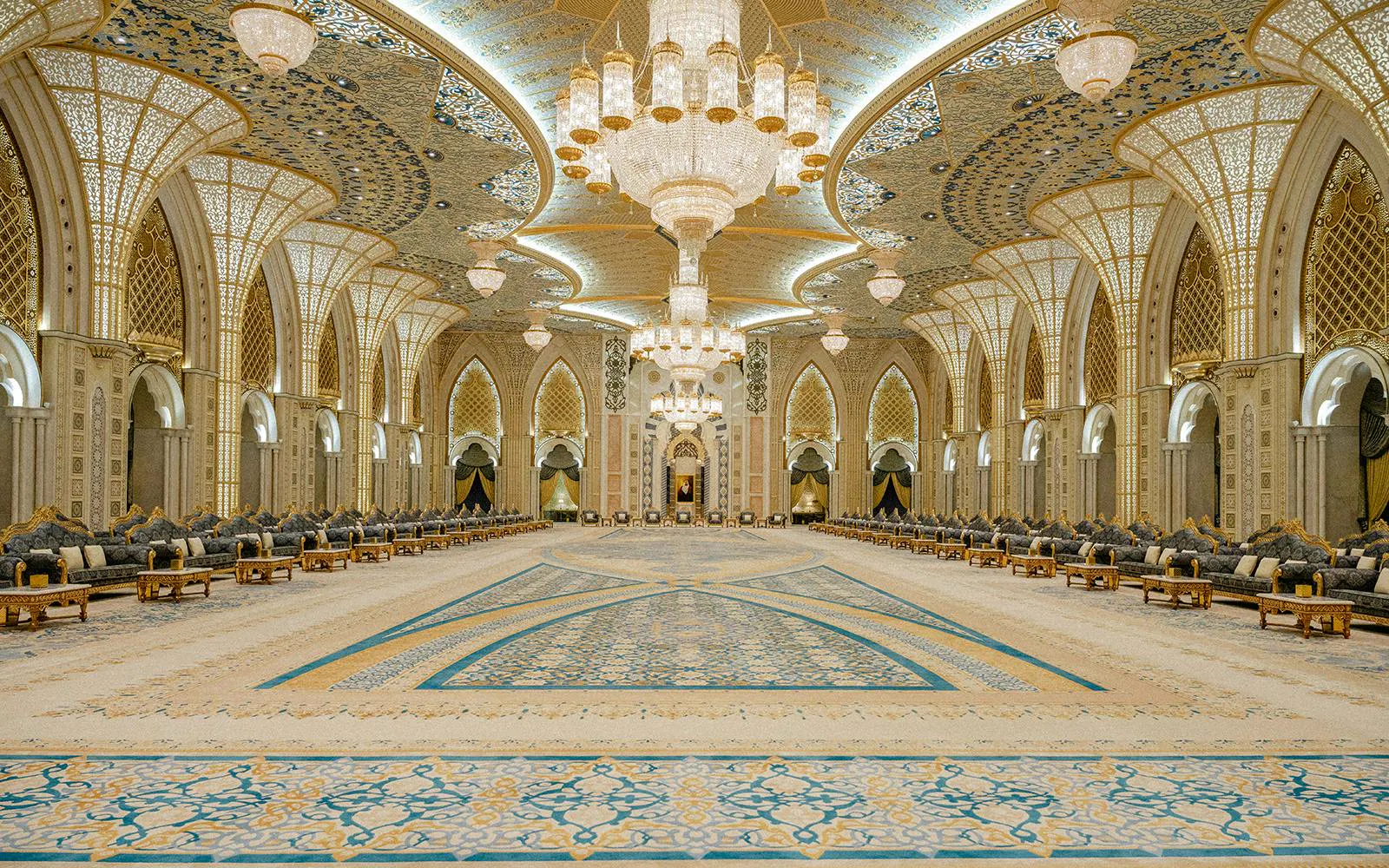
In the Presidential Banquet, official guests from around the world are hosted with Emirati hospitality. The hall has hosted world leaders, traditional iftar meals and meals for the country's leaders. The menu honors the cuisine and culture of the guest of honor, so visitors also learn about customs, protocol and food.
In the Presidential Gifts hall, visitors see diplomatic gifts up close. The explanation focuses on the cultural and protocol considerations behind choosing a gift. There are also gold wreaths, medals and coins from different regions and periods.
The palace library is open to all ages. The collection has been built over more than 35 years and covers history, the arts and humanities, social and economic development, memoirs and official documents on governance. Visitors can use the internet, computers and tablets there, and there are multimedia materials and community events such as panel discussions and cultural performances. The library was created from the vision of Sheikh Zayed to preserve and share Arab knowledge and culture.
What is included
Included
- Entry to the palace and its gardens
- On the combined ticket: entry to Louvre Abu Dhabi as well
Not included
- Hotel transfers
- The evening light show, if not chosen
- A guided tour
- Food and drink
- Pushchair hire
What you will see and do
- The Great Hall: a hall measuring 100 by 100 metres, with a dome 37 metres wide. It's wider than the main dome of Sheikh Zayed Mosque.
- Spirit of Collaboration: the hall where the UAE's Supreme Council convenes, with a giant crystal chandelier.
- The Presidential Banquet: a hall that holds more than 100,000 serveware pieces of silver, crystal and porcelain.
- Al Barza: a traditional majlis, with multimedia displays on majlis culture in the UAE.
- The House of Knowledge and Library: rare manuscripts, including a copy of the Birmingham Quran, and more than 50,000 books.
- The Presidential Gifts: diplomatic gifts from official visits from around the world.
- The Palace in Motion show: a light and sound show on the palace's façade, in three acts. It starts at 20:00 and lasts about a quarter of an hour.
- The gardens: a large green area around the palace, with a view of its white façade. Good for a short walk and photos.
- Gifts from around the world: Samurai armor from Japan, falcon hoods from Germany, a traditional rifle from Kuwait, a vase from the Phoenician era, a moon vase from Korea and a carpet from Turkmenistan. There is also a Holy Quran in a black cover with gold embroidery, a gift from the Kingdom of Saudi Arabia.
- The Presidential Banquet: a hall with traditional arches and a design mostly in blue, including the upholstered chairs. It holds up to 300 guests at one event. The host sits next to the guest of honor, who sits on his right, and the other guests sit at round tables facing the host.
Who it suits
Good for…
- Anyone who loves architecture, decor and grand buildings
- Anyone who wants to understand how the country is run and its history
- Anyone visiting Sheikh Zayed Mosque who wants to add another site on the same day
- Anyone who loves photography: the halls and the façade photograph beautifully
- Families with older children, who'll enjoy the halls and the interactive screens
Less suited to…
- Anyone looking for an activity for young children — this is a quiet tour through halls
- Anyone not willing to dress modestly
- Anyone in a real hurry — anyone who wants both the gardens and the evening show needs to stay until 20:00
When to go
The palace is indoors and air-conditioned, so you can visit in any season. In the hot months it is worth leaving the walk through the gardens to the late afternoon. Anyone who also wants to see the light show should arrive in the afternoon, tour the palace and stay into the evening. You need to arrive half an hour before the show starts, and entry is subject to available space. Opening hours may change, and we will confirm your entry slot with you when you book.
Getting there
- The palace is in Ras Al Akhdar, next to the Emirates Palace hotel.
- Taxi or Careem is the simplest way to get there. The free Experience Abu Dhabi shuttle bus stops at the palace, and inside the complex a free shuttle runs continuously between the Visitor Centre and the palace entrance.
- By private car: there's large, free parking, and also a valet service.
- All visitors first pass through the Visitor Centre, then continue on to the palace.
- From Dubai: you can go by rental car, taxi, or an organised day tour to Abu Dhabi that includes a palace visit.
Good to know
- Modest dress: shoulders and knees covered. Shorts, tank tops or see-through clothing are not allowed.
- Comfortable shoes. Flip-flops and overly casual shoes are not permitted.
- There's a security check at the entrance, so it's worth arriving early. Food and drink aren't allowed in, apart from a water bottle, and neither are large bags.
- Last entry to the palace is up to closing time. For the light show, up to half an hour before it starts.
- Non-commercial photography is allowed. Some halls may have restrictions, so it's worth listening to staff.
- There are free wheelchairs, and stroller rental.
- Food and drink are sold on site, but eating isn't allowed in the Great Hall or in the exhibition rooms.
- Phones should be on silent inside the palace.
- At the security check, remove metal items from your pockets. Place your phone, camera, keys and wallet inside your bag before it goes through the scanner. Handbags, hearing aids and electronic medical devices are allowed.
- Not allowed: knives of any kind, scissors, long umbrellas, alcohol, paints and aerosol sprays, bicycles, roller skates and skateboards, animals and weapons of any kind.
- Wearable devices are not allowed inside the palace and its grounds. Photographing security personnel or security systems is not allowed.
- There are restrooms in the Visitor Centre, at the Ceremonial Gate and in the palace. A first aid room is inside the palace. There is no cloakroom and no Wi-Fi on the grounds.
Buy online
Book and pay right here on the site · secure paymentFrequently asked questions
Is Qasr Al Watan a working palace?
What is Palace in Motion?
What should you wear to Qasr Al Watan?
What's the difference between Qasr Al Watan and Emirates Palace?
Can you take photos inside?
Is there parking?
Is there somewhere to eat at the palace?
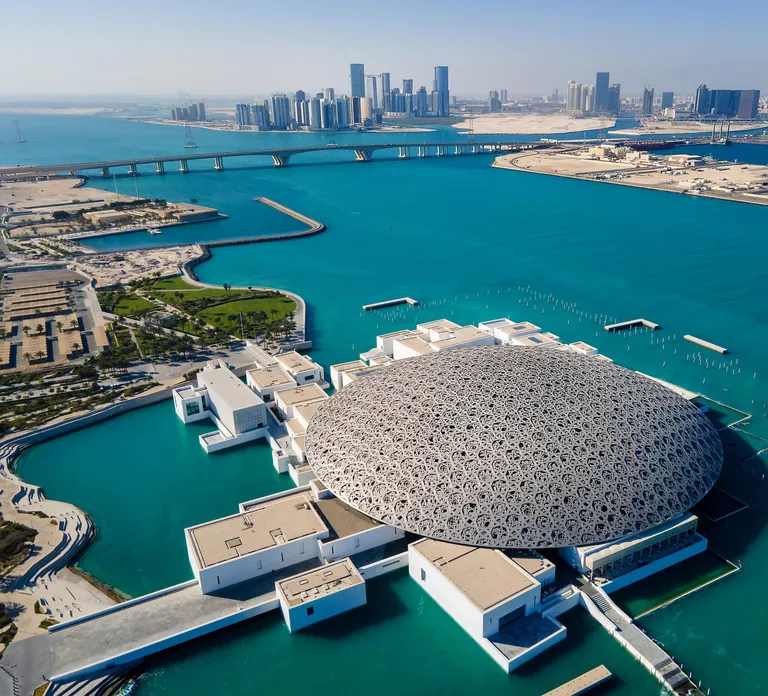
Can you combine it with the Louvre?
Can I enter with a large bag?
Can I bring a tripod?
Is smoking allowed in the palace?
Is there a prayer room?
Keep exploring
More experiences in Abu Dhabi





Where to stay
Recommended hotels in Abu Dhabi




The perfect combination
Also in Dubai


Plan smart
From the magazine

More inspiration