

The Creek · walking tour and boat ride
Old Dubai and an Abra Ride on the Creek
The lanes of Al Fahidi with their wind towers, the Al Seef promenade, and a crossing of the Creek in a wooden abra.
Tickets and prices
| Option | Price |
|---|---|
| Guided walking tour with an abra rideAfternoon tour with a licensed local guide, including the Creek crossing by abra | 86 AED per person |
- Guide
- A licensed local guide
- Type
- Guided walking tour
- Includes
- Crossing the Creek by abra
- Best season
- October–April
Dubai began along the Creek, the waterway that cuts through the city. The Al Fahidi district (Bastakiya) still has its stone and coral houses with wind towers, which cooled the homes before air conditioning existed. A tour of old Dubai with an abra ride on the Creek is the best way to see this side of the city, on foot and on the water.
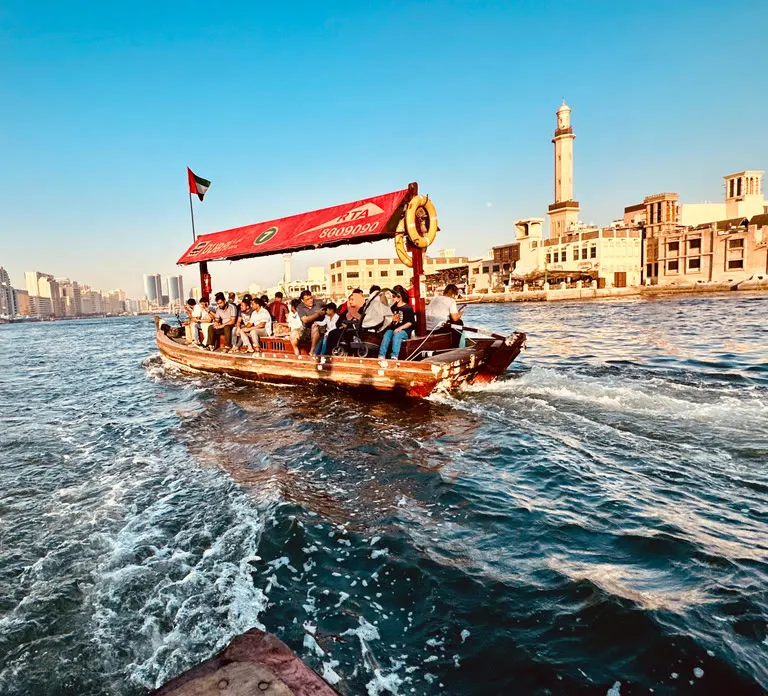
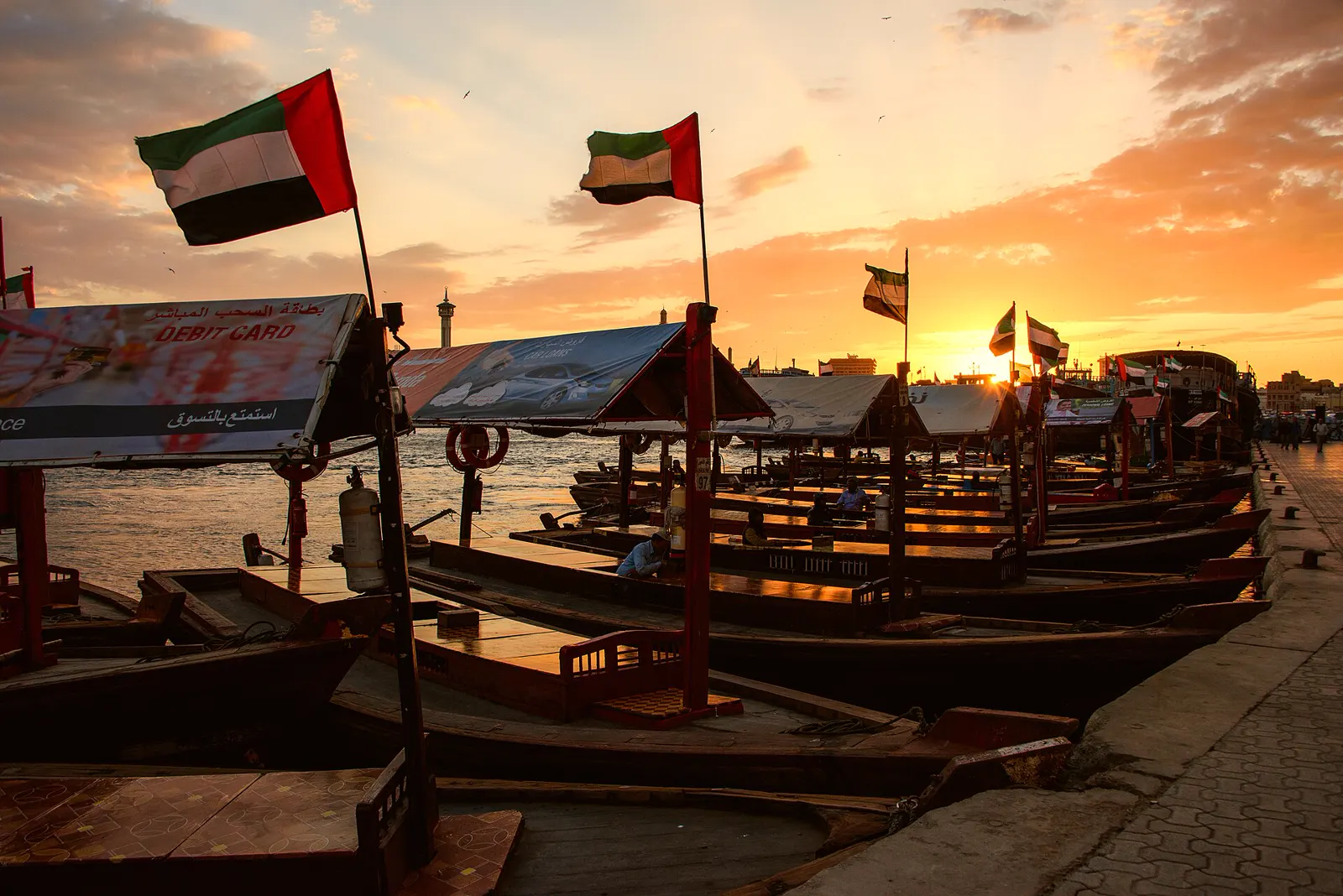
The tour winds through the lanes of Al Fahidi, continues to the restored Al Seef promenade on the bank of the Creek, and crosses the water in an abra, the traditional wooden water taxi.
The Creek separates Bur Dubai from Deira. The pearling fleet returned here at the end of the diving season, and cargo ships arrived from Africa and India loaded with timber and spices. Between 1959 and 1961 the Creek was dredged deeper on the orders of Sheikh Rashid bin Saeed Al Maktoum, so that larger ships could enter, and that was a turning point in Dubai's growth as a trading city. Wooden dhows still moor along it today, loading goods.
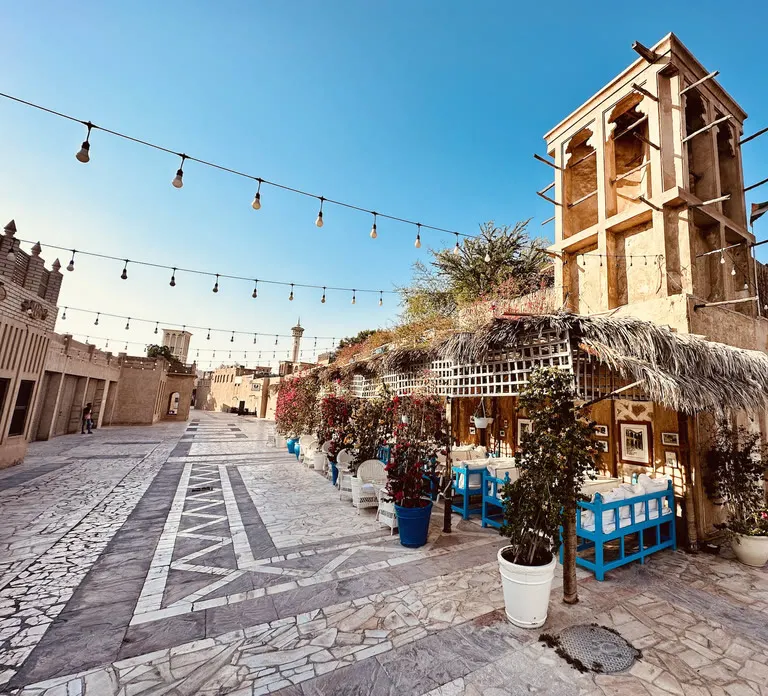
The Al Fahidi district, formerly known as Bastakiya, preserves life in Dubai from the mid-19th century to the 1970s. The houses are built of stone, gypsum, teak and palm fronds, topped with wind towers (barjeel). When plans to demolish the district were on the table, Prince Charles, today King Charles, wrote to the Ruler of Dubai asking him to preserve it. Today it holds galleries, museums and cultural centres, among them the Sheikh Mohammed Centre for Cultural Understanding.
Right beside the district stands Al Fahidi Fort, the oldest building still standing in Dubai. It was built around 1787 and served as a fort, the ruler's residence, a seat of government and a prison, and in 1971 it became Dubai's first museum. The fort has been closed since 2021 for restoration, and is due to reopen with new galleries.
The Al Seef promenade opened in 2017 and runs 1.8 km along the bank of the Creek. It has two parts: a heritage section inspired by Dubai's old architecture, and a modern section with restaurants and cafes. The abras between Bur Dubai and Deira run from morning until late at night, with departures every few minutes. Dubai's Roads and Transport Authority (RTA) publishes the current route hours.
The Creek (Khor Dubai) is a natural seawater inlet 14 km long and between 100 and 500 metres wide. In 2012 it was added to the tentative list of World Heritage sites, together with its first 4.5 kilometres: the historic districts of Shindagha, Bastakiya and Deira, the covered souks and Al Fahidi Fort. The abra itself is still working public transport. More than 14 million passengers pass through the Creek's abra stations each year, and the RTA has launched a project to refurbish four traditional stations: Bur Dubai, Deira Old Souq, Dubai Old Souq and Al Sabkha, with shading and accessibility to the universal design code.
It suits anyone who wants to see the historic side of the city, and families. The walking is easy and mostly flat. Tip: late afternoon is more pleasant, and the light on the Creek is beautiful.
The houses of Al Fahidi stand side by side, with alleys, pathways and public squares running between them. The alleys wind, and the buildings face the qibla, the direction of prayer. Privacy mattered in the design of the houses: the windows on the front are few, narrow and set high. So from the alley you mostly see walls, and only a few windows.
The district sits on the Creek, and that position allowed it to help manage the city and its trade overseas. It stands next to the diwan of the Ruler of Dubai.
One of the seasonal events in the district is the Sikka Art and Design Festival, organised by Dubai Culture. During the festival the district's alleys become an open museum, and works by artists are shown in the houses and courtyards.
The abra is part of the RTA marine transport system, and its routes link the stations of Al Seef, Al Fahidi, Baniyas, Dubai Old Souq, Al Sabkha and Deira Old Souq. The abras are well connected with the metro and the buses.
What is included
Included
- Licensed local guide
- Crossing the Creek in an abra
Not included
- Hotel transfer, unless an option that includes it is chosen
- Tips
- A full meal
- Shopping
What you will see and do
- Abra ride: crossing the Creek in a traditional wooden boat, between Bur Dubai and Deira.
- The lanes of Al Fahidi: stone and gypsum houses with wind towers.
- Al Seef promenade: 1.8 km along the Creek, with a heritage section and a modern one.
- Dhow boats: wooden cargo ships moored along the Creek, loading goods.
- Al Fahidi Fort: the oldest building in Dubai, from 1787. Currently closed for restoration.
- Small museums: the Coffee Museum and the Coins Museum, in the Al Fahidi district.
- Heritage House: founded in 1890 by Matar Saeed bin Mazina. A two-storey house with an inner courtyard and wind towers.
- Al Ahmadiya School: established in 1912, and it was the first semi-formal private school in Dubai.
Who it suits
Good for…
- Anyone who wants to see the historic, local side of Dubai.
- Families with children who walk comfortably. The walking is easy and mostly flat.
- Lovers of photography, old lanes and traditional architecture.
- Anyone who wants to ride an abra and see the Creek from the water.
Less suited to…
- Anyone who finds it hard to walk outdoors for a few hours.
- Anyone looking for towers, malls and modern attractions.
- Anyone visiting at midday in summer: the heat in the lanes is heavy.
When to go
The best time for a tour of old Dubai is October to April, when it is pleasant to walk. Late afternoon is especially pleasant: the heat drops, and the light on the Creek and on the dhows is soft and good for photography. In summer an early morning tour is better, with plenty of water.
Getting there
- Metro: Al Ghubaiba and Sharaf DG stations on the Green Line are about a 10-minute walk from the abra stations in Bur Dubai.
- Taxi or Careem: write Al Fahidi Historical Neighbourhood or Al Seef for the driver.
- Abra: there are stations in Bur Dubai, Deira, Al Seef and Al Fahidi. The abra crosses the Creek in a few minutes.
- Hotel transfer is included only if you choose an option with pickup. Without pickup, you meet the guide at the meeting point.
Good to know
- Comfortable walking shoes, a hat and water.
- Modest dress: shoulders and knees covered.
- We will confirm the tour days for your dates when you book.
- Al Fahidi Fort (Dubai Museum) has been closed for restoration since 2021, so the tour does not go inside.
- We will confirm the guiding language of the tour you choose when you book.
- The abra is open, with no enclosed roof. On hot days bring a hat, and on a winter evening an extra layer.
- Heritage House and Al Ahmadiya School are currently listed as closed for renovation.
- Abra operating hours during Ramadan and on public holidays may differ from the usual.
Buy online
Book and pay right here on the site · secure paymentFrequently asked questions
What is an abra?
Is it suitable for children?
Can I cross by abra without a tour?
What do you see on an old Dubai tour?
What hours does the abra run on the Creek?
Is Al Fahidi Fort open?
How do I reach old Dubai by metro?
How many people ride the abra on the Creek?
What is the difference between Al Fahidi and Bastakiya?
What was Al Ahmadiya School?
What does Heritage House display?
Keep exploring
More experiences in Dubai




Where to stay
Recommended hotels in Dubai






The perfect combination
Also in Abu Dhabi


Plan smart
From the magazine

More inspiration