

Al Khatim · Half a day
Desert safari in Abu Dhabi
Pick-up from your Abu Dhabi hotel, a drive of less than an hour to the dunes of Al Khatim, and there a jeep, camels, sandboarding and sunset at the camp.
Tickets and prices
| Option | Price |
|---|---|
| Evening safari with a barbecue and showsSunset, dune driving, a camel ride and shared transfer | 259 AED per person |
| Morning safari with camels and sandboardingDune driving, sandboarding and camels in a shared group, without a quad bike | 260 AED per person |
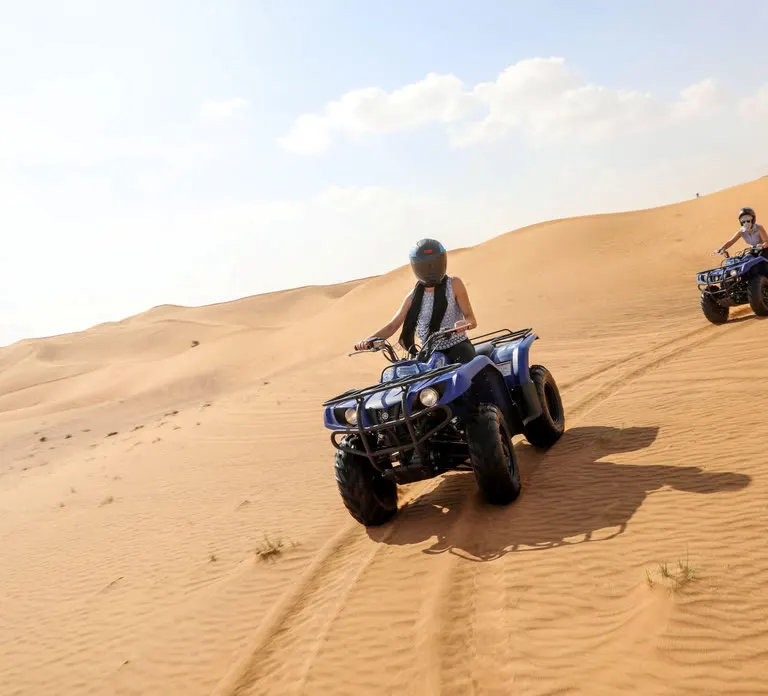
| Safari with a quad bikeIncludes a quad bike, on top of dune driving, camels and sandboarding | 337 AED per person |
- Desert
- Al Khatim, on the way to Al Ain
- Drive from the city
- 45–60 minutes
- Pick-up
- From your hotel in Abu Dhabi
- Children
- From age 3
What a desert safari in Abu Dhabi looks like
An air-conditioned 4x4 picks you up from your hotel in Abu Dhabi, and within 45 to 60 minutes you are in the Al Khatim dunes.
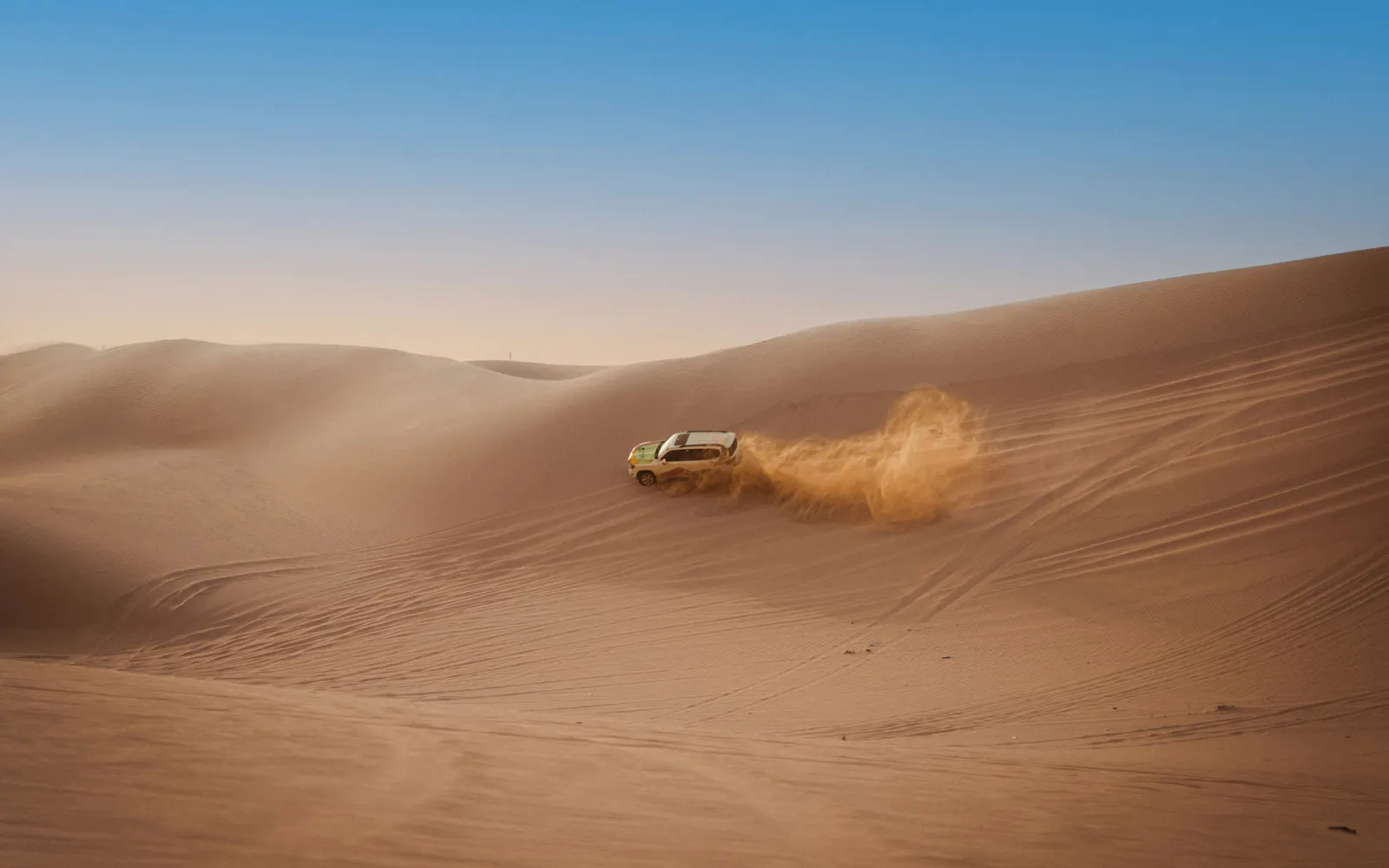
You drive the dunes with a professional driver, up and down the sand.
Desert activities according to the option you chose.
The 4x4 takes you back to your hotel.
An Abu Dhabi desert safari starts right at your hotel door. A 4x4 jeep picks you up in the city, and within 45 to 60 minutes you're among the dunes of Al Khatim, the desert between Abu Dhabi and Al Ain. It's the safari for anyone staying in Abu Dhabi: no need to travel to Dubai, and no need for a full day trip to Liwa.
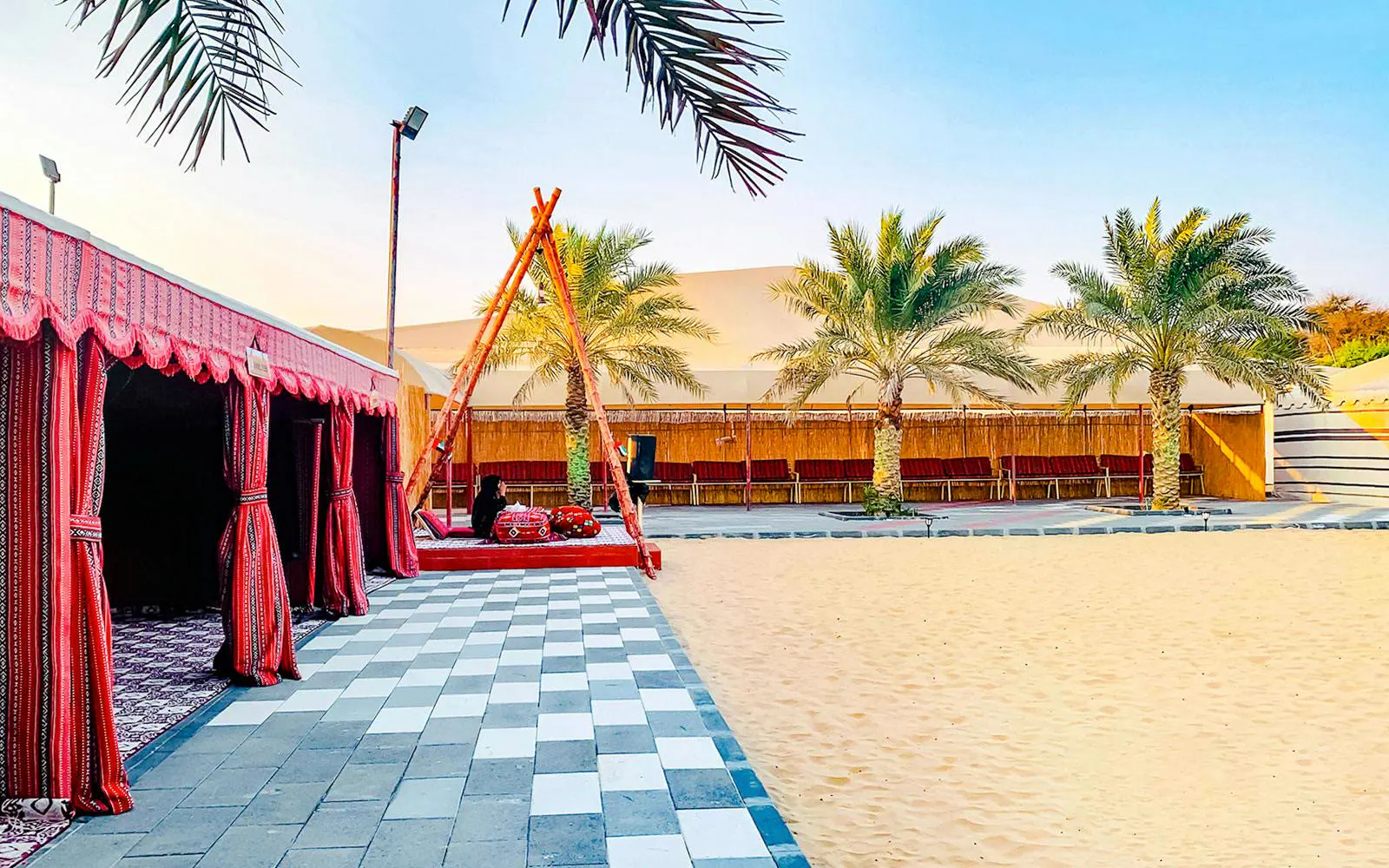
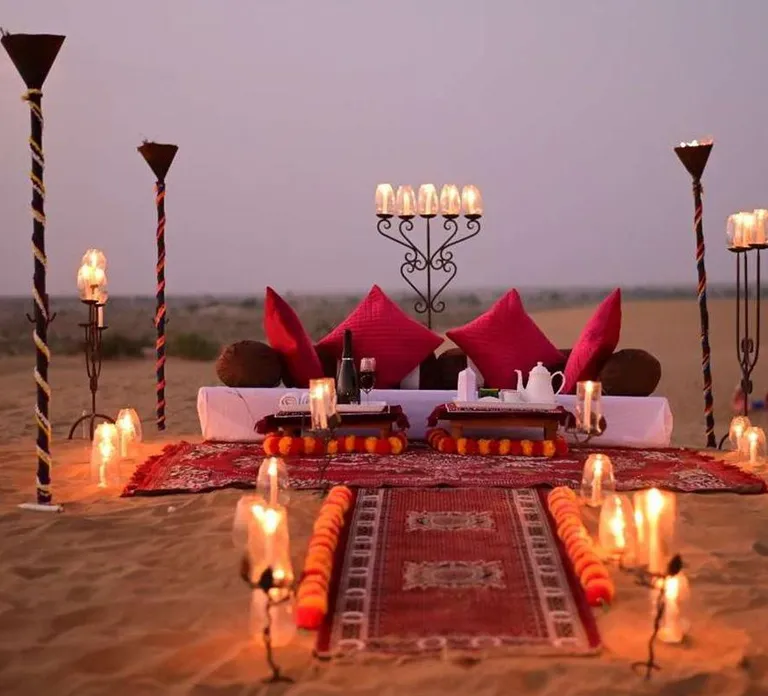
Al Khatim is the area most safaris from the capital head to. It's the desert between Abu Dhabi and Al Ain, and overnight camps are set up there too. The dunes here are gold and orange, and the camps are built Bedouin-style: rugs, low cushions, Arabic coffee and dates.
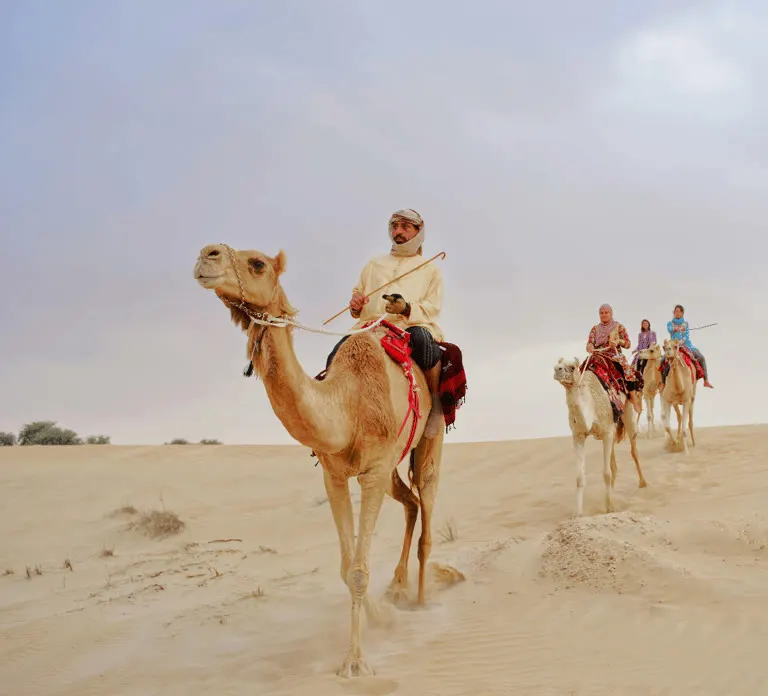
There are a few safari types. The evening safari is the most popular: you depart in the afternoon, drive the dunes by jeep, stop at a camel farm, watch the sunset from atop a dune, and finish at the camp with a BBQ dinner and shows. The morning safari is shorter: a dune drive, sandboarding, a short camel ride and a photo stop, before the midday heat sets in.
Anyone wanting more adrenaline can choose a safari with a quad bike, where you drive yourself over the dunes alongside the jeep ride.
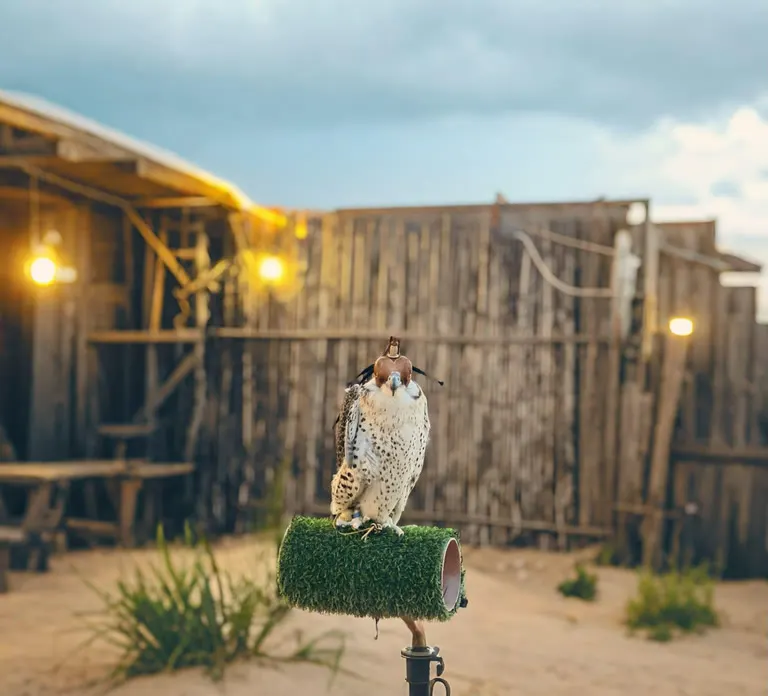
At the evening safari camp, there's usually a tanoura dance, belly dancing, henna painting, shisha and photos in traditional Arabic dress. Some options also let you take photos with a falcon. There's no belly dancing during Ramadan.
What's the difference from a Dubai safari? Mainly the departure point. On this safari, pickup is from Abu Dhabi, and the drive to the desert is short. Anyone in Dubai will usually book a safari departing from Dubai, and anyone wanting a taller, wilder desert, with a full day on the road, will choose the Liwa safari.
The safari suits families, couples and groups. On shared tours, children age 3 and up can join.
The dune drive is the wild part of the evening, and it has rules. Seatbelts are required throughout the drive, and the drivers are experienced desert drivers. Because of the speed, the dune drive is off-limits to infants, and it's not suitable for pregnant women or anyone with back or heart conditions. Desert evenings turn cool in winter, so bring a light jacket.
The desert isn't just scenery. More than 80 percent of the UAE's land is desert, and the country asks visitors to leave nothing behind. Plastic left in the sand is dangerous to wildlife: one study documented about 300 camels that died since 2008 after swallowing plastic. A 1999 federal law protects the environment, and anyone who harms it faces a fine.
Arabic coffee is much more than a drink. In 2015, the tradition of Arabic coffee, a symbol of generosity, was inscribed on UNESCO's Representative List of the Intangible Cultural Heritage of Humanity, on a joint application from the United Arab Emirates, Saudi Arabia, Oman and Qatar. The beans are sorted, washed, dried and roasted until they turn red or brown, then ground and brewed into a strong coffee, with cardamom boiled in. In the past it was brewed over a fire pit, and later on a small clay hearth in a corner of the majlis, the guest room.
There is also serving etiquette. The server holds the pot in the left hand and the cup in the right, and the guest receives and returns the cup with the right hand. The oldest or most important guest is served first, each cup is filled only about a quarter full, and it can be topped up. The custom is to drink at least one cup and no more than three. Honouring a guest is incomplete without coffee, even when a banquet is held in the guest's honour.
The date palm is part of the heritage too. In 2019, date palm culture was inscribed on UNESCO's list. It covers caring for the tree, crafts made from its leaves, fronds and fibres, and social and ceremonial customs. The countries that submitted the application include the United Arab Emirates.
Falconry is another ancient tradition of the region. UNESCO has inscribed it as living heritage, and the United Arab Emirates is one of the countries on the list. It is the traditional art of training and flying falcons. It has been practised for more than 4,000 years, and began as a way of obtaining food.
Anyone who wants to compare types of desert can read the official Abu Dhabi tourism website. The Liwa and Al Dhafra area has dunes such as Tel Moreeb, which rises more than 300 metres. Trips there are usually for a full day or overnight, not half a day.
What is included
Included
- Pick-up and drop-off at your Abu Dhabi hotel
- An air-conditioned 4x4 with a professional driver
- Dune driving
- Sandboarding
- A stop at a camel farm and a short ride
- Water and soft drinks
- On the evening safari: a buffet dinner, coffee and dates, henna and shows
Not included
- A quad bike, if an option including one was not chosen
- Desert buggy
- Alcoholic drinks
- Personal expenses
What you will see and do
- Dune drive: 30–40 minutes of a 4x4 jeep riding up and down the dunes, with a professional driver.
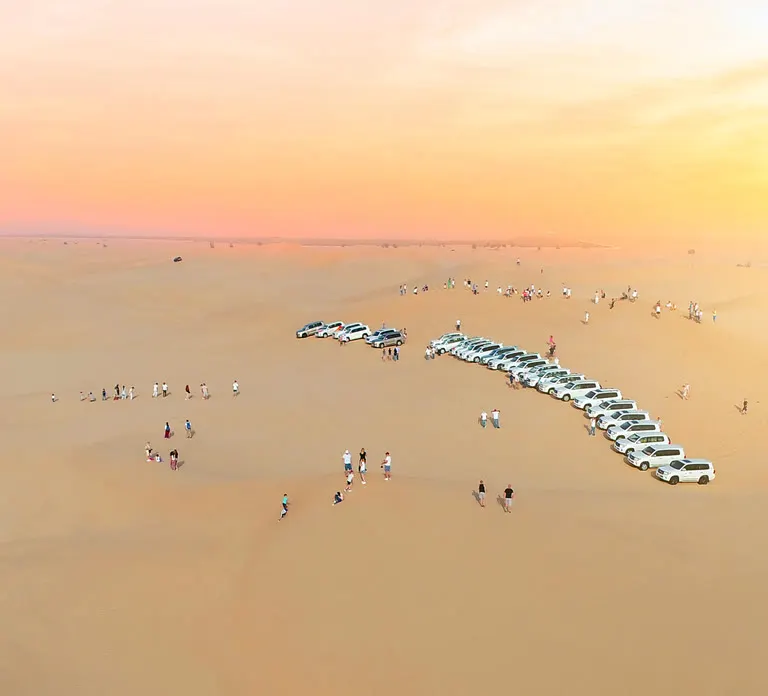
- Desert sunset: A stop atop a high dune as the sun sets, on the evening safari.
- Camel farm: A stop by the camels and a short ride.
- Sandboarding: Boarding down the dune, suitable for beginners too.
- Bedouin-style camp: Arabic coffee, dates, low tables and cushions.
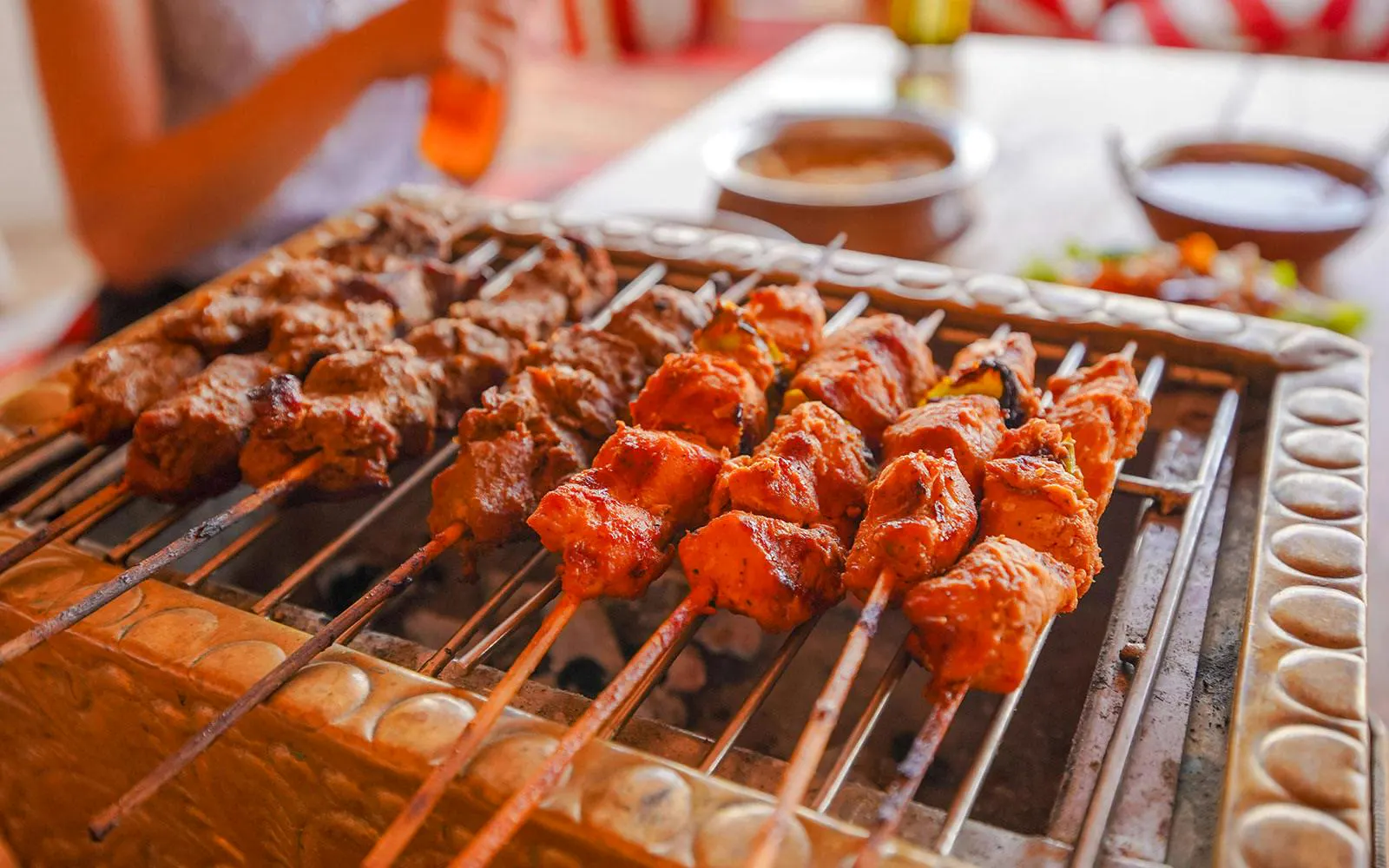
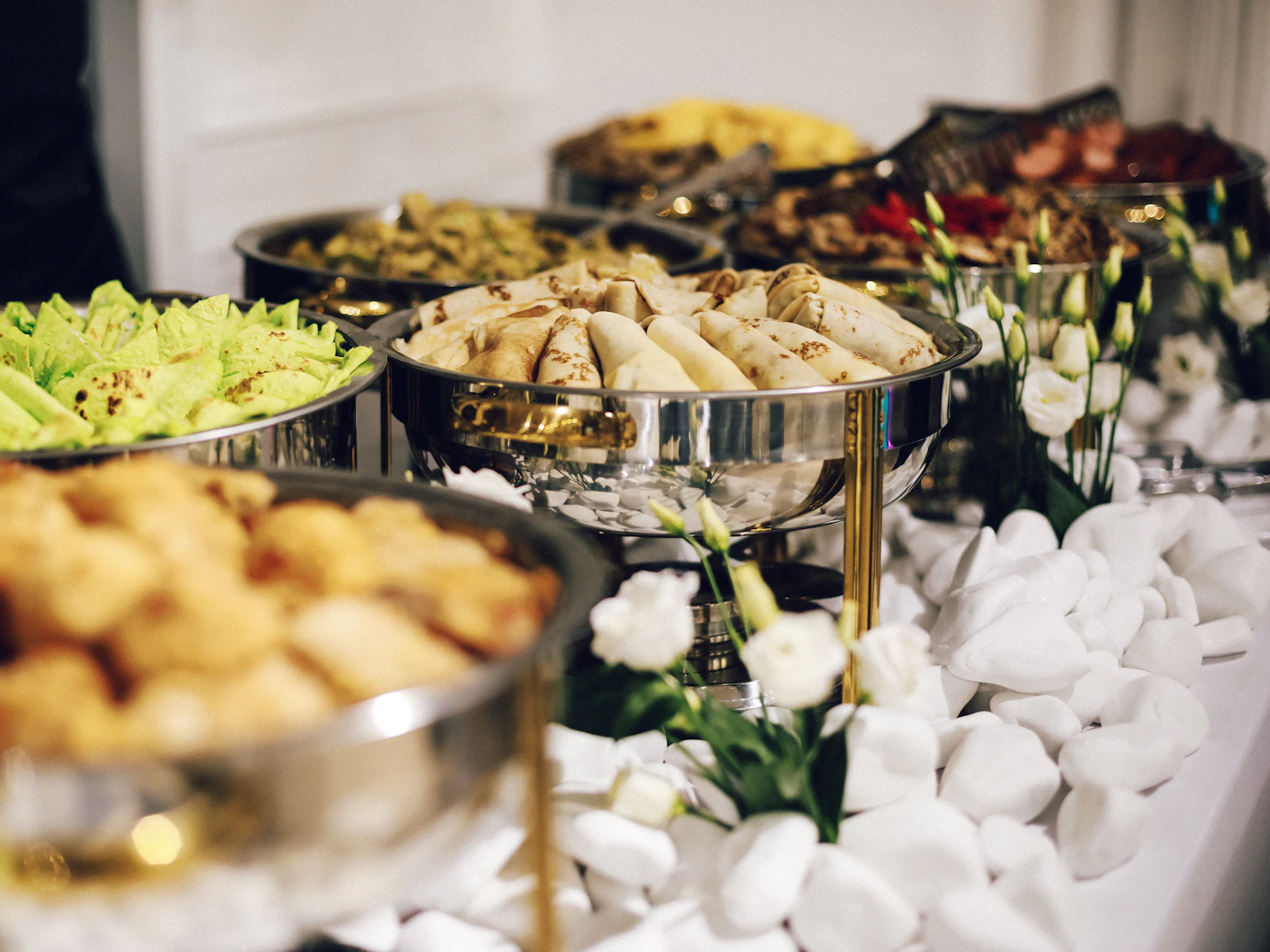
- Dinner at the camp: A buffet with meat, Arabic salads and a vegetarian option.
- Evening shows: Tanoura dance and belly dancing under the open sky.
- The Arabic coffee ritual: a small cup filled a quarter full, received in the right hand, and topped up on request.
Who it suits
Good for…
- Anyone staying in Abu Dhabi who wants a safari without traveling to Dubai
- Families with children age 3 and up
- Couples wanting a sunset and dinner in the desert
Less suited to…
- Anyone prone to motion sickness, because of the dune driving
- Anyone looking for Liwa's towering dunes
- Anyone staying in Dubai who doesn't want to travel to Abu Dhabi
- Pregnant women and anyone with back or heart conditions, because of the dune driving
- Infants: the dune drive is off-limits to them
When to go
The morning safari sets out early, to make the most of the time before the midday heat. The evening safari is built around sunset, so the pick-up time changes through the year. We will confirm the exact time with you in writing when you book. It's best to drink plenty and bring sun protection, because desert temperatures vary a great deal from season to season.
Getting there
- Hotel pickup: Every safari option includes pickup and drop-off at your hotel or a pickup point in Abu Dhabi, in an air-conditioned 4x4 jeep.
- Drive time: 45 to 60 minutes from the city to the desert camp at Al Khatim.
- Location: Al Khatim sits between Abu Dhabi and Al Ain.
- From Dubai: Pickup is in Abu Dhabi. Anyone staying in Dubai needs to reach the pickup point on their own.
Good to know
- Clothing: comfortable, weather-appropriate clothes. Open shoes are best, so your footwear doesn't fill with sand.
- Sun protection: a hat, sunglasses, sunscreen and a scarf.
- Water: bottled water is in the vehicle, but drink plenty throughout the tour.
- Children: on shared tours, ages 3 to 11 count as children, and 12 and up as adults.
- Ramadan: there's no belly dancing at the camp during Ramadan.
- The dune drive is bumpy. Anyone sensitive to motion can ask the driver to take it easier.
- Seatbelts are required throughout the dune drive. Winter evenings get cooler, so bring a light jacket.
- Pickup time depends on the safari type and season. We'll confirm it in writing at booking.
- Arabic coffee: it is customary to receive and return the cup with the right hand, and to drink at least one cup and no more than three.
- Dehydration: the official Abu Dhabi tourism website recommends bringing water and, if needed, electrolytes, to avoid dehydration.
Buy online
Book and pay right here on the site · secure paymentFrequently asked questions
Where do you go on an Abu Dhabi desert safari?
What's the difference between an Abu Dhabi safari and a Dubai safari?
What's the difference between an Abu Dhabi safari and a Liwa safari?
Is an Abu Dhabi desert safari good for kids?
What does an Abu Dhabi evening safari include?
Can I go on a desert safari while pregnant?
Can I bring an infant on the safari?
What should I wear on a desert safari?
Why is Arabic coffee so important?
What is the connection between the date palm and the local culture?
Are there higher dunes in Abu Dhabi?
Keep exploring
More experiences in Abu Dhabi




Where to stay
Recommended hotels in Abu Dhabi




The perfect combination
Also in Dubai







Plan smart
From the magazine

More inspiration