

DDCR reserve · morning, about 5 hours
Tour of the Dubai Desert Conservation Reserve
A quiet 4x4 drive with a guide through Dubai's large nature reserve, looking for herds of Arabian oryx, gazelles and desert birds.
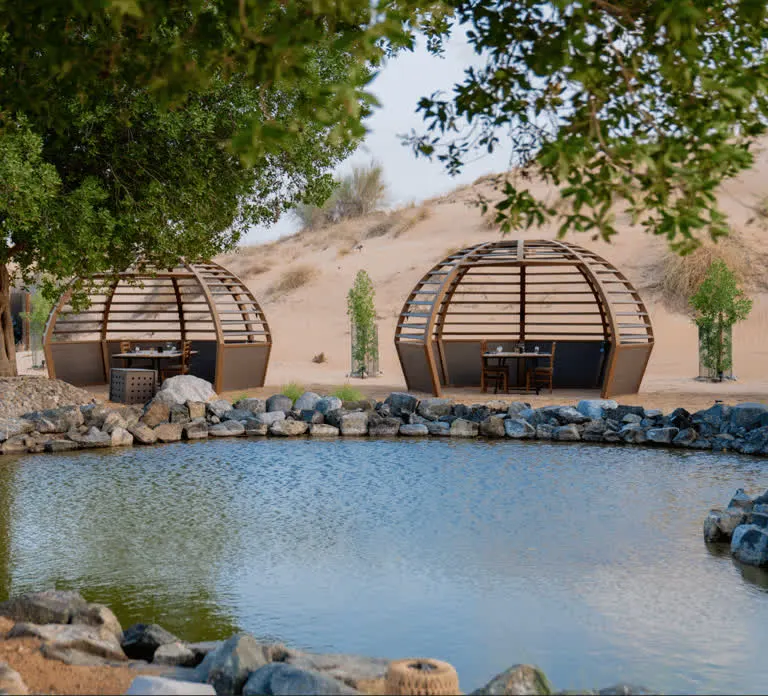

Tickets and prices
| Option | Price |
|---|---|
| Morning conservation drive – about 5 hoursOff-road drive with a guide in the reserve, with hotel pickup and drop-off | 715 AED per person |
| Land Rover conservation drive with breakfast at Al MahaThe tour with breakfast at Al Maha and a short camel ride, with hotel pickup | 2350 AED per person |
| Visitor centre – entry | Not available right now |
- Area
- 225 km², about 5% of Dubai's land
- Tour
- Morning, about 5 hours including transfers
- Vehicle
- Off-road vehicle with a guide
- What you see
- Arabian oryx, gazelles, birds
What a visit to the Dubai Desert Conservation Reserve looks like
You arrive at the Dubai Desert Conservation Reserve (DDCR), the first national park of the UAE.
The reserve is fenced, and activity inside it follows fixed routes.
The visit depends on the option you chose.
At the end you head back.
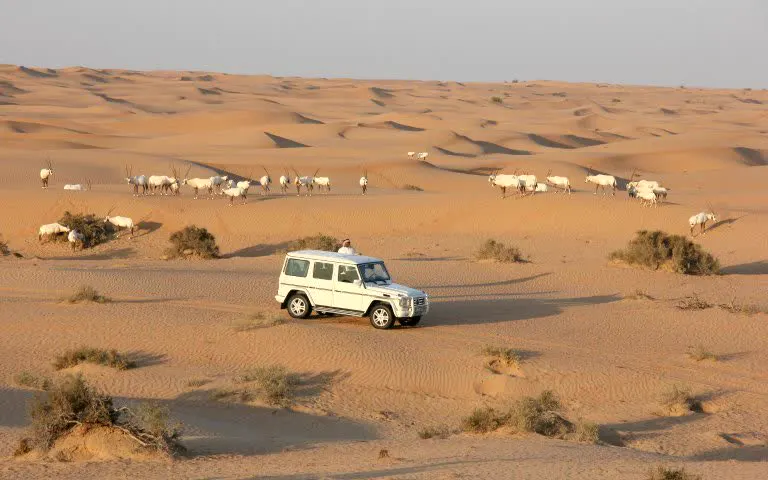
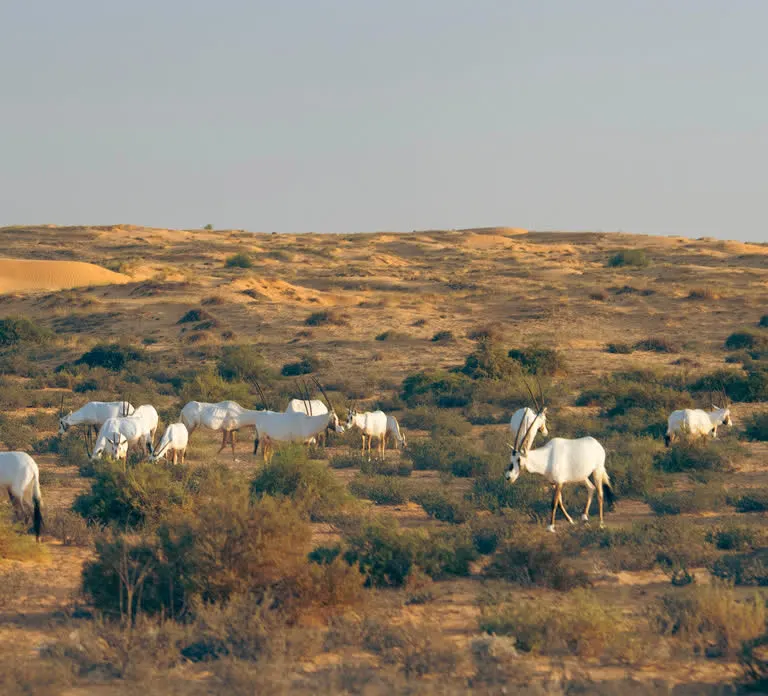
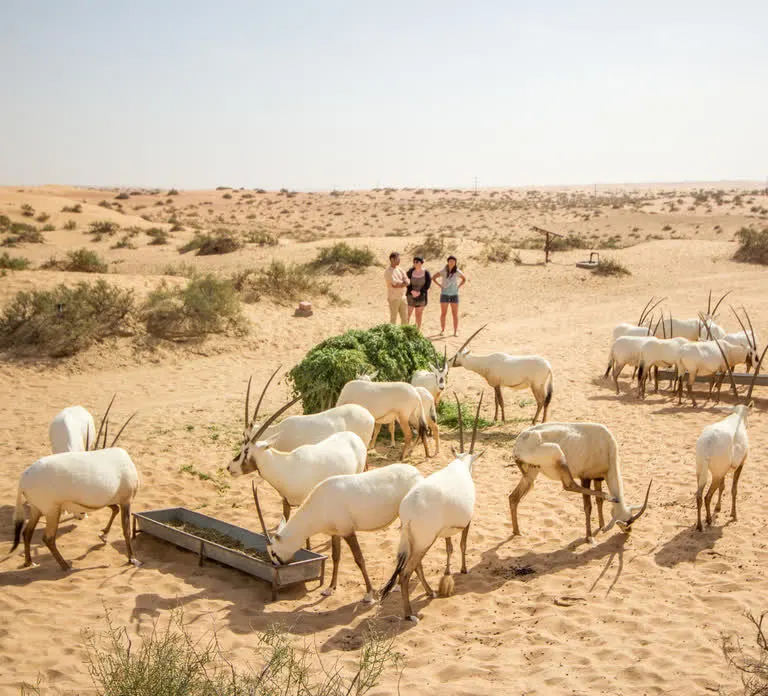
A tour of the Dubai Desert Conservation Reserve is the quiet side of the desert. Instead of charging over the dunes, you drive slowly in a 4x4 with a guide and look for wildlife. The main target is the Arabian oryx, a white antelope with long straight horns, which lives in the reserve in free-roaming herds.
The Dubai Desert Conservation Reserve, or DDCR, is the first national park in the United Arab Emirates. It covers 225 sq km, about 5% of the emirate of Dubai, and it is fenced to protect the plants and the animals living in it. The reserve is now home to more than 50 plant species, 120 bird species and 43 species of mammals and reptiles.
The reserve is a member of the IUCN, the International Union for Conservation of Nature, and is a candidate for its Green List. Its goal is to restore the desert habitat to its natural state, so that local species thrive again. That is why there is no free movement inside it: activities run on set routes, with guides and with companies chosen for the purpose.
What does the tour look like? You are picked up from your hotel early in the morning, around sunrise, and driven to the reserve. There you switch to a 4x4, and the guide leads you along a route between the dunes. The guide explains the desert's ecology and looks for the wildlife herds. Along the way you usually see oryx herds, gazelles, desert monitor lizards and many birds. If you are lucky you will also see Gordon's wildcat, a rare species.
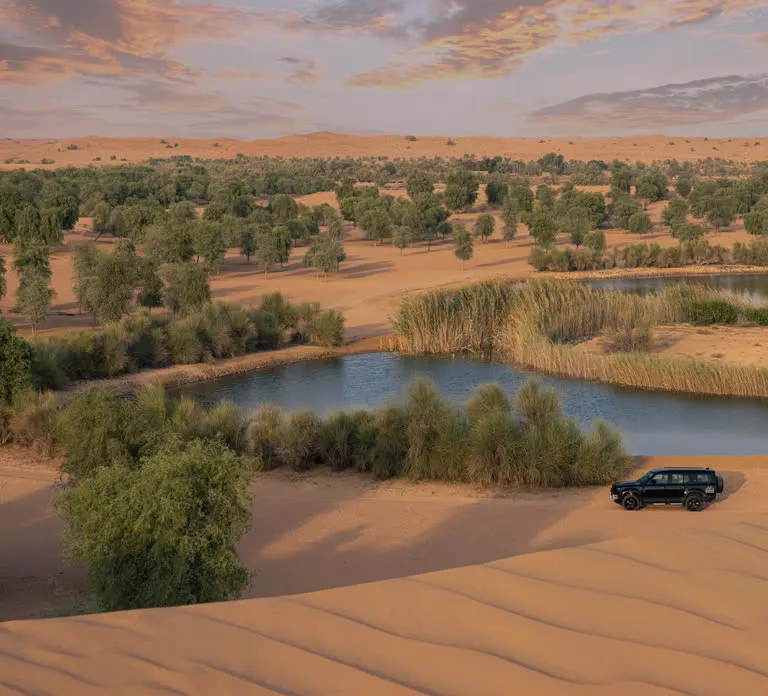
There is also a breakfast tour. On this one you ride in a Land Rover Defender, stop beside a small, secluded desert lake, and have breakfast at the Al Maha desert hotel. There is also a short camel ride around the oasis, and you receive a small gift, a head covering and a stainless steel water bottle. You return to your hotel at midday, between 12:00 and 12:30.
Anyone who prefers a shorter visit can go to the reserve's visitor centre. It has several areas: a culture area, a screening room, a habitats hall and a night hall. In the night hall a dome screen shows the desert's nightlife. There is also a film about the history of the reserve and an interactive station with a map of the reserve. The visit to the centre is unguided, and you get there on your own.
Tip: anyone coming with children who are curious about desert animals should start at the visitor centre. There you learn what to look for, and the tour of the reserve then becomes more interesting.
The reserve is fenced, and access is limited. Anyone who wants to see the plants and animals inside has to join an organised tour run by one of the tour companies that operate in the reserve.
The reserve has three habitats: gravel plains, sand dunes and valley dunes. Among the plants, the ghaf tree stands out, a local desert tree which is counted among the symbols of the region. Some of the ghaf trees in the reserve are almost 100 years old, and about 6,000 local plants and shrubs have also been planted there.
The reserve was set up mainly to protect the Arabian oryx.
Besides the oryx, several animals and birds are often seen in the reserve: Arabian gazelles and sand gazelles, the desert wheatear, the blue-cheeked bee-eater, the brown-necked raven and the white-spotted sand lizard. More elusive animals, such as the red fox, the horned viper and the eagle owl, are also recorded in the reserve.
The reserve is also used for research. Research groups from universities and other organisations have studied it year after year, and every research proposal goes to a research committee for approval. Cameras installed near watering holes track the health and numbers of the animals with almost no human contact.
The visitor centre presents the reserve's conservation achievements and scientific findings over the past two decades. The displays include desert truffles and archaeological finds discovered in the reserve.
What is included
Included
- Hotel pick-up and drop-off in Dubai, on the drives
- A 4x4 drive with a guide inside the reserve
- Breakfast at Al Maha, on the drive with breakfast
- A short camel ride, on the drive with breakfast
- Entry to the visitor centre, on the visitor centre ticket
Not included
- Tips
- Photographs
- Food and drink at the visitor centre
- Transfer to the visitor centre
What you will see and do
- Arabian oryx: herds living free in the reserve.
- Gazelles, desert lizards and birds: depending on the season and your luck.
- A 4x4 and a guide: a slow drive on set routes, with commentary about the desert.
- The Emirates' first national park: 225 sq km of protected desert.
- Breakfast at Al Maha: on the breakfast tour, after a stop beside a small desert lake.
- A short camel ride: on some of the breakfast tours.
- The visitor centre: a night hall with a dome screen, a film and an interactive map.
Who it suits
Good for…
- Nature lovers and wildlife photographers.
- Families with children, including a visit to the visitor centre.
- Anyone who has already done a dune safari and is after the quiet side of the desert.
- Couples who want a calm desert morning with breakfast.
Less suited to…
- Anyone after adrenaline and a wild ride over the dunes.
- Anyone who does not like early starts: pick-up is around sunrise.
- Anyone who wants to see the reserve without a guide: without a guide you can only visit the visitor centre.
When to go
The tour of the Dubai Desert Conservation Reserve takes place in the morning, before the midday heat. The most comfortable season is October to April. In summer the drive starts earlier, according to sunrise. The visitor centre also suits the hot hours, as it is indoors.
Getting there
- On the tours: hotel pick-up in Dubai early in the morning, around 6:30-7:30, returning at midday.
- You reach the visitor centre on your own, by private car or taxi.
- There is free parking at the visitor centre.
Good to know
- Bring sunscreen, sunglasses, a hat and comfortable shoes.
- The morning tour is from age 4. On the breakfast tour, children from age 5.
- Visitor centre: children under 5 enter free.
- The visitor centre is accessible to people with disabilities and has a cafe.
- The animals live free, so there is no guarantee of exactly what you will see.
- The pick-up time depends on the time of sunrise. We will confirm the exact time in writing when you book.
- The best chance of seeing wildlife in the reserve is at sunrise or towards evening.
Buy online
Book and pay right here on the site · secure paymentFrequently asked questions
What is the Dubai Desert Conservation Reserve?
What do you see on a tour of the Dubai Desert Conservation Reserve?
How long does the tour take?
Is it like a dune safari?
Can you enter the reserve without a guide?
Is it suitable for children?
When is the best time to come?
What is the status of the Arabian oryx?
Who oversees the reserve?
Keep exploring
More experiences in Dubai








Where to stay
Recommended hotels in Dubai








The perfect combination
Also in Abu Dhabi







Plan smart
From the magazine



More inspiration