

Mushrif · 2–3 hours
Dubai Crocodile Park
Around 250 Nile crocodiles in an African-styled park, with an underwater aquarium and a museum that tells the story of 200 million years of crocodiles. Next to Mushrif Park.
Tickets and prices
| Option | Price |
|---|---|
| Park entryCrocodile park, nature museum and aquarium in one ticket, without transfer | 90 AED per person |
- Crocodiles
- About 250 Nile crocodiles
- Area
- 20,000 m²
- Opened
- April 2023
- Hours
- 10:00 AM–8:00 PM
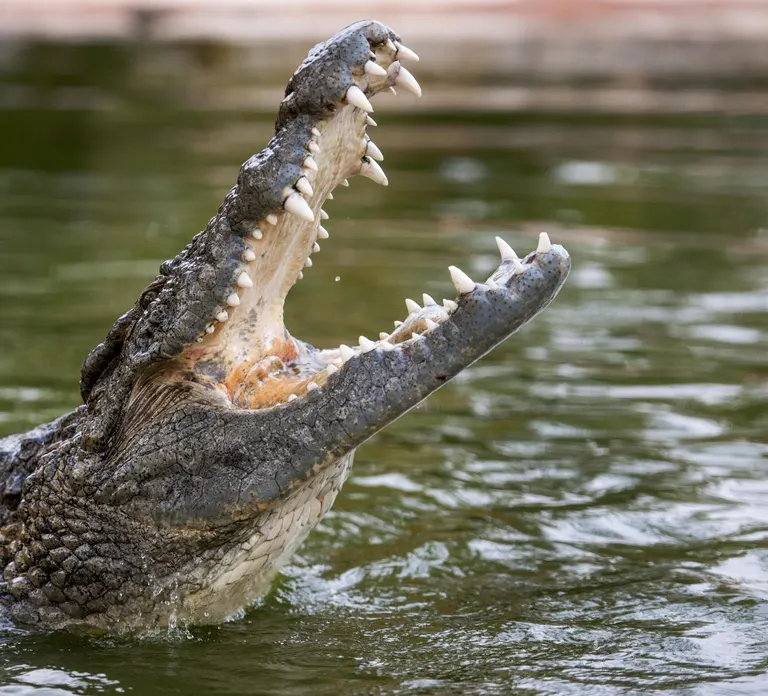
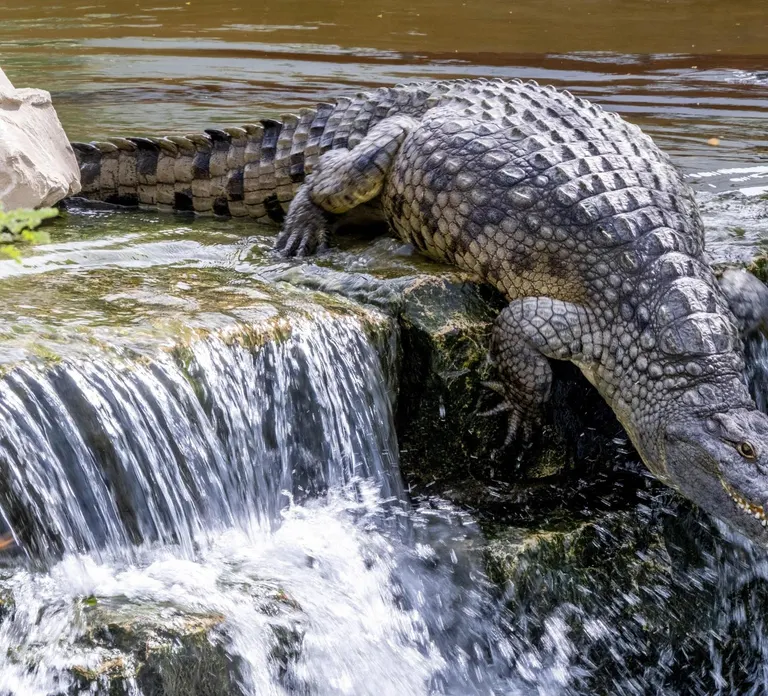
Dubai Crocodile Park is an African-themed park home to about 250 Nile crocodiles, from hatchlings to fully grown giants. Anyone looking for a crocodile park in Dubai, or an animal attraction for children that is not just another zoo, can see crocodiles up close here, above the water and below it.
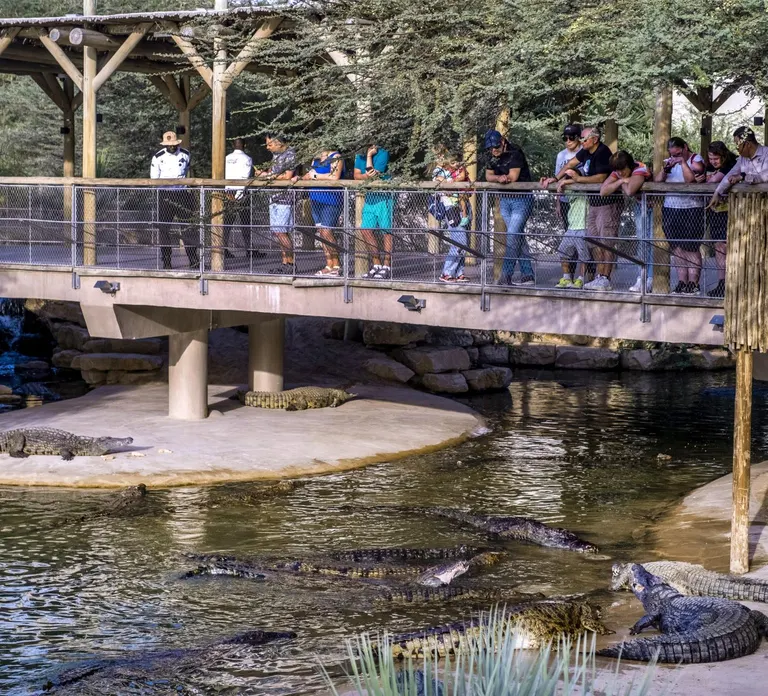
The park opened on 18.4.2023 and it covers 20,000 sqm of land and water. It is in the Mushrif neighbourhood, next to Mushrif Park, in eastern Dubai. The design recalls an African savannah landscape, with trees, lakes, wooden bridges and thatched-roof buildings.
The route through the park runs along several lakes, and from a number of viewing points you see the crocodiles lying on the sand, swimming or resting on the rocks. From the wooden bridge over one of the lakes you look straight down onto them. Nile crocodiles are among the largest reptiles in the world, and the adults are especially impressive up close.
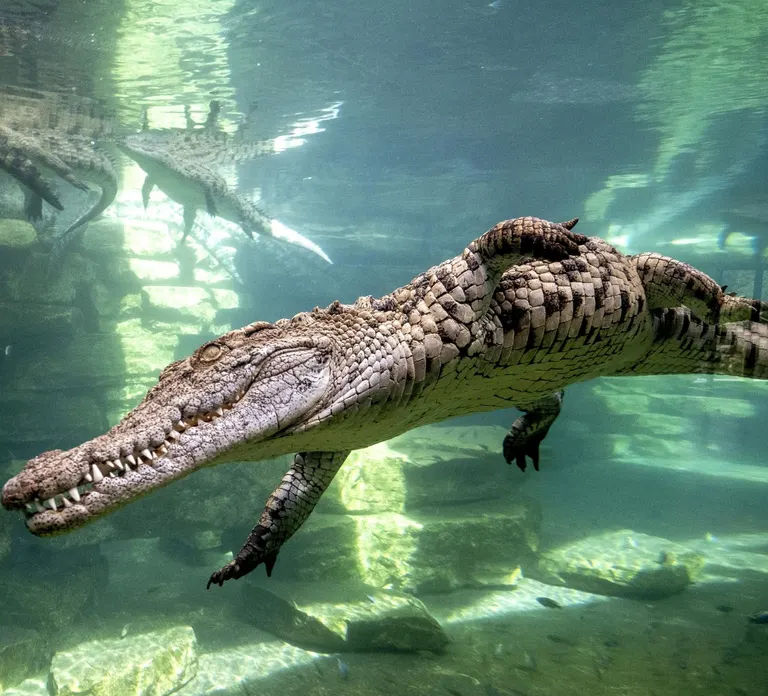
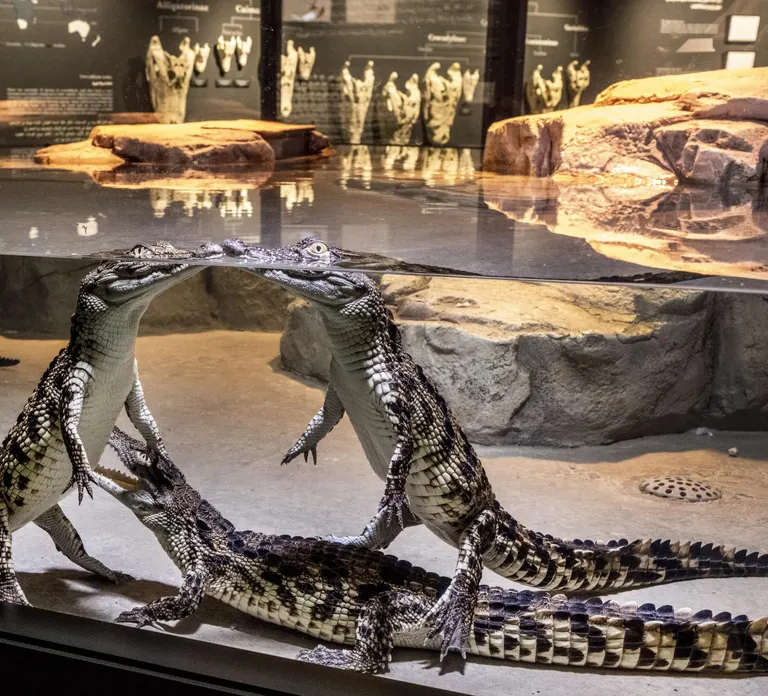
In the aquarium, designed after an African lake, you see the crocodiles underwater, through a glass wall. The aquarium water is temperature-controlled year round. It is an angle that is hard to catch in the wild: how a giant crocodile moves through water with almost no effort.
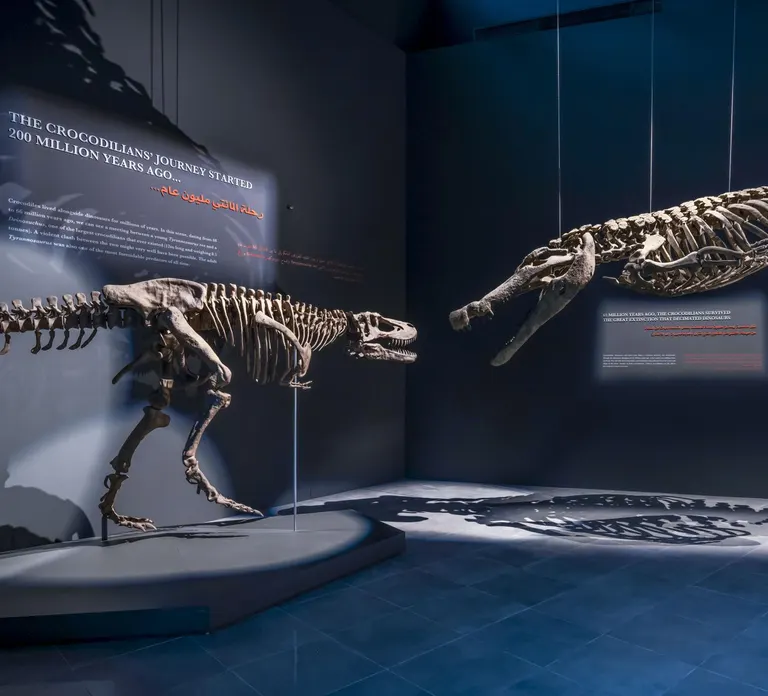
The park's nature museum tells the story of crocodiles across about 200 million years. It holds skeletons of ancient reptiles, displays on crocodile evolution and on conservation, and tanks with young crocodiles. This part is especially good for curious children, and it is indoors and air-conditioned.
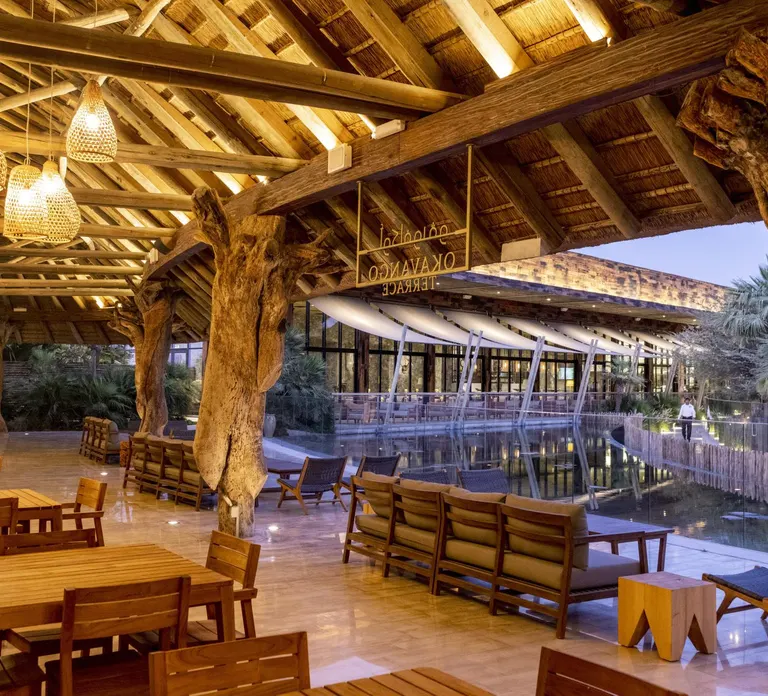
The park also has green, shaded areas, a souvenir shop and restaurants, and a covered waterside terrace where you can sit and rest. The ticket covers the park, the museum and the aquarium.
It suits families with children, nature lovers and anyone who has already seen Dubai's big attractions and is looking for something different.
The museum tells a journey of about 200 million years: how crocodiles evolved, which traits helped them survive even the extinction of the dinosaurs, and how they live both on land and in water.
The Nile crocodile lives in the wild across sub-Saharan Africa, in the Nile basin and in Madagascar. Its habitat is rivers, freshwater marshes and mangrove swamps. It spends part of its time on land, warming up in the sun, and part of it floating in the water.
A fully grown Nile crocodile averages about 5 metres in length and about 230 kilograms in weight. The largest reach about 6 metres and about 750 kilograms. It is a predator: its main food is fish, but it also eats birds and mammals, and even carrion. In a single meal it can eat up to half its own body weight.
In the wild, in the dry season, the female digs a nest in the sand close to permanent water and lays between 25 and 80 eggs in it. She guards the nest for about 3 months, and during that time she eats very little or nothing at all. The sex of the hatchlings is set by the temperature in the nest.
When the hatchlings emerge, the mother opens the nest and carries them in her mouth to the water. Each hatchling is about 30 centimetres long. They stay together under the watch of the adults for up to 3 months, and meanwhile feed on insects and small fish.
What is included
Included
- Entry to the Crocodile Park
- Entry to the natural history museum
- Entry to the aquarium
- Parking
- Return hotel transfer, on the private transfer option only
Not included
- Food and drink
- Shopping in the souvenir shop
- Hotel transfer on the standard option
What you will see and do
- About 250 Nile crocodiles, from hatchlings to giants.
- Aquarium: see the crocodiles underwater, through glass.
- Nature museum: 200 million years of crocodiles, with ancient skeletons.
- A wooden bridge and viewing points above the lakes.
- African savannah landscaping, with green, shaded areas.
- Restaurants, a waterside terrace and a souvenir shop.
- The park presents animal welfare and education as the basis of its work, and aims to teach about the importance of conserving and protecting crocodiles.
Who it suits
Good for…
- Families with children who love animals.
- Nature and photography lovers.
- Anyone visiting eastern Dubai or Mushrif Park.
- Anyone looking for a quiet attraction, away from the busy centre.
Less suited to…
- Anyone afraid of reptiles.
- Anyone looking for a zoo with a wide range of animals.
- Anyone in Dubai in summer, when the park closes for maintenance.
When to go
The park is open every day 10:00–20:00. In the summer months it closes for maintenance: in 2026 it was closed from 15 June to 14 September and reopened on 15 September. In winter, from October to April, walking between the lakes is far more pleasant. On hot days you can start in the air-conditioned museum and aquarium and head out to the lakes in the late afternoon.
Getting there
- The park is in Mushrif, next to Mushrif Park, in eastern Dubai.
- Taxi or Careem: the most convenient way to get there.
- By car: there is parking on site.
- Hotel transfer is included only with the private transfer option.
Good to know
- Open daily, 10:00-20:00.
- Children under 12 may enter only with an adult aged 16 or over.
- Feeding the animals is not allowed, and selfie sticks may not be used over the enclosures.
- Flash photography is not allowed during feeding.
- Part of the route is outdoors: hat, sunscreen and water on hot days.
- The museum and the aquarium are indoors and air-conditioned.
- In summer the park closes for maintenance. We will confirm the exact opening dates with you when you book.
Buy online
Book and pay right here on the site · secure paymentFrequently asked questions
How many crocodiles are there at Dubai Crocodile Park?
Where is Dubai Crocodile Park?
Is Dubai Crocodile Park open now?
What are the opening hours of the crocodile park?
What is there at the park besides the crocodiles?
Is the crocodile park suitable for children?
Can you watch the crocodiles being fed?
What does the museum tell?
How long does a Nile crocodile live?
Is the Nile crocodile endangered?
Keep exploring
More experiences in Dubai






Where to stay
Recommended hotels in Dubai





The perfect combination
Also in Abu Dhabi







Plan smart
From the magazine



More inspiration