
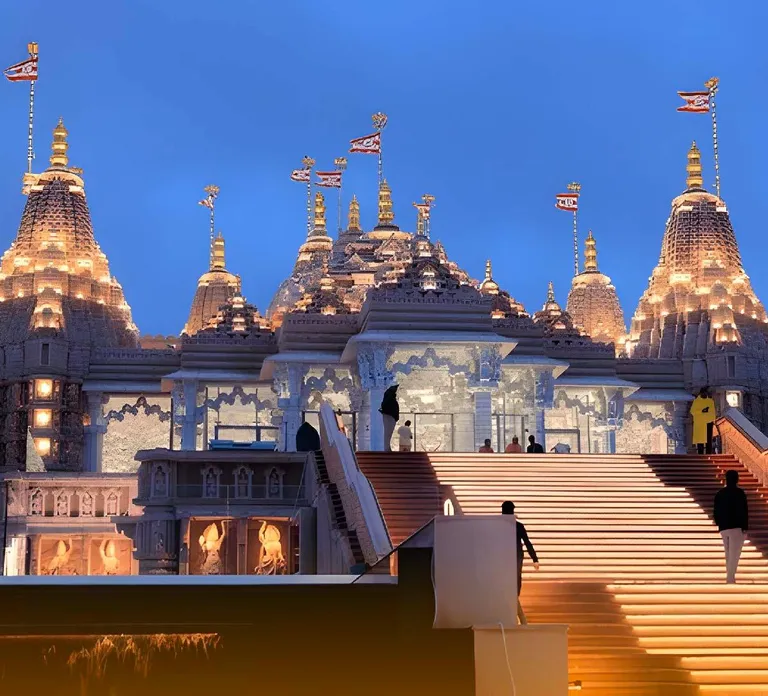
Abu Mureikhah · 1–2 hours at the temple
BAPS Hindu Mandir in Abu Dhabi
The first traditional stone Hindu temple in the Middle East: pink sandstone and white marble, carved by hand, with 7 spires for the seven emirates. Entry is by advance registration and in modest dress.

Tickets and prices
| Option | Price |
|---|---|
| A tour from Abu Dhabi: the temple and Sheikh Zayed MosqueVisit to the temple and mosque, bottled water included | 204 AED per person |
| A tour from Dubai: the temple and Sheikh Zayed MosqueThe same visit, with hotel pickup and drop-off depending on the tour | 208 AED per person |
| A private tour: the temple and the mosqueA visit for your group only, with bottled water | 1222 AED per group |
- Hours
- Tuesday–Sunday 9:00 AM–8:00 PM
- Closed on
- Monday
- Entry
- By advance registration only
- Opened to the public
- 1 March 2024
What the BAPS Temple and Sheikh Zayed Mosque tour looks like
Registration in advance is required. You show a QR code at the gate and a physical ID.
Modest dress: no shorts, no skirt above the knee and no tank tops.
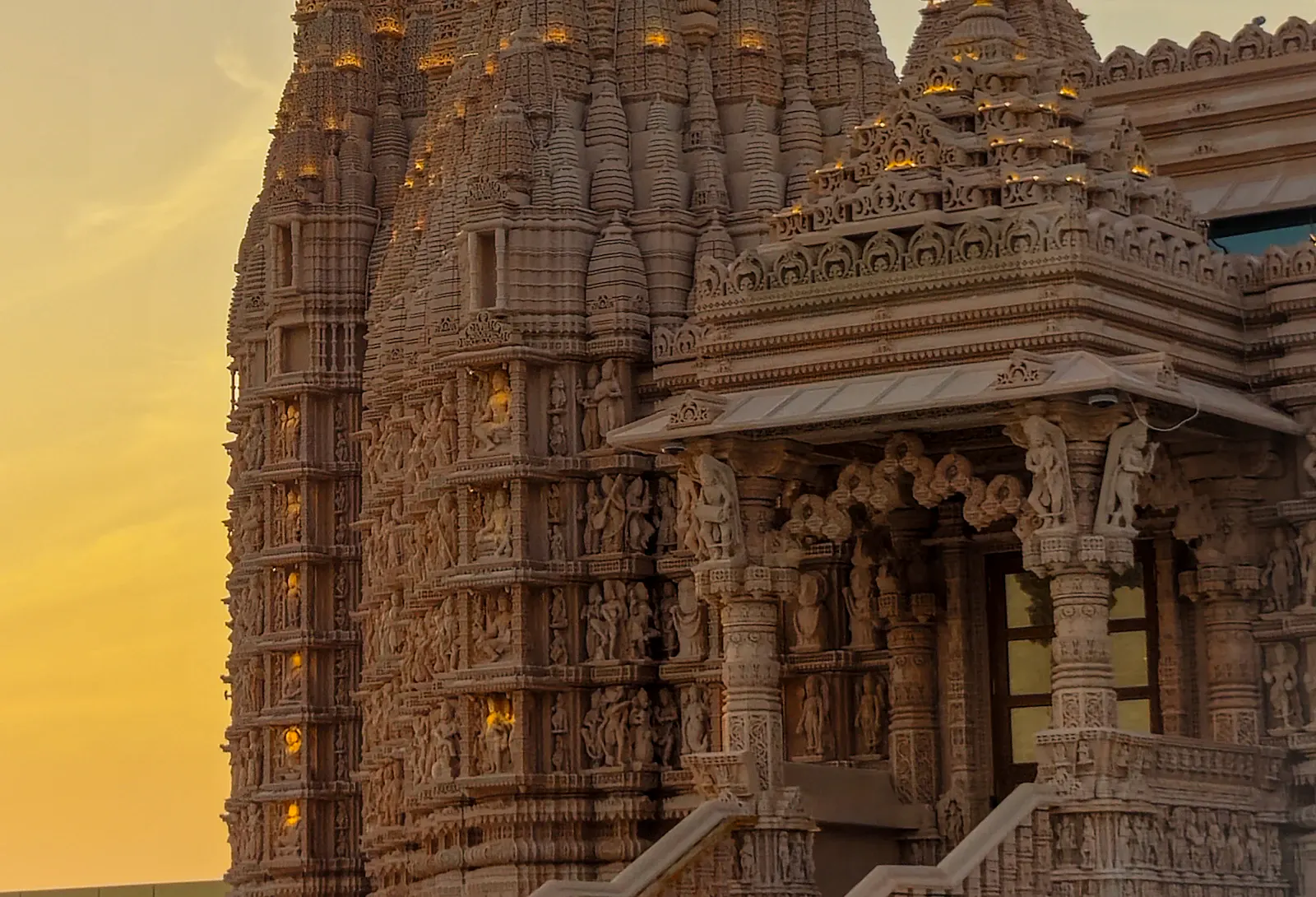
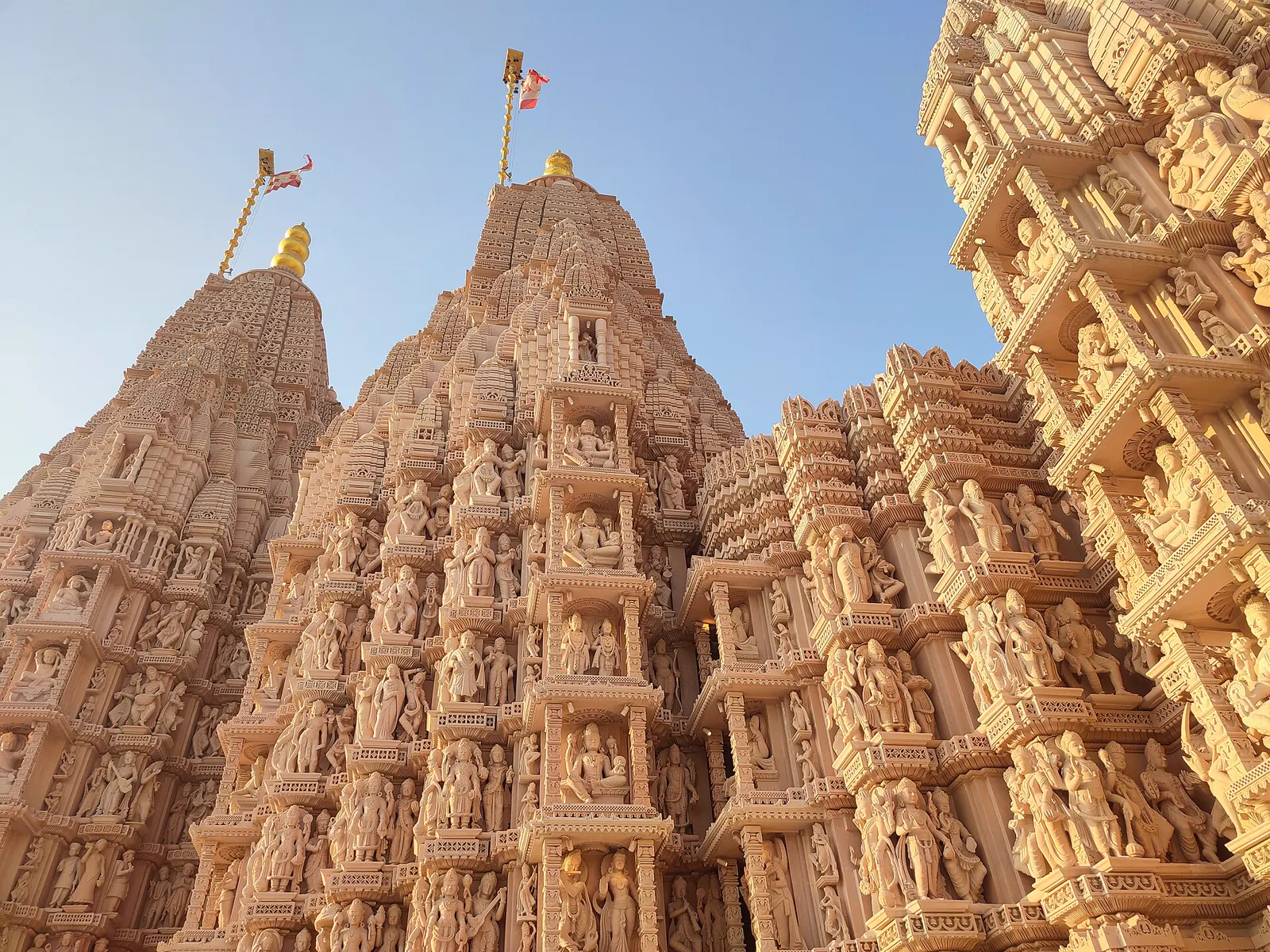
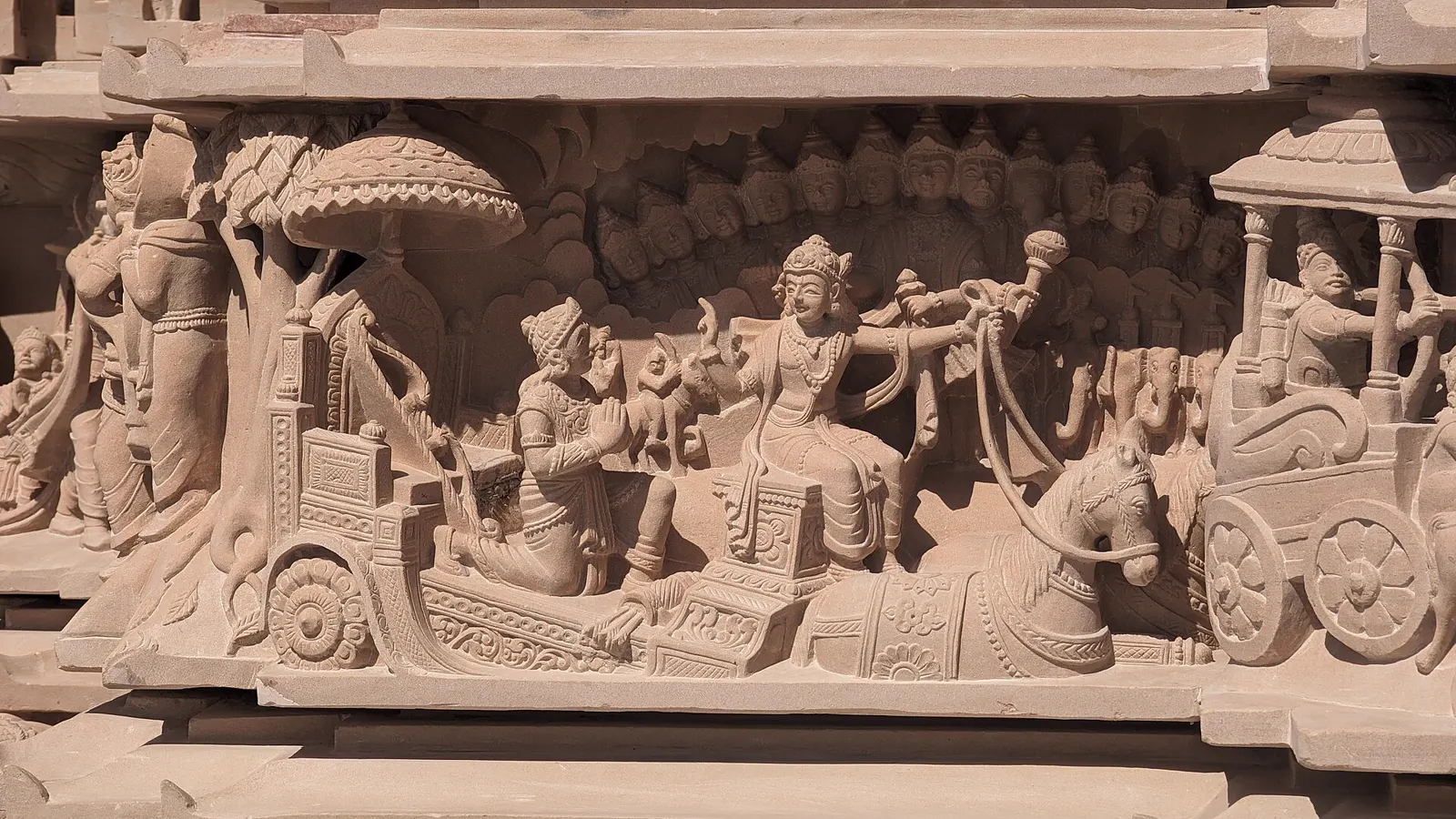
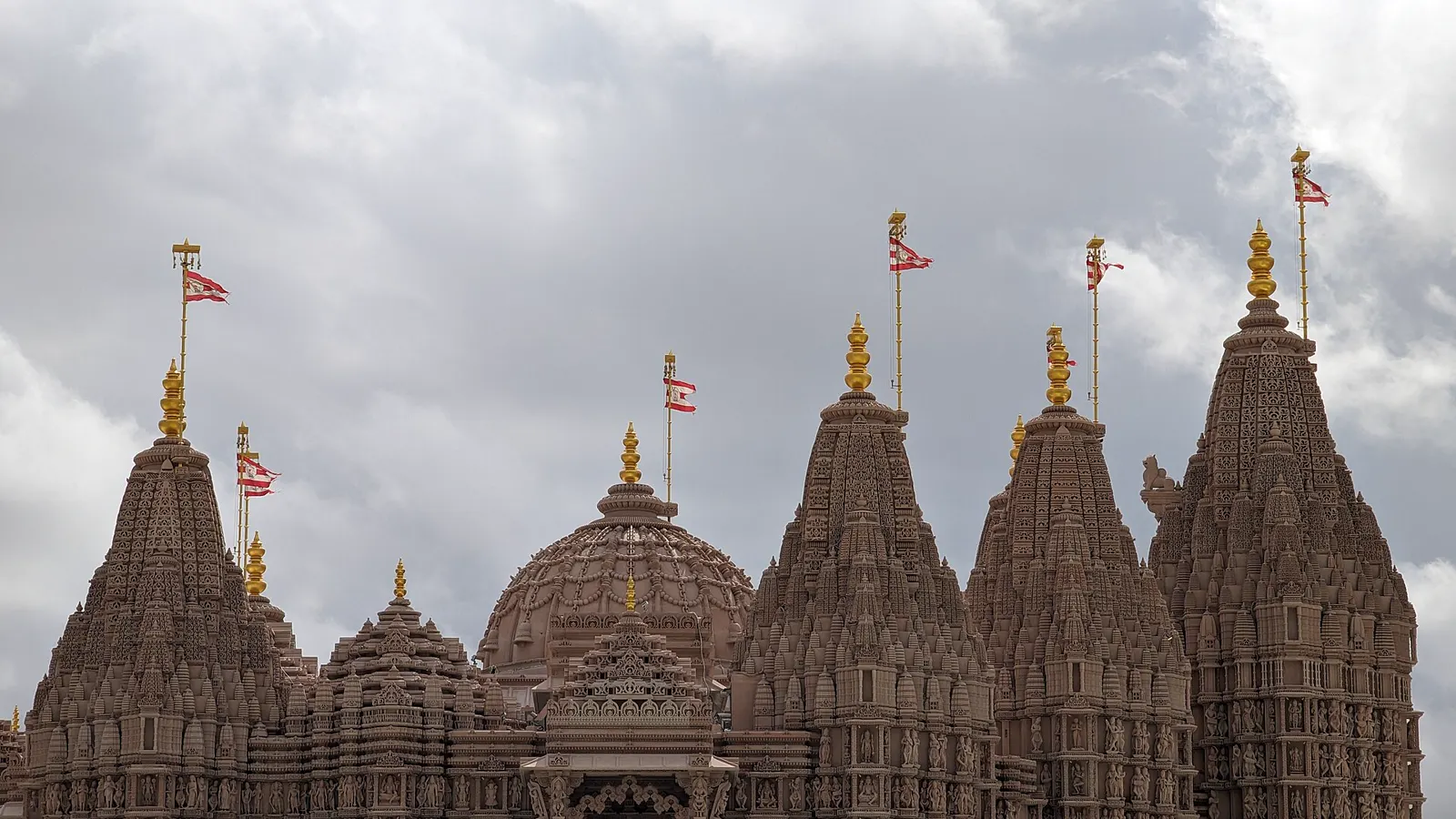
The temple is made of pink sandstone and white marble, with 7 spires and 402 hand-carved marble pillars.
The Sheikh Zayed Grand Mosque, on the combined tour.
We confirm the details of the option you chose in writing when you book.
The BAPS Hindu Mandir in Abu Dhabi is the first traditional stone Hindu temple in the Middle East. It's located in the Abu Mureikha area, right by the highway between Dubai and Abu Dhabi. The temple was inaugurated on February 14, 2024, and opened to the general public on March 1, 2024. It's open to visitors of all faiths.
The land was granted in 2015 by Sheikh Mohamed bin Zayed, then Crown Prince and now President of the UAE. The temple was built according to the ancient Hindu architecture and sculpture texts (Shilpa Shastras), with no iron, no steel and no reinforced concrete. The exterior is made of pink sandstone from Rajasthan, and the interior is clad in Italian white marble.
The 7 shikharas (spires) represent the seven emirates, and beneath 7 domes the stories of different deities are told. Inside there are 402 hand-carved white marble pillars, and more than a thousand statues. Thousands of artisans from Rajasthan and Gujarat worked on the stones in India, and they were shipped to Abu Dhabi and assembled on site.
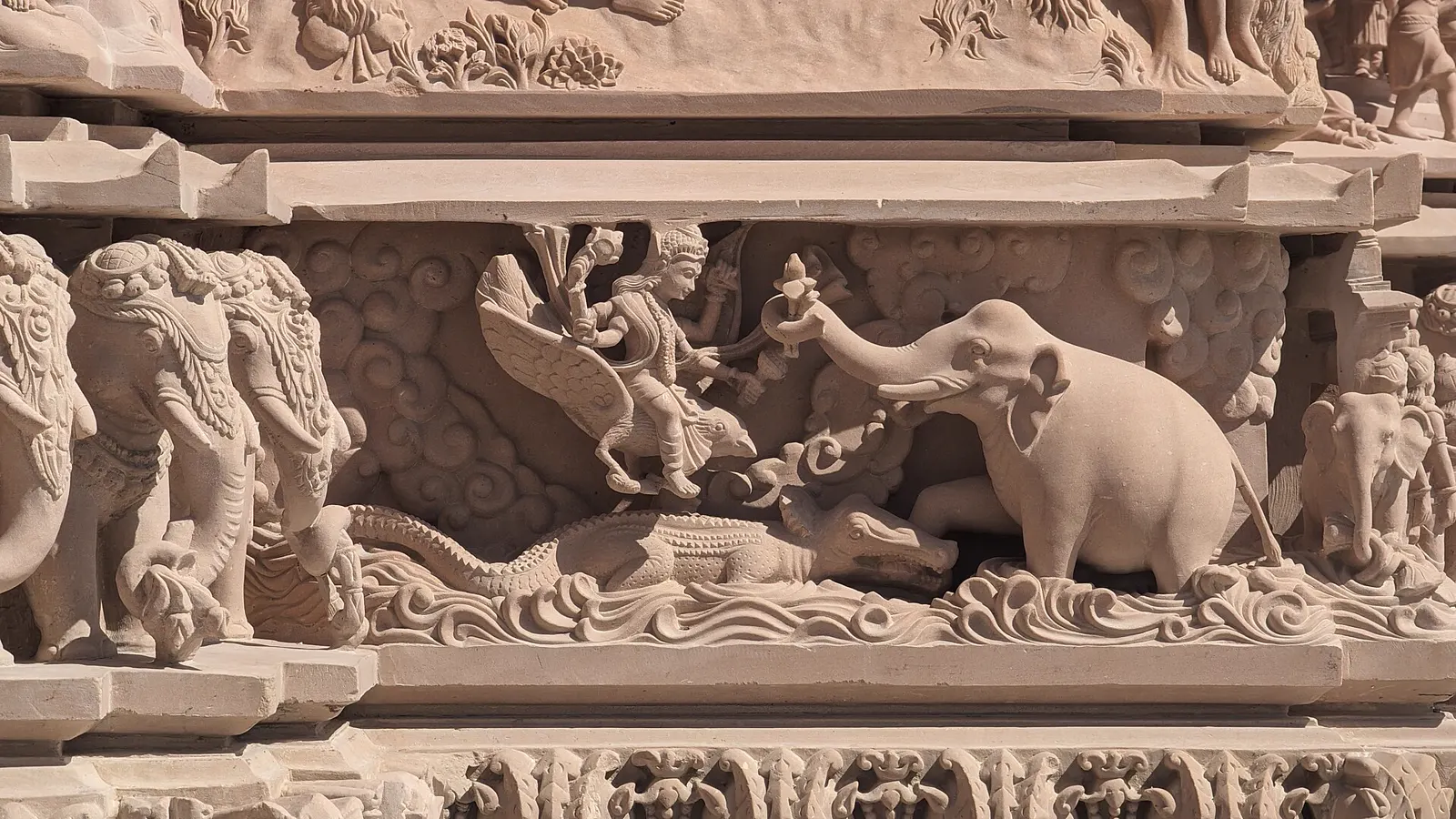
The carvings don't only tell Indian stories. Alongside stories from the ancient texts there are 14 value-based stories from other cultures: Arab, Chinese, Aztec and Mesopotamian. Among the carved figures are also peacocks, elephants, horses and camels, moon phases and musicians. This is a place worth walking through slowly, taking in the details.
There's more around the temple. Two symbolic water channels represent the Ganges and Yamuna rivers, and a beam of light represents the Saraswati river. There's an amphitheater inspired by riverbanks in India, a visitor center with a security check, a library, a community center and a children's playground. The site can hold 8,000-10,000 people.
In the evening, the Ganga Aarti ceremony takes place by the water: on weekdays at 7:30 PM, and on weekends and holidays at 6:45 PM and 7:30 PM. It's a quiet, impressive experience, and anyone arriving toward evening can see the temple both in daylight and lit up.
How do you visit? Admission is free, but advance registration is mandatory, and anyone who hasn't registered won't be allowed in. You can get there independently by car or taxi, or choose an organized tour from Abu Dhabi or Dubai that combines the temple with Sheikh Zayed Mosque, and sometimes with Heritage Village too.
What is included
Included
- On the organised tour: hotel pick-up and drop-off, according to the tour chosen
- A visit to the temple and to Sheikh Zayed Mosque
- Entry fees for the sites on the tour
- Bottled water
Not included
- Lunch
- Tips and personal expenses
- Entry to the temple itself is free, but advance registration is the visitor's responsibility
What you will see and do
- 7 carved shikharas, one for each emirate.
- Pink sandstone from Rajasthan and Italian white marble, with no iron and no steel.
- 402 hand-carved white marble pillars.
- Carvings of Indian stories and 14 value-based stories from other cultures.
- Symbolic water channels representing the Ganges and Yamuna.
- The Ganga Aarti ceremony in the evening.
- On the combined tour: Sheikh Zayed Grand Mosque too.
Who it suits
Good for…
- Architecture and art lovers
- Anyone interested in culture and religion
- Anyone traveling between Dubai and Abu Dhabi who wants a special stop
- Families, provided the children are suited to a quiet visit
Less suited to…
- Anyone arriving without registering in advance
- Anyone planning a visit on a Monday
- Anyone looking for an attraction with hands-on activity
When to go
The temple is open Tuesday to Sunday, 9:00–20:00, and closed on Mondays. Towards evening you can see the Ganga Aarti ceremony and the temple lit up. At weekends and on Hindu festivals such as Diwali there are far more visitors. In the first weeks after it opened in 2024, tens of thousands of visitors arrived in a single day, so it is worth registering early.
Getting there
- Address: P6 Al Taf Road (E16), in the Abu Mureikha area, at exit 366 off Sheikh Maktoum Bin Rashid Road (E11).
- By car: the temple is right by the highway between Dubai and Abu Dhabi, so it's easy to stop on the way between the cities.
- Public transport: there's no public bus route to the temple. Get there by taxi, car or an organized transfer.
- Organized tour: there are tours with hotel pickup in Abu Dhabi or Dubai that also combine Sheikh Zayed Mosque.
Good to know
- Advance registration is mandatory. Anyone who hasn't registered won't be allowed in. You can only register after arriving in the UAE, and you show a QR code at the gate.
- A physical ID is required: a passport or UAE Emirates ID.
- Dress code: no shorts, no skirts above the knee, and no tank tops. Tight or sheer clothing isn't allowed. A sarong can be bought at the reception desk.
- Food and drinks, including water, flowers and fruit, aren't allowed inside.
- Professional cameras, video cameras, selfie sticks and drones aren't allowed inside. Phone photography for personal use is permitted.
- Animals aren't allowed inside, including guide dogs.
- Wheelchairs are available on request, and visitors with disabilities get priority entry.
- The temple is closed on Mondays. At Sheikh Zayed Mosque, part of the combined tour, Friday visiting hours are limited.
- Every visitor must book an entry individually. The entry pass carries the visitor's personal details, which are checked against their ID.
- Avoid garments and accessories that are very shiny or make distracting noises. Headwear and garments with provocative designs or explicit political statements are prohibited.
- The following are also prohibited on the premises: tobacco and e-cigarettes, alcohol, musical instruments, chairs, bicycles, scooters and skateboards, and knives and sharp objects of any size. The guidelines apply in the car park too.
- Photography on a mobile device is allowed for personal, non-commercial use only. Authorised temple personnel may photograph visitors for promotional and archival purposes.
Buy online
Book and pay right here on the site · secure paymentFrequently asked questions
What are the opening hours of the Abu Dhabi Hindu temple?
Do I need to register in advance for the BAPS temple?
Is admission to the Abu Dhabi Hindu temple paid?
What should I wear to the temple?
Is photography allowed at the temple?
Where is the temple located?
Can it be combined with Sheikh Zayed Mosque?
Was the temple closed in 2026?
What happens if my clothing is not suitable?
Is there a security check at the temple entrance?
Keep exploring
More experiences in Abu Dhabi






Where to stay
Recommended hotels in Abu Dhabi




The perfect combination
Also in Dubai


Plan smart
From the magazine


More inspiration