
Ras Al Khaimah · Half day
Desert Safari in Ras Al Khaimah
Red dunes, camels, a Bedouin camp and a barbecue dinner under the stars. An evening safari or a morning safari in the Ras Al Khaimah desert.
Tickets and prices
| Option | Price |
|---|---|
| Evening safari with a barbecue dinnerPickup from Ras Al Khaimah hotels, dunes, camel ride, BBQ dinner, henna and shows | 179 AED per person |
| Morning safari with a camel farm and datesHotel pickup, dune drive, camel ride and sandboarding, with no evening meal | 206 AED per person |
- Evening safari length
- About 6 hours
- Dune drive
- About an hour on most tours
- Comfortable season
- November–March
- Pick-up
- From hotels in Ras Al Khaimah
What a desert safari in Ras Al Khaimah looks like
You are picked up from your hotel in Ras Al Khaimah in an air-conditioned off-road vehicle and head out to the red desert.
A stop at a camel farm on the way.
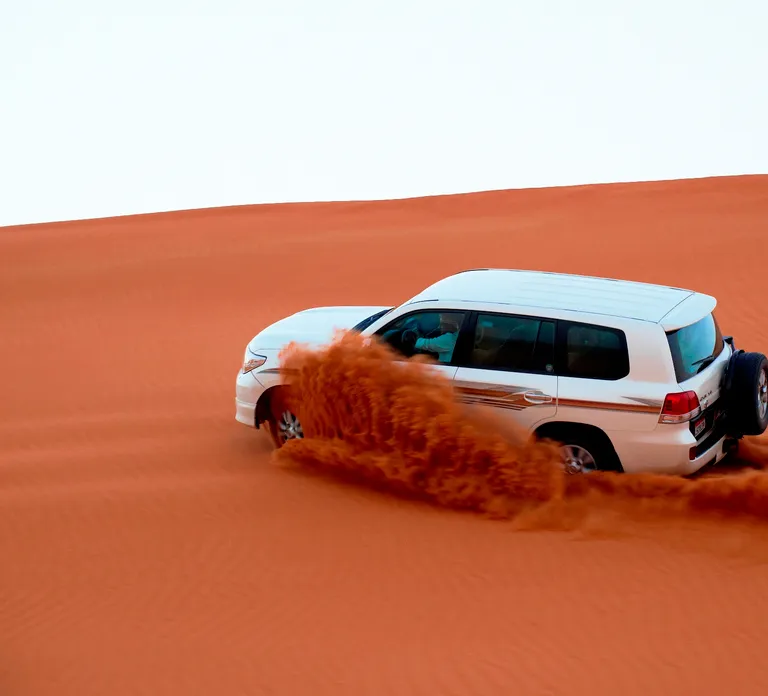
A drive through the red dunes.
Back to your hotel.
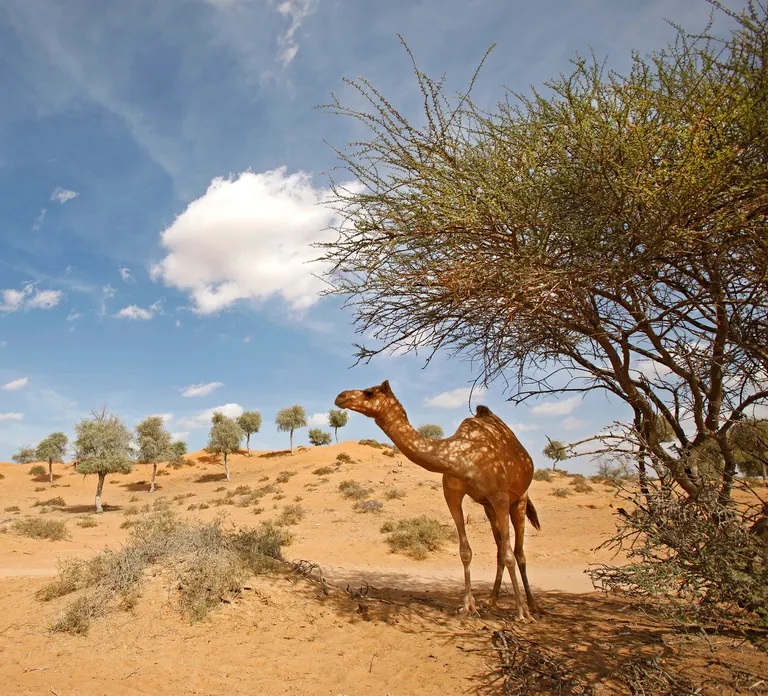
A desert safari in Ras Al Khaimah is the way to get to know the red desert of the northern Emirates. The dunes here come in shades of red and terracotta, and part of the desert is a protected nature reserve home to camels, rare oryx and sometimes wild donkeys. Anyone staying in Ras Al Khaimah will find a full desert experience close to their hotel.
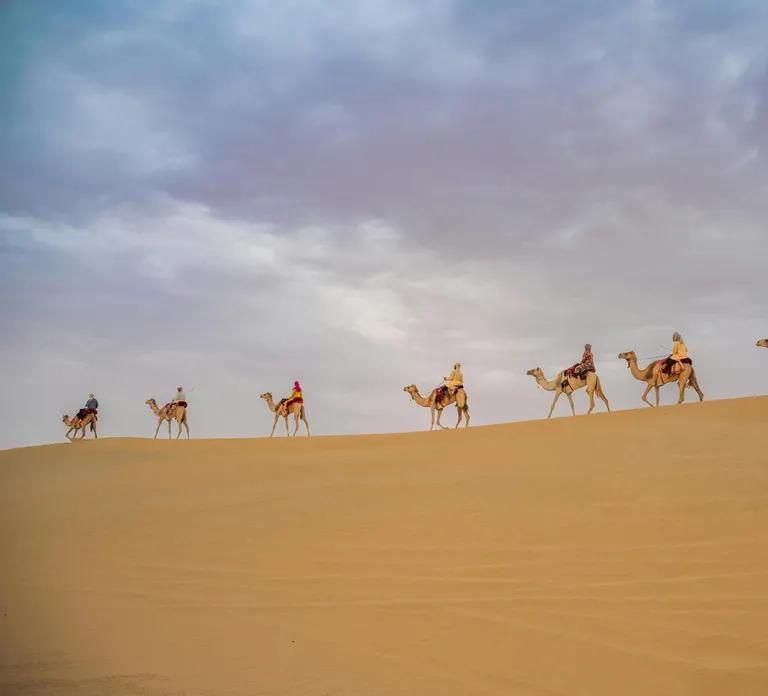
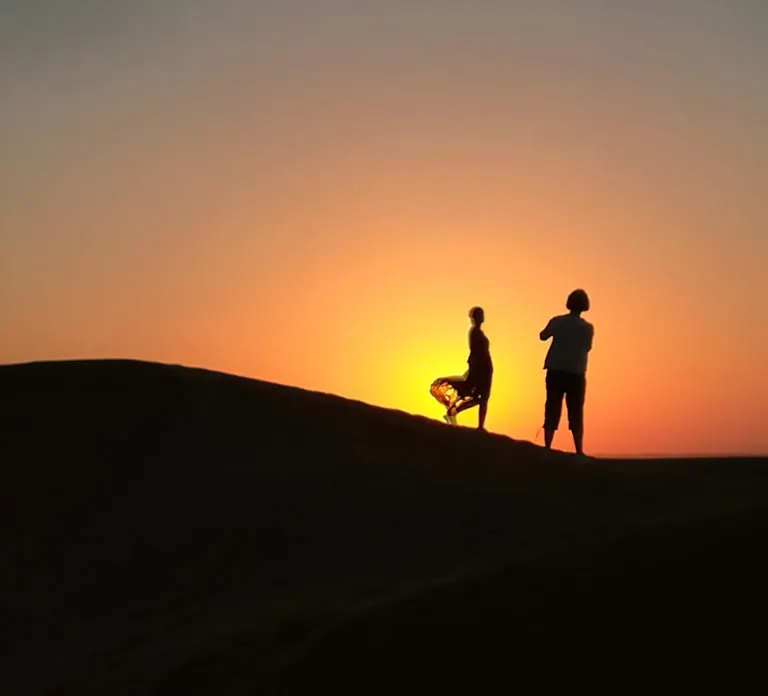
The evening safari is the popular option. You're picked up from your hotel in an air-conditioned 4x4, and on the way to the desert there's a stop at a camel farm to hear about the local camel breeds. Then comes the dune drive, which lasts about an hour on most tours, and a sunset view from the top of a high dune.
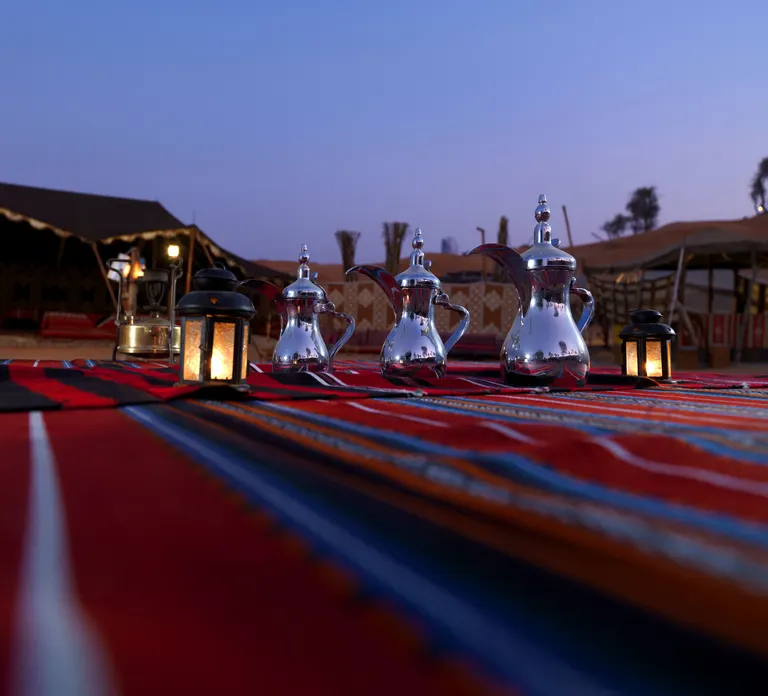
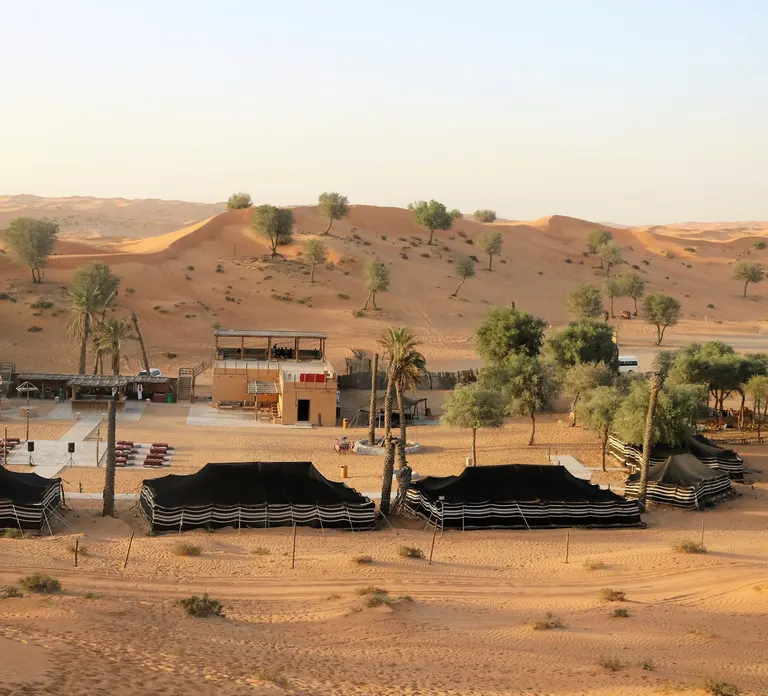
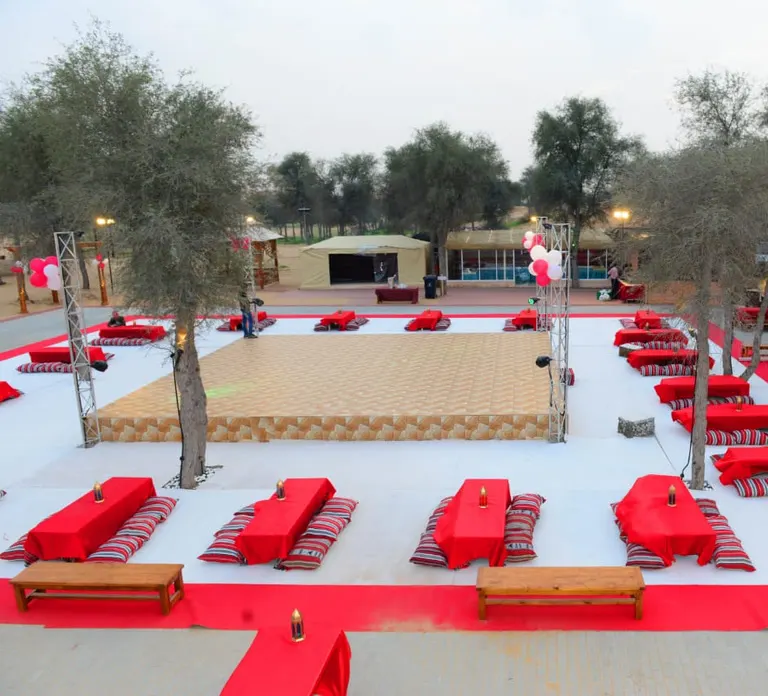
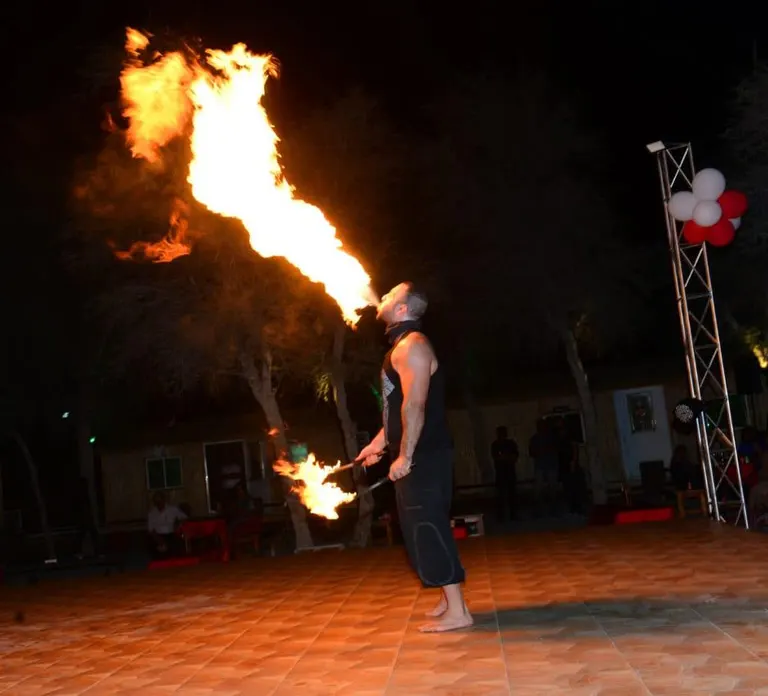
From there you continue to a Bedouin-style camp. You're served Arabic coffee, tea and dates, and there's a short camel ride, sandboarding on a dune, henna painting and traditional costumes for photos. In the evening a barbecue buffet dinner is served, with a shawarma station and Arabic bread, along with tanoura dance, belly dancing and sometimes a fire show. Soft drinks, coffee and tea are unlimited.
At Ras Al Khaimah's Bedouin camps, food is also cooked in a zarb, a traditional oven dug into the ground and covered with sand. This method slow-cooks a whole lamb for hours. Alongside the meat, hummus, fattoush, shish tawook and Arabic bread are served.
The morning safari is shorter and more relaxed. There's about 45 minutes of dune driving, a visit to a camel farm and a date farm, and a short camel ride. In the morning hours the desert scenery is fresh, and you avoid the midday heat.
The desert makes up 80 percent of the United Arab Emirates. The Bedouins of the Emirates were nomads, and moved in search of a cooler climate, food and water. Their way of life was shaped by the mountains, seasonal wadis, rare oases and the Gulf.
Arabic coffee is part of hospitality in the Emirates: guests are welcomed with coffee and dates. The coffee is flavored with cardamom and saffron, and served in small cups without handles, called finjans.
Dates are an important source of nutrition in the desert, and to this day it is customary to break the fast with them during Ramadan. More than 40 varieties of dates are grown in the Emirates, each with its own color and flavor.
The camel was much more than a means of transport. The Bedouins herded camels for milk and meat, and made bags and useful utensils from camel hide. From camel hair they wove fine outer garments for men, called bisht.
The Bedouin hair tent was woven using Sadu, a traditional weaving craft of Bedouin women. Traditionally, men shear goats and camels, and women clean the wool, spin it and weave it on a floor loom. The patterns are narrow geometric bands, and the colors come from local plants such as henna and saffron. The traditional colors are black, white, brown, beige and red. In 2011, Sadu was added to an international list of intangible cultural heritage in need of urgent safeguarding.
Henna is a plant dye that has been used across the Arabian Peninsula for centuries. It is made from dried, ground henna leaves mixed with water into a paste. Traditionally it is used to decorate women's hands, feet and hair. Arabic henna designs are large and floral. The application is painless, and the design washes off within a week.
The ghaf is the national tree of the United Arab Emirates, and was declared so in 2008. It is drought-tolerant and stays green even in harsh desert conditions, and lives up to 120 years on average. In the past its leaves and pods were eaten, and its branches were given to livestock.
What is included
Included
- Pick-up and drop-off at hotels in Ras Al Khaimah, on both the evening and the morning safari
- Dune driving in a 4x4
- A short camel ride and sandboarding
- A barbecue dinner with soft drinks, coffee and tea, on the evening safari
- Henna painting, traditional dress and shows, on the evening safari
Not included
- Alcoholic drinks
- Quad bike or buggy
- Professional photography and souvenirs
- Tips
What you will see and do
- Red and terracotta dunes, part of a nature reserve that's home to camels and oryx.
- Dune driving in a 4x4, with a sunset view from the top of a dune.
- A Bedouin-style camp with camels, sandboarding, henna and traditional costumes.
- A barbecue dinner, and at some camps, zarb cooking in an underground oven.
- Tanoura performances, belly dancing and a fire show.
- A morning safari with a camel farm and a date farm.
Who it suits
Good for…
- Families with children, on both the evening and morning safaris
- Anyone staying in Ras Al Khaimah
- Anyone who wants to see the red dunes of the north
Less suited to…
- Pregnant women and anyone with back problems, during the dune drive
- Anyone staying in Dubai who doesn't want to travel to Ras Al Khaimah
- Anyone looking for a short one- or two-hour activity, on the evening safari
When to go
The comfortable season for a safari in Ras Al Khaimah is November to mid-March, when the weather is cooler. In summer an evening or morning safari is better than the middle of the day. During Ramadan there are no belly dancing shows or loud music; an oud player performs instead.
Getting there
- Both the evening and morning safaris include pickup and drop-off from hotels in Ras Al Khaimah, in an air-conditioned 4x4.
- Evening safari pickup is usually between 3:00 and 4:00 PM. We'll confirm the exact time in writing when you book.
- Pickup from a private home in Ras Al Khaimah is also possible, if you provide an exact address.
Good to know
- The dune drive isn't recommended for pregnant women or anyone with back problems.
- The evening safari runs about 6 hours from pickup to drop-off.
- You can request a child safety seat. Mention it when booking.
- Dietary preferences, such as vegetarian, should be requested in advance. Vegetarian options are available at the meal.
- On the morning safari, children must be at least 4 years old.
- During Ramadan there's no belly dancing show and no alcohol is sold.
- Bring a hat, sunscreen, sunglasses and comfortable clothes.
- In sandboarding you can ride down seated or standing, with your feet strapped in.
- Maximum coverage is recommended: a long-sleeved shirt, long trousers and socks in breathable, natural fabrics such as cotton and linen, and closed shoes. A wide-brimmed hat is also a good idea.
Buy online
Book and pay right here on the site · secure paymentFrequently asked questions
What does a desert safari in Ras Al Khaimah include?
Ras Al Khaimah or Dubai for a desert safari?
When is the best time for a desert safari in Ras Al Khaimah?
Is a desert safari in Ras Al Khaimah suitable for children?
How long does the evening safari last?
What's different about the safari during Ramadan?
How is Arabic coffee served, and how do you signal that you have had enough?
Can you go on a safari outside November to March?
Keep exploring
More experiences in the Northern Emirates



The perfect combination
Also in Abu Dhabi




Plan smart
From the magazine

More inspiration