

Ajman · Half day or full day
Ajman Tour
A private tour with a driver-guide through the smallest emirate: the museum in an 18th-century fort, Souk Saleh, the corniche and the Al Zorah mangroves.
- Type
- A private tour with a driver-guide
- Duration
- Half a day or a full day
- Pick-up
- From your hotel
- Entry fees
- Not included
An Ajman tour is a convenient way to get to know the smallest emirate in the UAE, right next to Sharjah and a short drive from Dubai. The tour is private, with a driver-guide and air-conditioned vehicle, and you're picked up from your hotel. Along the way you stop at Ajman Museum, the old souks, the corniche on the gulf coast, and on the full-day tour, also at the Al Zorah mangrove reserve.
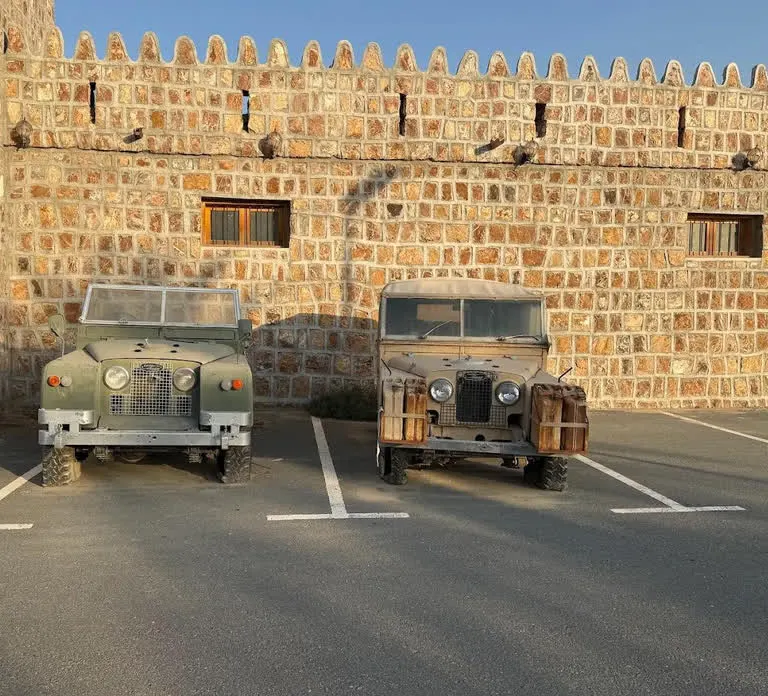
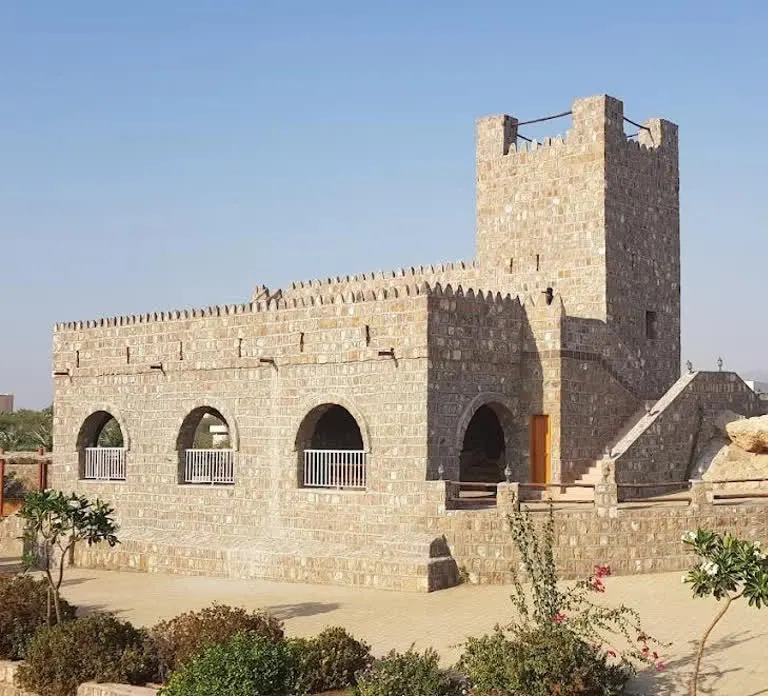
The main stop is Ajman Museum. It's housed in an 18th-century fort that served as the ruler's residence until 1970. Inside are displays on traditional life in the emirate, archaeological finds, the history of pearl diving and local customs.
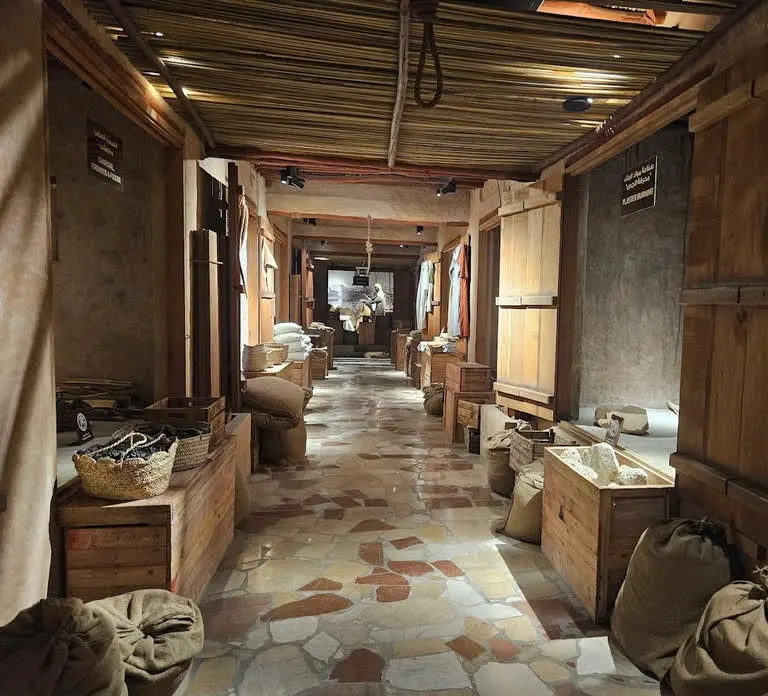
A heritage trail leads from the museum to the corniche, passing Souk Saleh. It's a traditional market with palm-frond roofs, wooden beams and a coral-stone floor. Souvenirs, fabrics, spices and perfumes are sold there. The city also has a Gold Souk.
Ajman's corniche runs along the coast, with palm trees, cafés and views of the gulf. The emirate has 16 kilometers of coastline. The tour stops for photos and a short walk, and some tours also continue to the Al Murabba watchtower and the marina.
On the full-day tour, you also visit the Al Zorah nature reserve. It was declared a reserve in 2004, and has mangrove forests and lagoons. You can kayak there, and flamingos can usually be seen. Kayaking isn't included in the tour.
There's also a shopping tour. It passes through the fish market and local market, Souk Saleh and the Gold Souk, and Ajman's big malls, with free time for shopping. On this option, pickup is possible from a hotel in Ajman, Dubai or Sharjah.
Who is it for? Anyone who's already seen Dubai and wants to see a quieter, more traditional side of the UAE, without driving. Because the tour is private, you can adjust the pace and the order of stops based on what interests you.
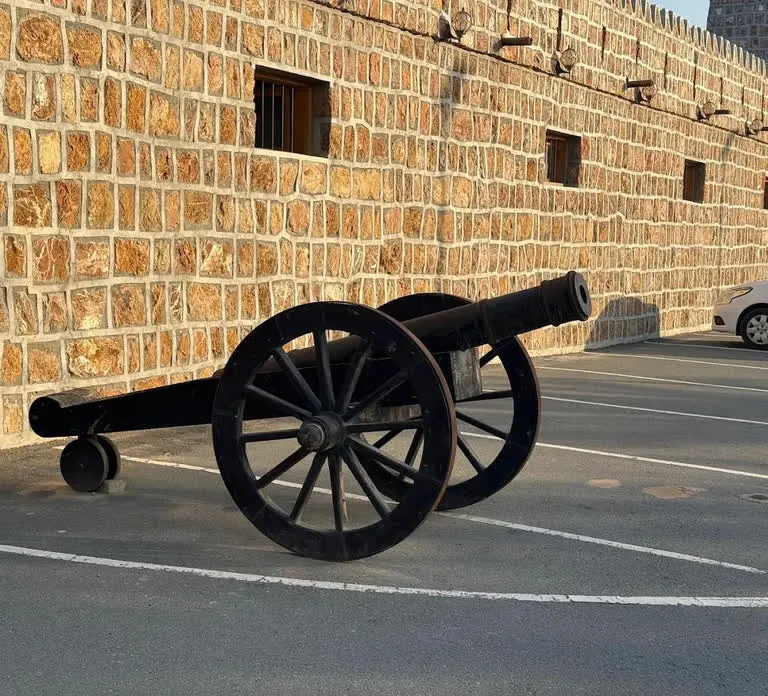
The fort that houses the museum is built from fossilised coral and stones from Oman, bound with sand, mud, seashells and gypsum. The building has wind towers and wooden doors. You enter the museum between two watch towers, and cannons stand by the gate. Inside there is an archaeology section with finds from the Al Muwaihat site, including pottery and funeral jewellery, as well as ancient manuscripts, weapons and models of wooden ships. There are also corners on the pearl trade, irrigation systems, traditional medicine, and local professions and customs. It opened as a museum in 1981, and it sits in the Al Bustan area, next to the Gold Souk and the traditional souk.
Ajman is small in size but rich in history. It lies on the coast of the Gulf, between Sharjah and Umm Al Quwain, and covers about 260 square kilometres. It was once a village of fishermen and pearl divers, and its people also farmed. Around 1775 the Al Nuaimi tribe settled in the area, and in 1820 Ajman was first recognised as an autonomous state. On 2 December 1971 it joined the United Arab Emirates. Today the city itself is home to the ruler's office, banks, commercial markets and a port.
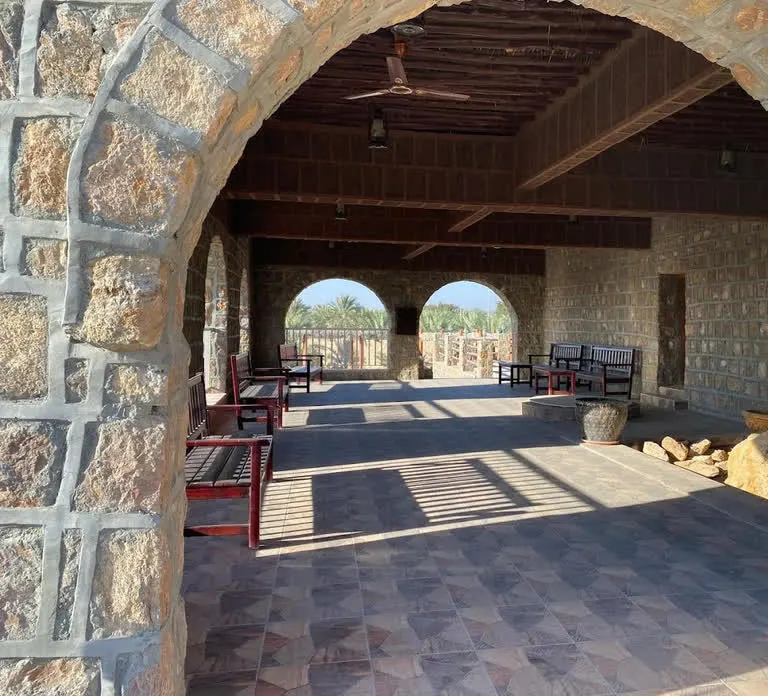
The fort that houses the museum was built around 1775. Between 1820 and 1830 it was rebuilt, after British warships destroyed it. Until 1970 it was the ruler's residence, and for the ten years that followed it served as a police station. Only then did it become a museum. The building has two storeys, with long, shaded verandas. The walls are thick and the windows small, so it is insulated from heat and cold. In the wind tower, hot air rises to the top and cool air is directed down into the rooms below. In the scorching summer, ship sails soaked in water were hung inside it to strengthen the cooling.
The doors in the fort's rooms are low. This saved wood, which was expensive because it was imported from India, and it also gave women privacy and time to cover their heads when a man entered the room. The fort's ceilings were built from tree trunks brought from East Africa.
The Al Muwaihat site was discovered by chance in 1986, when municipal workers were laying sewage pipes on the outskirts of the city. The circular tomb was built from piles of stones, in the style of the Umm Al Nar period, a Bronze Age culture, and it seems to have been a family burial chamber. In the archaeology room, which used to be the servants' quarters of the ruler's household, large clay jars are on display, along with funeral necklaces set with agate brought from China and carnelian from India, bronze tools and a soapstone seal. The pottery is decorated with wavy black lines on an orange-red background, and it points to links with Mesopotamia.
Souk Saleh, also called the embroidery souk, is directly opposite the museum. It sells sewing supplies for women and children: fabrics, gold and silver metallic thread, Moroccan buttons knotted by hand, and also embroidered kaftans and jalabiyas. Sunlight filters in through the palm-frond roof and makes patterns on the coral-stone floor. Nearby, by the creek, is the fish market. Fishing boats unload their catch there onto the sale tables, and an auction is held there every day.
The Al Zorah reserve spreads over about 195 hectares, at the mouth of Ajman Creek, which is one kilometre long and flows into the Gulf. Besides the mangrove forests, it has sandy beaches, salt flats and lagoons. It is recognised as a Ramsar site, that is, a wetland of international importance, and it is protected by law. Scientists and researchers come to it for field studies.
What is included
Included
- A professional driver-guide
- A private, air-conditioned vehicle
- Hotel pick-up and drop-off
- Photo stops at the main sights
- Bottled water
- Parking and fees
- A flexible itinerary
Not included
- Entry fees to the sites
- Meals
- Tips
- Personal expenses and shopping
What you will see and do
- Ajman Museum: An 18th-century fort that served as the ruler's residence until 1970.
- Souk Saleh: A traditional market with palm-frond roofs and a coral-stone floor.
- The Corniche: A walk along the coast, with palm trees and cafés.
- Al Murabba Watchtower: One of Ajman's oldest landmarks.
- Al Zorah Reserve: Mangroves, lagoons and usually flamingos, on the full-day tour.
- Shopping tour: Markets, the Gold Souk and malls, with free time.
- Private tour: The vehicle and guide just for you, with a flexible route.
- The ruler's room on the upper floor: swords, firearms, gifts from official guests and documents.
- The Al Muwaihat site: a circular Bronze Age tomb discovered by chance in 1986.
- The fort's wind tower: traditional cooling, with sails soaked in water.
- Souk Saleh, the embroidery souk, directly opposite the museum.
- Al Zorah Reserve: a Ramsar site of about 195 hectares, at the mouth of Ajman Creek.
Who it suits
Good for…
- Anyone who's already seen Dubai and wants a more traditional side
- Families, thanks to the private vehicle and flexible pace
- History and museum lovers
- Anyone who loves markets and shopping
Less suited to…
- Anyone looking for big, fast-paced attractions
- Anyone wanting a beach day
- Anyone who prefers to explore alone without a guide
- Anyone wanting to see all the emirates in one day
When to go
The tour runs all year. In the cooler months it is more pleasant to walk along the corniche and through the souk; in summer most of the time is spent in the air-conditioned vehicle and in the museum. We will confirm the exact pick-up time for you in writing when you book.
Getting there
- Hotel pickup and drop-off, in a private, air-conditioned vehicle. Included in every option.
- On the half-day and full-day tours, pickup is from a hotel in Ajman. Hotel in Dubai or Sharjah? Ask us.
- On the shopping tour, pickup is possible from Ajman, Dubai or Sharjah.
- Parking and tolls are included.
Good to know
- Entry fees for the museum and sites aren't included, and are paid on-site.
- Bring a hat, sunscreen and a camera.
- Comfortable shoes, since you walk in the souk and along the corniche.
- Modest dress is recommended for visiting traditional sites.
- The tour is private, and you can ask to change the order of stops.
- On the shopping tour, keep in mind that purchases themselves are at your own expense.
- We'll confirm the exact pickup time with you in writing at the time of booking.
- The doors in the fort's rooms are low, so you duck when entering some of them.
- On Fridays Ajman Museum opens only at 14:30 (Saturday to Thursday 8:00–20:00), so on a Friday tour the order of stops is adjusted.
Frequently asked questions
What do you see on the Ajman tour?
Is the Ajman tour private?
Is museum admission included?
What's the history of Ajman Museum?
Can I start the tour from Dubai?
Can you see flamingos in Ajman?
Where is Ajman and how big is it?
When did Ajman join the United Arab Emirates?
What happened to the fort of Ajman Museum over the years?
How was the fort cooled before air conditioning?
What is special about the Al Zorah reserve?
Keep exploring
More experiences in the Northern Emirates





The perfect combination
Also in Abu Dhabi





Plan smart
From the magazine


More inspiration