

Fujairah · Half day
Diving in Fujairah
A first try dive or two dives for certified divers, on the reefs of the east coast. Dibba Rock, an artificial reef, turtles and reef sharks.
Tickets and prices
| Option | Price |
|---|---|
| Try dive for beginnersA first dive for those with no experience, with full gear and a certified instructor | 429 AED per person |
| Two dives for certified divers in Khor FakkanTwo dives for certified divers, with gear not included in some options | 496 AED per person |
| Diving with a transfer from DubaiAn option that includes travel from Dubai, unlike most options | 671 AED per person |
- Depth on the discover dive
- Up to 10 metres
- Sites
- Dibba Rock, an artificial reef and more
- For certified divers
- Two boat dives
- Certification
- Not required for the discover dive
What diving in Fujairah looks like
You bring a passport or ID.
A boat trip to the dive site on the east coast, in the Gulf of Oman.
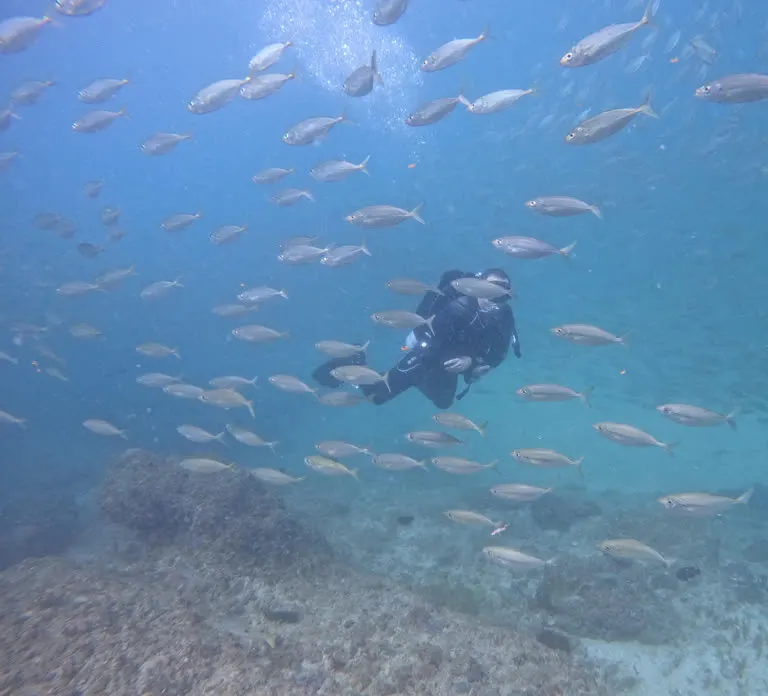
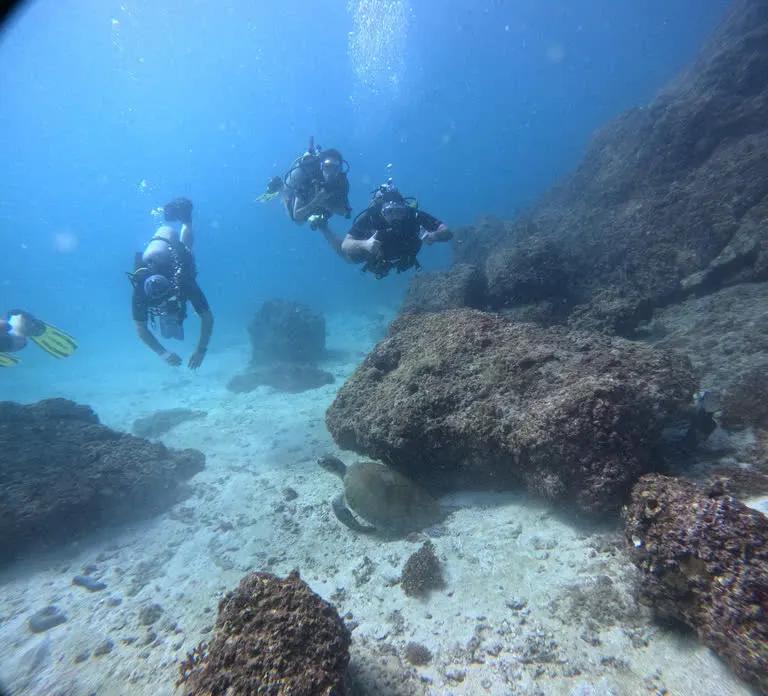
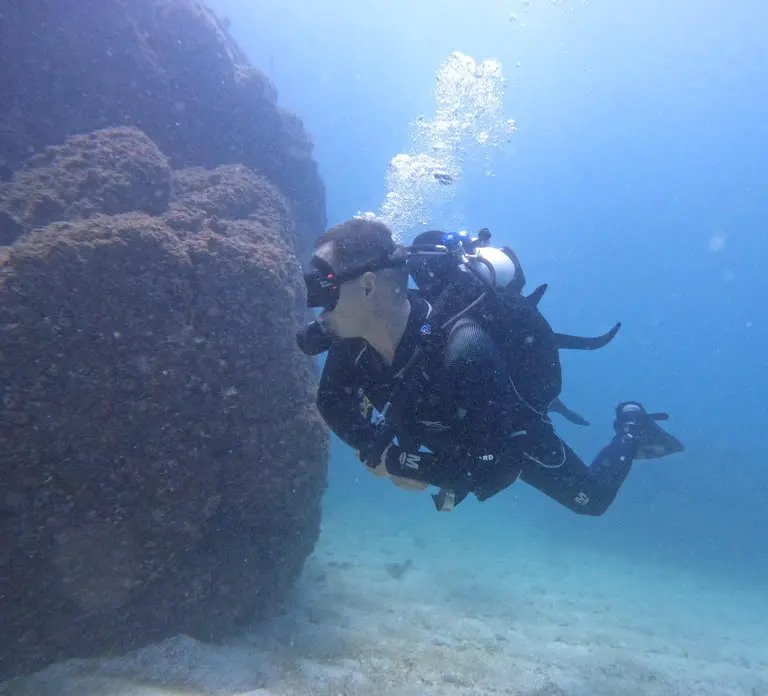
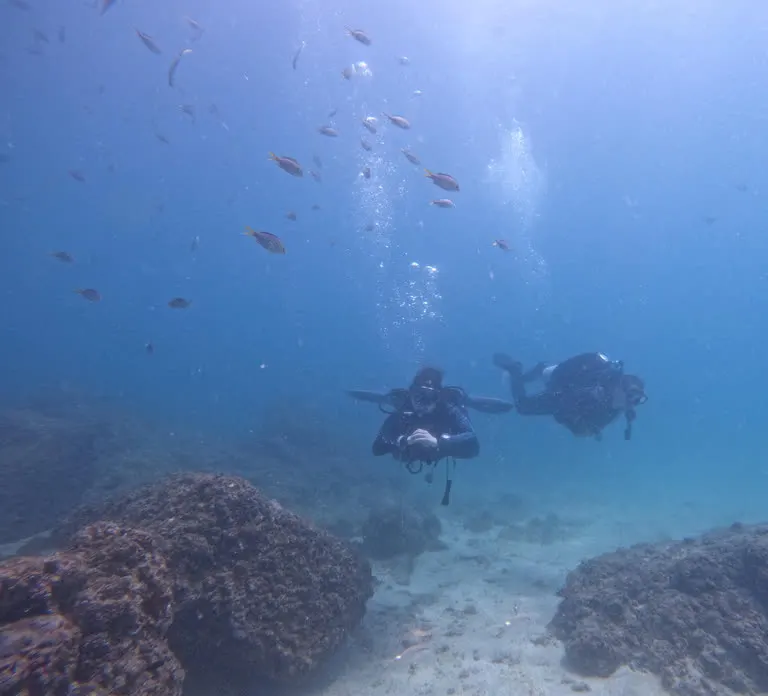
You dive with a certified dive guide, on reefs with corals, reef fish and turtles.
We confirm the details of the option you chose in writing when you book.
Diving in Fujairah is the closest way from Dubai to dive the reefs of the Gulf of Oman. The UAE's East Coast is very different from Dubai's coast: the water is clearer, there are rocks and coral, and marine life is rich. You can do a first introductory dive here with no certification at all, or head out for two guided dives if you already hold a certificate.
Dibba Rock is the area's famous site. It's the oldest marine protected area in the UAE, and likely the richest in the region for marine life diversity. There are coral reefs there, blacktip sharks, reef fish, crabs and octopuses. Dives there range from about 5 to 16 meters, so they suit every level.
Below the rock is an underwater ridge about 200 meters long. The first section is a steep wall, home to tropical marine life and sometimes a school of barracuda. The second section is a gentle slope that ends in a coral wall, where you see reef sharks, turtles and plenty of fish. A whale shark is occasionally reported too.
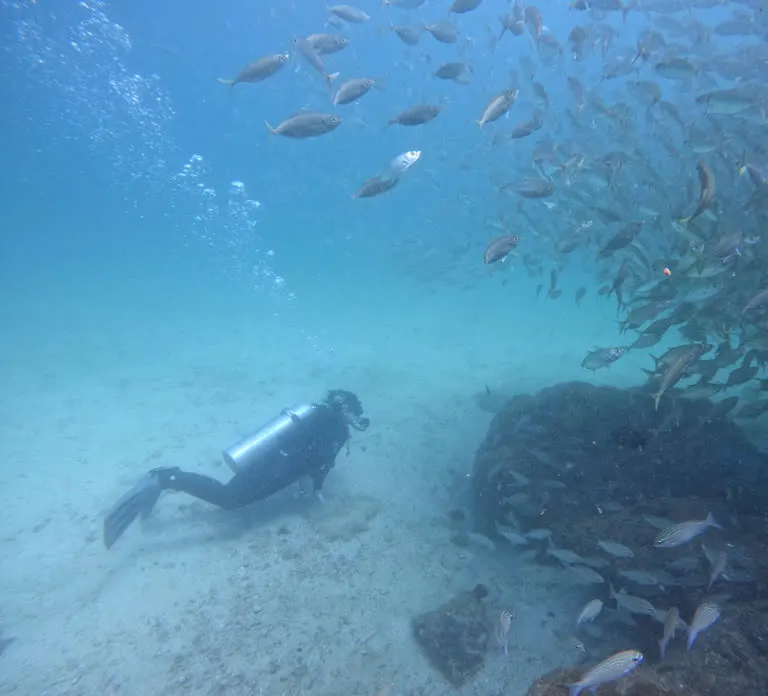
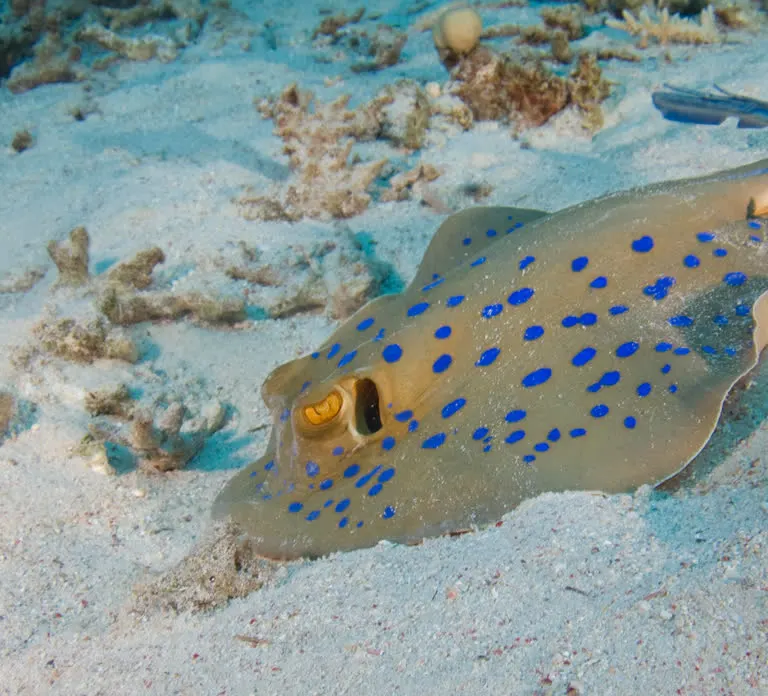
Less than five minutes away is Dibba's artificial reef. Divers see large fish schools, turtles, rays, giant pufferfish and groups of barracuda in winter there. It's an open-sea site, with a flat sandy bottom, and a depth of 10 to 15 meters depending on the tide.
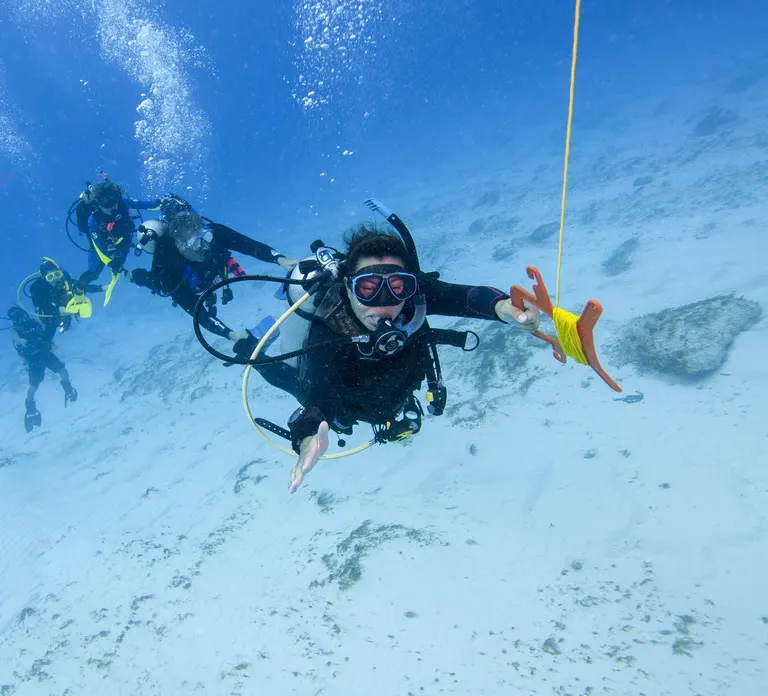
An introductory dive is structured like this: a short briefing on the gear and underwater breathing, practice, and then a descent with a guide right beside you down to a depth of 10 meters. The guide stays with you the whole time. On one of the options you also get underwater photos. Certified divers do two dives at two different sites.
Certified divers also have deeper sites in the Al Aqah area, about 15 kilometers south of Dibba Rock.
Fujairah is the only emirate that lies entirely on the eastern coast of the UAE, along the Gulf of Oman. Its coastline runs for about 70 kilometres, from the city of Fujairah in the south to Dibba in the north. Because of its eastern location, the climate here is milder than in Abu Dhabi and Dubai.
The ticket for certified divers is in the Khor Fakkan area. This town belongs to the emirate of Sharjah, even though it is surrounded by Fujairah territory. It sits on the Gulf of Oman, with the Hajar mountains behind it and a corniche with a beach about 2.5 kilometres long. Not far from the shore, a short boat ride from the south-eastern side of the bay, is a small rocky island called Shark Island. Coral shoals surround it, and it is popular with divers who come to see blacktip reef sharks.
The first rule of diving is to breathe continuously and never hold your breath. As you ascend, the air in your lungs expands, and holding your breath can injure the lungs. Steady breathing also calms you and saves air. This rule applies to every diver, beginners and certified divers alike.
What is included
Included
- A certified diving instructor
- Full diving equipment on the try dive
- The boat ride to the dive site
- A briefing and practice before the dive
- Water and soft drinks
- On one of the options: underwater photos
Not included
- Swimwear and towel
- Diving equipment, on some of the options for certified divers
- Transfer, on most of the options
- A dive computer
What you will see and do
- Introductory dive: breathe underwater for the first time, with a guide right beside you and no certification needed.
- Dibba Rock: the UAE's oldest marine protected area, with coral and reef sharks.
- Turtles and rays: seen regularly on Dibba's artificial reef.
- Fish schools: barracudas and reef fish, sometimes right around you.
- Two dives for certified divers: two different sites in one outing.
Who it suits
Good for…
- Anyone who wants to try diving for the first time
- Certified divers looking for reefs close to Dubai
- Couples and friends who want a shared underwater experience
- Anyone combining it with a day trip along the East Coast
Less suited to…
- Young children: the minimum age depends on the option
- Anyone with a medical condition that prevents diving
- Anyone who isn't comfortable in open water
- Anyone looking for a relaxed beach activity
When to go
Diving here goes on all year. The shoals of barracuda at the artificial reef in Dibba are seen mainly in winter. We will confirm the exact departure time for you in writing when you book.
Getting there
- By car from Dubai: Fujairah is about a two-hour drive from Dubai.
- The dive sites are in the northern East Coast, around Dibba and Al Aqah. The exact meeting point depends on the option.
- There's no metro or train to the East Coast. Arrive by car, taxi or transfer.
- There's an option with transfer from Dubai. On some options, transfer from Dubai is available for an extra fee on-site.
Good to know
- Bring a passport or ID.
- Certified divers should bring their certification card and logbook.
- On some of the options for certified divers, you can bring your own gear or rent gear on-site.
- On an introductory dive you don't go deeper than 10 meters, and the guide stays with you the whole time.
- The age range varies by option. On some, the limit is 12 to 45. We'll check with you before booking.
- Ask us for the health questionnaire in advance. Certain medical conditions don't allow diving.
- Don't touch the coral or the wildlife, even if they look calm.
- Flying in the next few days? Tell us when you book, and we'll check with the dive team.
- Before flying after a dive, it is recommended to wait between 12 and 24 hours. After several dives in a day or several days of diving in a row, the minimum wait is 18 hours.
- Drink water before the dive and after it. Dehydration is one of the main contributing factors to decompression sickness.
- On dives for certified divers, ascend slowly, no faster than 18 metres per minute, and make a safety stop at a depth of 5 metres for at least 3 minutes.
- If a dive feels uncomfortable, tell the guide and sit it out.
Buy online
Book and pay right here on the site · secure paymentFrequently asked questions
Do I need certification to dive in Fujairah?
How deep do you go on an introductory dive?
What do you see diving in Fujairah?
What is Dibba Rock?
Is there transfer from Dubai for diving in Fujairah?
When is the best season for diving on the east coast?
Who needs a doctor's approval before diving?
What level of fitness do you need to dive?
What should I do if my ears hurt on the way down?
Keep exploring
More experiences in the Northern Emirates




The perfect combination
Also in Abu Dhabi





Plan smart
From the magazine



More inspiration