The final price is shown before payment.
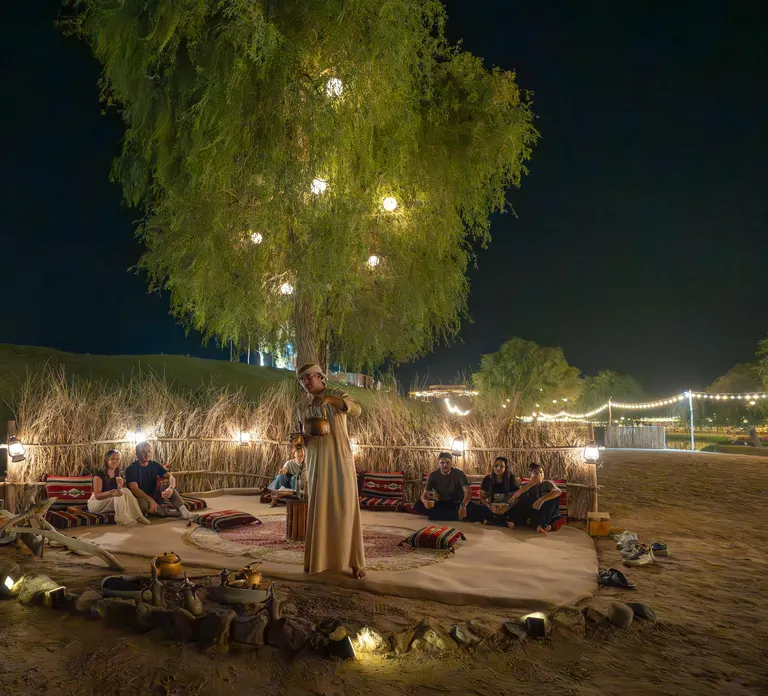
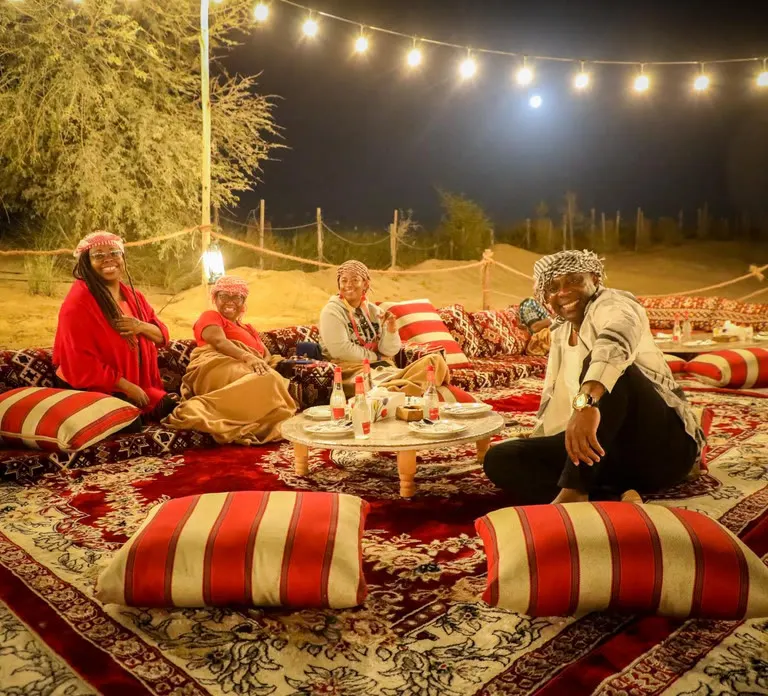
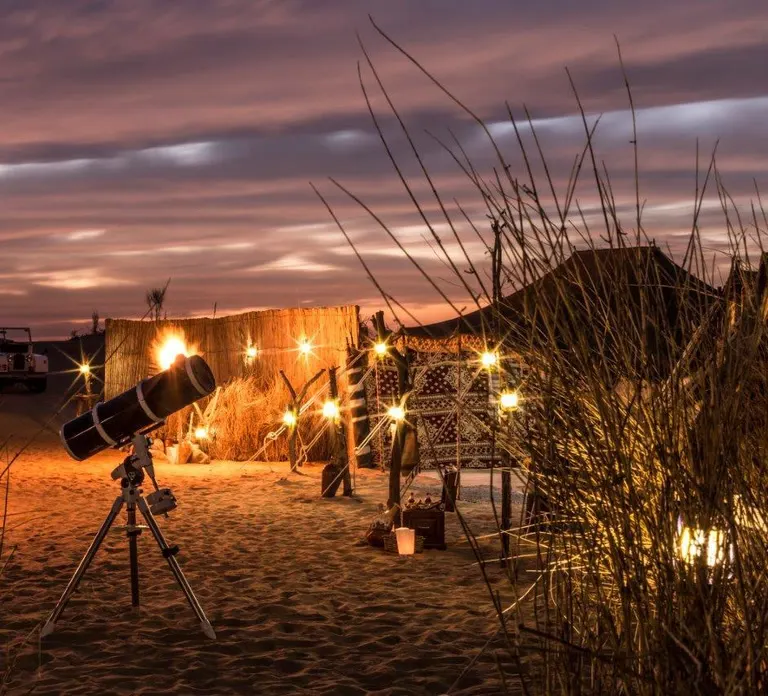
Al Marmoom Bedouin Oasis is a Bedouin evening in Dubai held inside a nature reserve. The small Bedouin village sits within Al Marmoom Reserve, among ghaf trees, sandy paths and a small pool, with hanging lights and rug seating. You arrive in the afternoon, watch the sunset over the dunes, and stay for an Emirati dinner and stargazing.
Al Marmoom Reserve is Dubai's largest reserve, covering 949.35 square kilometers, and the largest unfenced reserve in the UAE. It was declared under Decree No. 22 of 2014. The reserve has recorded 258 bird species, 11 mammal species, 26 reptile species and 47 plant species. Arabian oryx and sand gazelles live there, and it has eight birdwatching hides. The reserve also contains artificial lakes and the Mohammed bin Rashid Al Maktoum Solar Park.
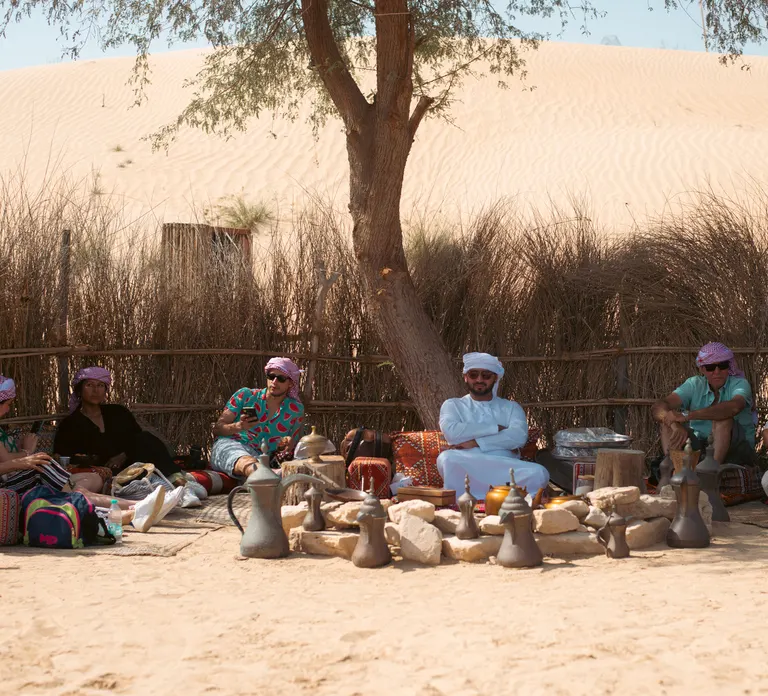
The drive to the village crosses the reserve's desert. Keep an eye out for the local vegetation, especially the ghaf tree, the UAE's national tree, which provides shade and nesting spots for desert birds. If you're lucky, you'll spot oryx and gazelles in their natural surroundings. At the village itself, you're welcomed with Emirati hospitality: Arabic coffee, luqaimat and dates, and time to sit and settle into the quiet.
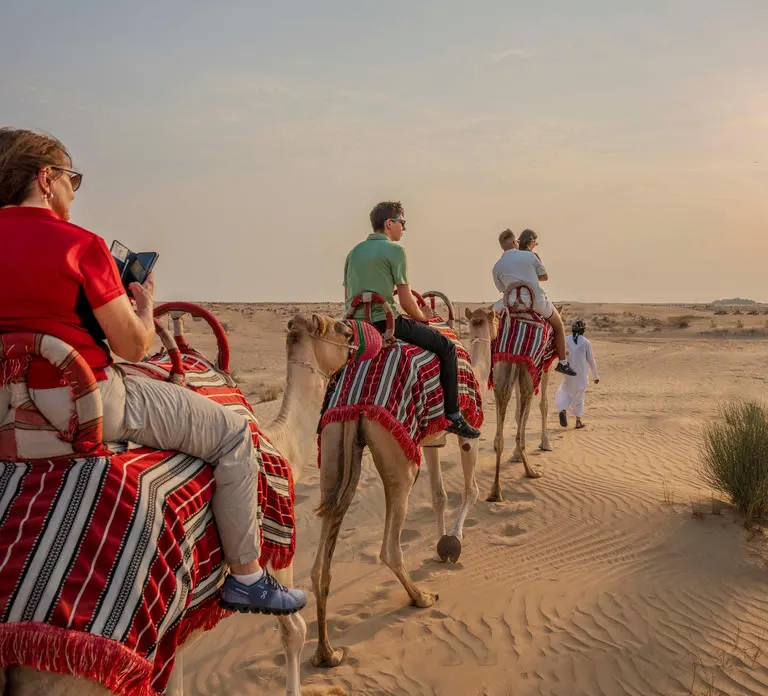
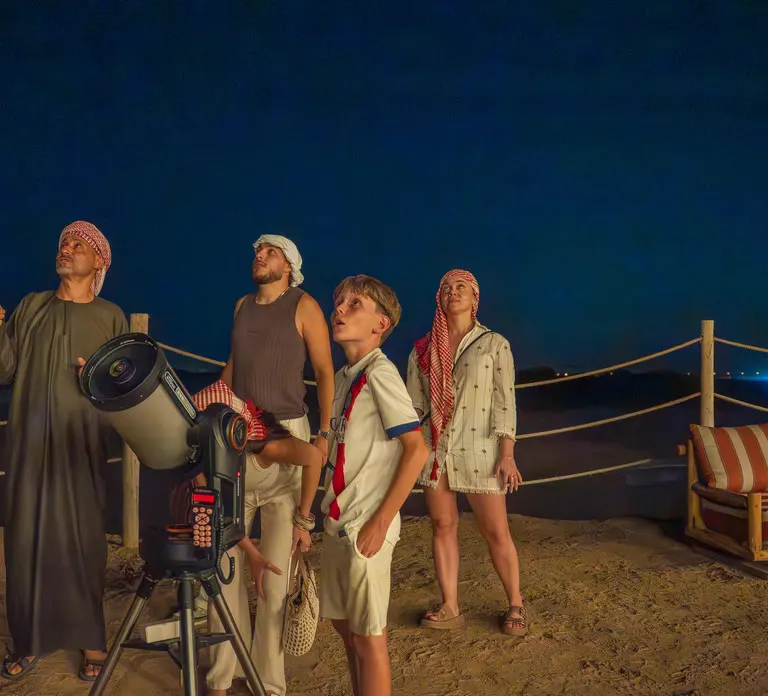
After the welcome, you mount the camels for a 10- to 15-minute ride among the dunes. Women can get henna painted, and you can take a photo with a falcon. As the sun sets, the desert turns shades of orange and gold, and it's the time to take photos. As darkness falls, dinner is served at an open buffet, with Emirati dishes and grilled meat, and afterward you can look at the stars through a powerful telescope.
The atmosphere here is different from a regular desert safari. There's no dune jeep drive and no big stage with shows. It's a quieter evening, focused on nature, food and Bedouin hospitality. The whole idea is to sit, eat, talk and look up at the sky, the way people have done here for generations.
Who is it for? Couples and families looking for a relaxed desert evening, nature and birdwatching lovers, and anyone wanting to see Dubai's largest reserve. Children from age 7 can join. Anyone looking for adrenaline, dune driving and fire shows will find a better fit at the other camps on the camps page.
Al Marmoom Reserve covers almost 23% of the Emirate of Dubai and is classed as IUCN Category II, meaning a national park. It is one of the first unfenced desert sanctuaries in the country to open to the public for sustainable recreation. It lies in the Saih Al Salam desert area.
The landscape in the reserve is more varied than it looks from the road. It has sand sheets with grasses, ghaf woodland, dunes, sabkhas (the plains between the dunes), gravel plains and artificial lakes. These habitats have also recorded 134 species of invertebrates and three species of fish.
Among the animals in the reserve, besides the oryx and the sand gazelle, are the Arabian gazelle (dhaman), the spiny-tailed lizard and a gecko. The reserve also runs a programme to reintroduce the houbara bustard to the wild. The houbara is a desert bird, and the programme is an important one of its kind in the region.
Within the reserve lies Saruq Al Hadid, an Iron Age archaeological site discovered in 2002. The site dates to between 2600 and 550 BC, and researchers believe it was an important centre for metal smelting. In other words, there is human history here that is far older than the Bedouin village.