

Al Fahidi · an hour and a half
A Cultural Meal at the Sheikh Mohammed Centre for Cultural Understanding (SMCCU)
Sit on cushions in the courtyard of an old wind-tower house in Al Fahidi, taste Emirati dishes, and ask an Emirati host everything you wanted to know about life, customs and religion in the Emirates.
Tickets and prices
| Option | Price | |
|---|---|---|
| Cultural lunchEmirati meal at midday with a talk led by an Emirati host | 162 AED per person | |
| Cultural dinner | Not available right now | 160 AED per person |
- Founded
- 1998
- Meal length
- An hour and a half
- Location
- House 26, Al Fahidi
- Lunch
- Monday–Thursday, 1:00 PM
What the meal at the SMCCU centre looks like
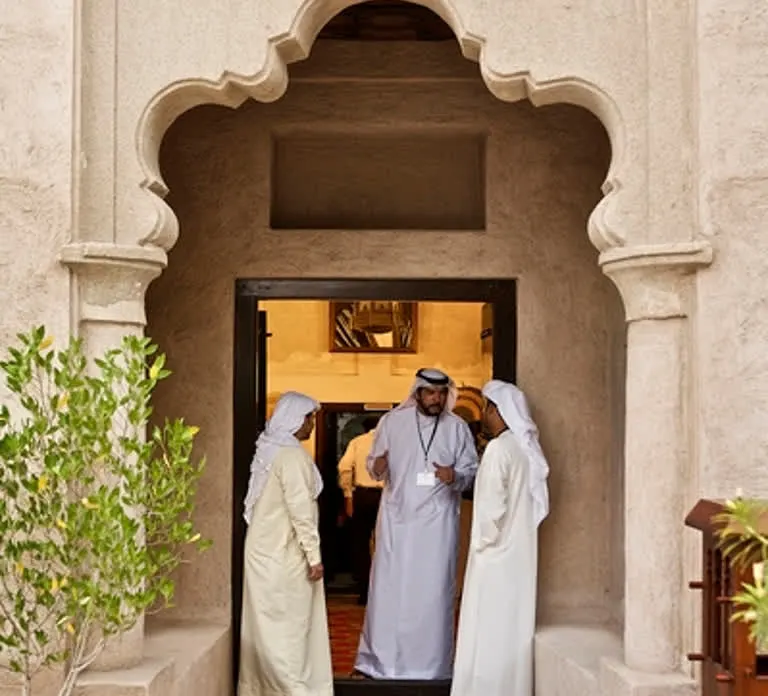
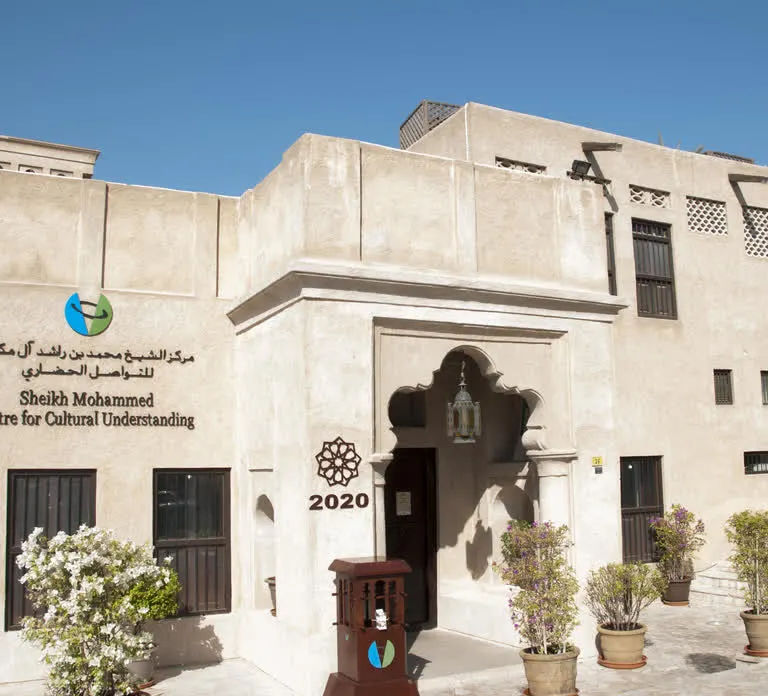
You arrive at the traditional wind-tower house in the historic Al Fahidi district in Bur Dubai.
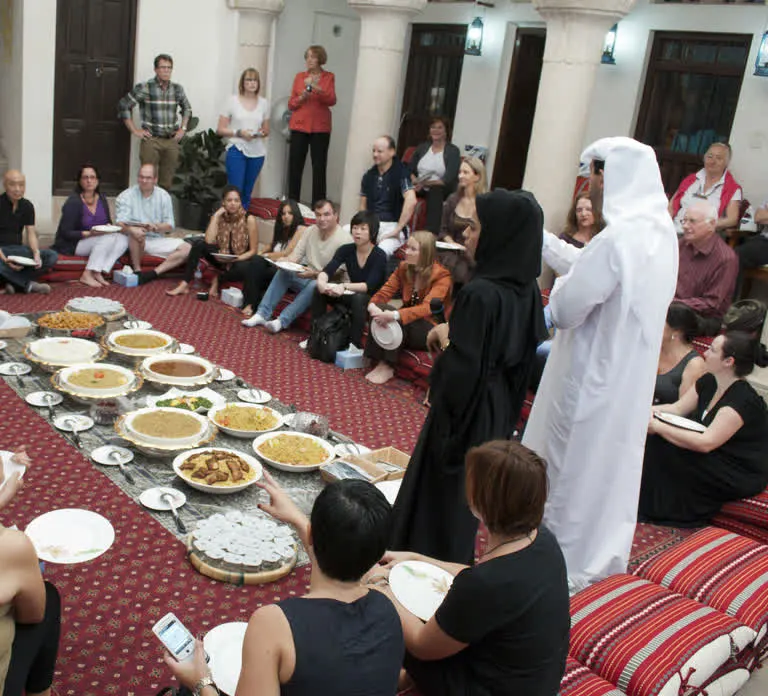
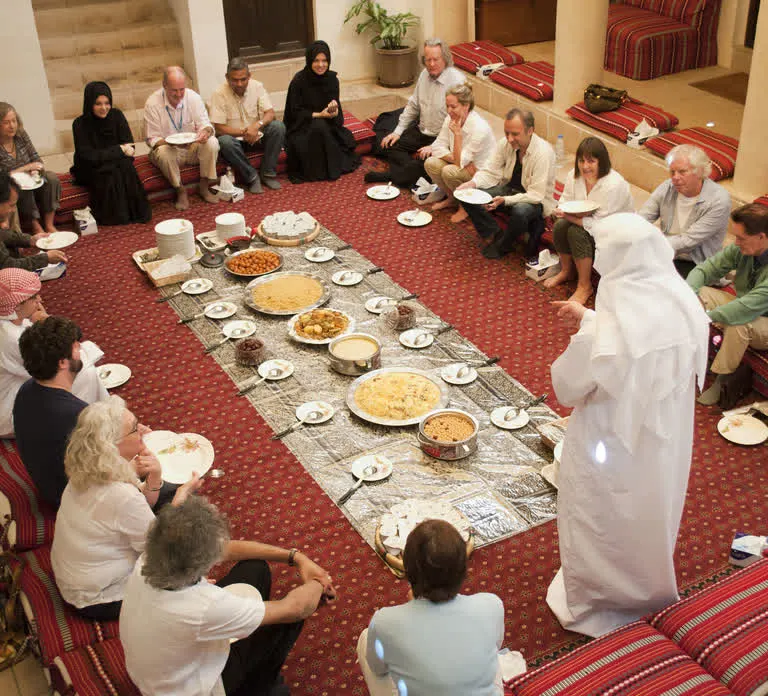
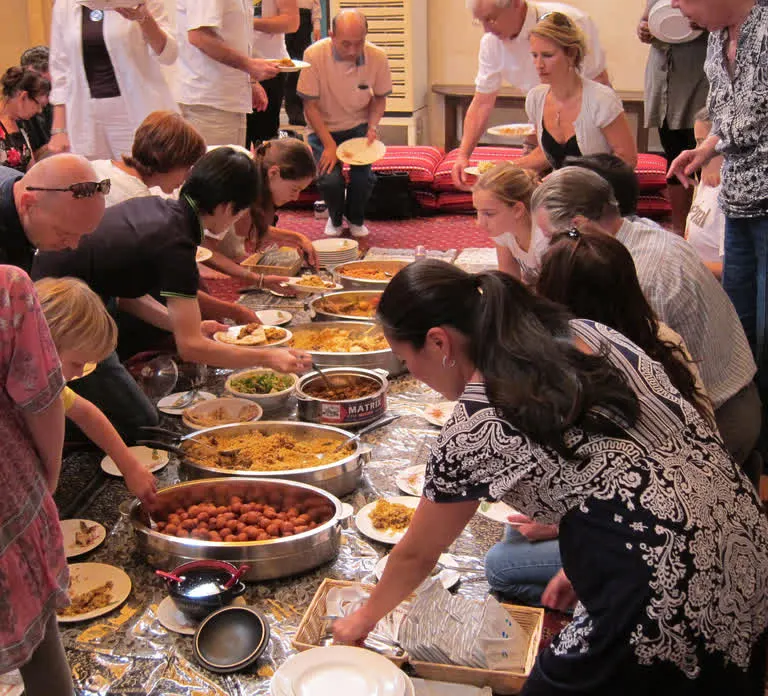
You are welcomed with Arabic coffee, tea and dates, and sit on cushions in the courtyard.
Platters of local dishes arrive, with a dessert at the end.
An Emirati host talks about customs and life in the Emirates, and you can ask any question. The meal lasts about an hour and a half.
A cultural meal in Dubai at the Sheikh Mohammed Centre for Cultural Understanding (SMCCU) is one of the best ways to get to know Emirati culture up close. The centre sits in a traditional wind-tower house in the historic Al Fahidi district in Bur Dubai. You sit on cushions in the courtyard, taste local dishes, and an Emirati host talks with you about life in the Emirates and answers every question.
The centre was founded in 1998, inspired by the vision of Sheikh Mohammed bin Rashid Al Maktoum, the Ruler of Dubai. Its aim is to build understanding between the different cultures living in the Emirates. Its motto is "Open Doors. Open Minds", meaning open doors and an open mind. Since it opened it has hosted visitors from all over the world for meals, tours and study programmes.
What is the meal like? It starts with Arabic coffee and dates, the way guests are welcomed in an Emirati home. Then come platters of local dishes, and dessert at the end. All the guests sit together on traditional cushions around the food, and the conversation develops according to your questions.
What do you talk about? The hosts are Emiratis who know the culture from the inside. They talk about customs and traditions, about greetings and expressions in Arabic, about how Islam shapes values and daily life, and about life in Dubai today. There is no wrong question, and many people come precisely for the questions that are awkward to ask anywhere else.
Several meals run through the week. Lunch takes place Monday to Thursday at 13:00. Dinner takes place on Tuesday at 18:30. There is also a breakfast, a weekend brunch and Fuala, an Emirati tea meal. Each meal lasts about an hour and a half. During Ramadan the dinner is replaced by an iftar programme.
The meal suits anyone who wants to understand the place and not only see it. It works for couples, for families with children and for solo travellers. Children under 7 enter free, and children aged 7-12 have a child ticket.
Tip: combine the meal with a walk through the Al Fahidi district, with its narrow lanes and wind towers, and with an abra ride on the nearby Creek.
In 2015 the centre joined the Mohammed bin Rashid Al Maktoum Global Initiatives.
Who founded the centre, and why? Abdullah Al Serkal founded it in 1998. The centre's vision is to inspire people and visitors to understand, respect and learn from different cultures. Its goals are clear: to reduce prejudices and stereotypes toward the local culture, to recognise and appreciate different identities, to give foreign residents in the Emirates a sense of belonging, and to create a model of local development that aims to share global values.
Al Fahidi reflects the way of life that prevailed in Dubai from the mid-19th century until the 1970s. The district sits on the Creek, and thanks to that location it played an important role in running the city and in its trade relations with the world. The buildings are made of traditional materials such as stone, gypsum and teak, with tall wind towers (barjeel) rising above them. The houses stand side by side, with winding alleys, paths and squares between them. All of the district's buildings face south-west, toward the qibla. Today the houses hold art galleries, specialised museums, cultural associations and cultural centres, among them the Sheikh Mohammed Centre.
The Arabic coffee that opens the meal is a core part of Emirati hospitality. Receiving a guest without coffee is incomplete, even when a large feast is being prepared in their honour. It is brewed with cardamom, and the tradition of serving and drinking Arabic coffee was inscribed in 2015 on UNESCO's list of intangible cultural heritage, on a joint nomination by the UAE, Saudi Arabia, Oman and Qatar.
The dates served alongside the coffee are more than a snack. A bowl of dates stands for hospitality and for survival in a harsh landscape. The date palm once supplied almost everything: shelter, food, and materials for boats and household goods. The knowledge, skills and traditions around it were added in 2019 to UNESCO's list.
What is included
Included
- An Emirati meal with a selection of local dishes
- Arabic coffee, tea, dates and water
- A conversation with an Emirati host
Not included
- Getting to the centre
- The centre's other tours
What you will see and do
- A traditional Emirati meal in the courtyard of a wind-tower house.
- Arabic coffee, tea and dates on arrival.
- An open conversation with an Emirati host, and you can ask anything.
- Customs, greetings in Arabic and how Islam shapes daily life.
- Seating on traditional cushions, as in an Emirati home.
- In the historic Al Fahidi district, close to the Creek.
Who it suits
Good for…
- Anyone who wants to get to know Emirati culture up close
- Couples, families and solo travellers
- Anyone with questions about Islam and life in the Emirates
- Lovers of local food
Less suited to…
- Anyone who finds it hard to sit on the floor on cushions
- Anyone looking for a restaurant with a menu to choose from
- Anyone looking for a quick activity of a few minutes
When to go
The meal takes place inside a traditional house, so it is possible all year round. Lunch is served Monday to Thursday at 13:00, and dinner on Tuesday at 18:30. From October to April it is more comfortable to combine it with a walk around Al Fahidi.
Getting there
- The centre is at House 26 on Al Musallah Road, in the historic Al Fahidi district in Bur Dubai, next to the Ruler's Court.
- Taxi or Careem: ask for Al Fahidi Historical Neighbourhood.
Good to know
- The meal lasts about an hour and a half.
- You sit on cushions on the floor.
- Children under 7 enter free. There is a child ticket for ages 7-12.
- Booking ahead is required.
- Accommodations for people with disabilities are available.
- The Al Fahidi heritage site is open to visitors every day from 7:00 to 20:00. It is worth checking the opening hours of the galleries and museums inside it separately.
Buy online
Book and pay right here on the site · secure paymentFrequently asked questions
What is a cultural meal in Dubai?
When does the cultural meal take place?
How long does the meal last?
Is the meal suitable for children?
Where is the Sheikh Mohammed Centre for Cultural Understanding?
What do you eat at the meal?
How is Arabic coffee traditionally drunk?
What is a majlis?
Why do the old houses of Al Fahidi have almost no windows on the front?
Is the meal only for tourists?
Keep exploring
More experiences in Dubai




Where to stay
Recommended hotels in Dubai





The perfect combination
Also in Abu Dhabi




Plan smart
From the magazine
More inspiration