
The whole city · half a day
Dubai City Tour
Old and new Dubai in one tour: the Creek, Al Fahidi, Jumeirah Mosque, Burj Al Arab and the Dubai Frame.
Tickets and prices
| Option | Price |
|---|---|
| Classic city tourGroup tour with a guide: hotel pickup, an abra ride on the Creek and the spice and gold souks | 103 AED per person |
| Classic tour ending at The Dubai MallThe classic tour by shared transfer, ending at Dubai Mall | 108 AED per person |
| Half-day tour with a guideAbout 5 hours with a guide in a shared group, between old and modern Dubai | 247 AED per person |
| Private guided tourPrivate half-day guided tour for your group only, between old and modern Dubai | 826 AED per person |
- Duration
- Half a day
- Pick-up
- From your hotel (shared transfer)
- Includes
- An abra ride across the Creek
- Children
- From age 3
What a city tour in Dubai looks like
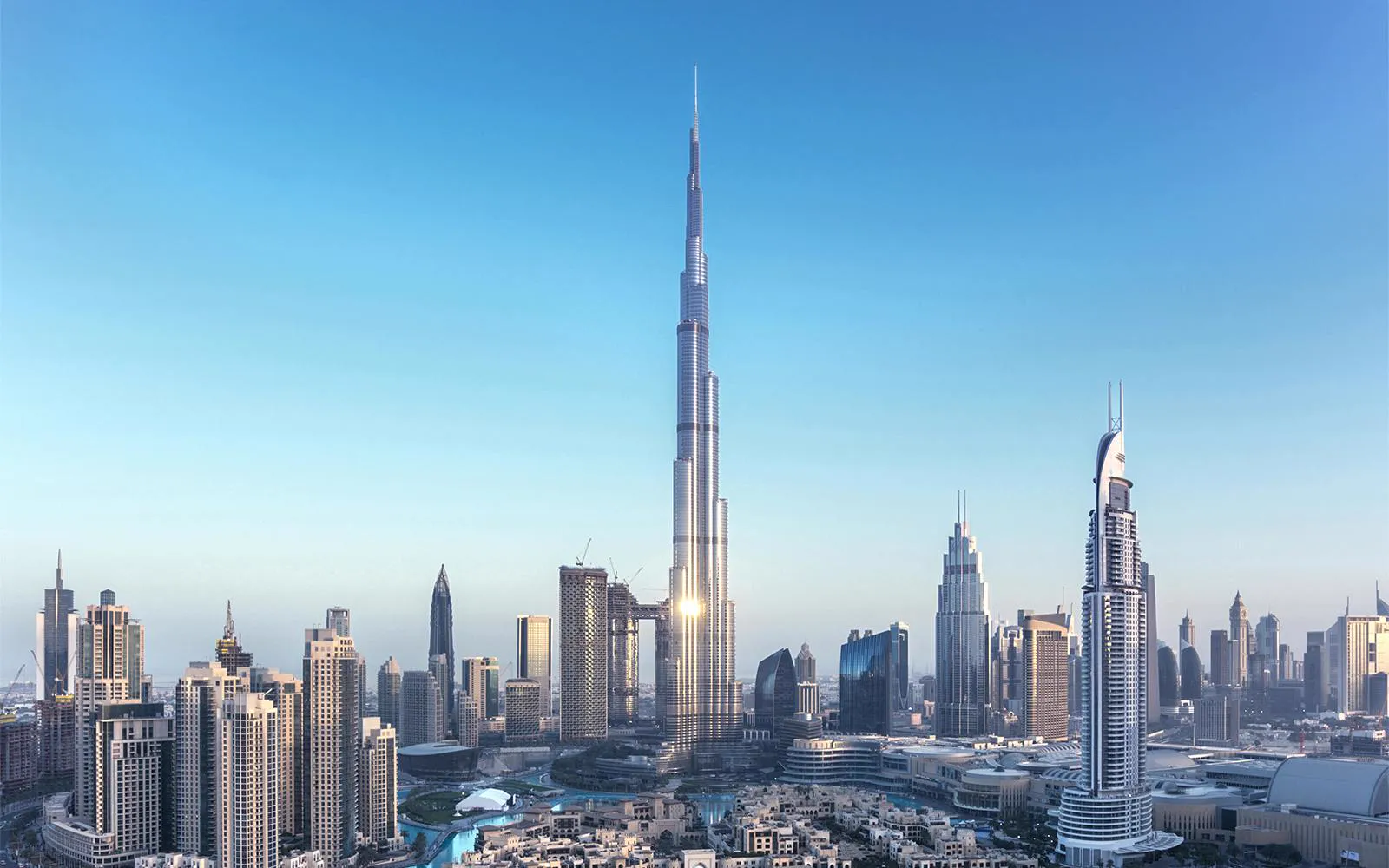
You join a guided tour between Old Dubai, along the Creek, and new Dubai on the Jumeirah coast.
In the old part you stroll Al Fahidi and pass through the markets.
In the new part there are photo stops, and the guide explains the city.
The tour lasts half a day.
A city tour is the easy way to get to know Dubai on your first day. It is a guided tour that moves between old Dubai, along the Creek, and new Dubai on Jumeirah Beach. Some people look for it as a Dubai city sightseeing tour, and it is the same tour.
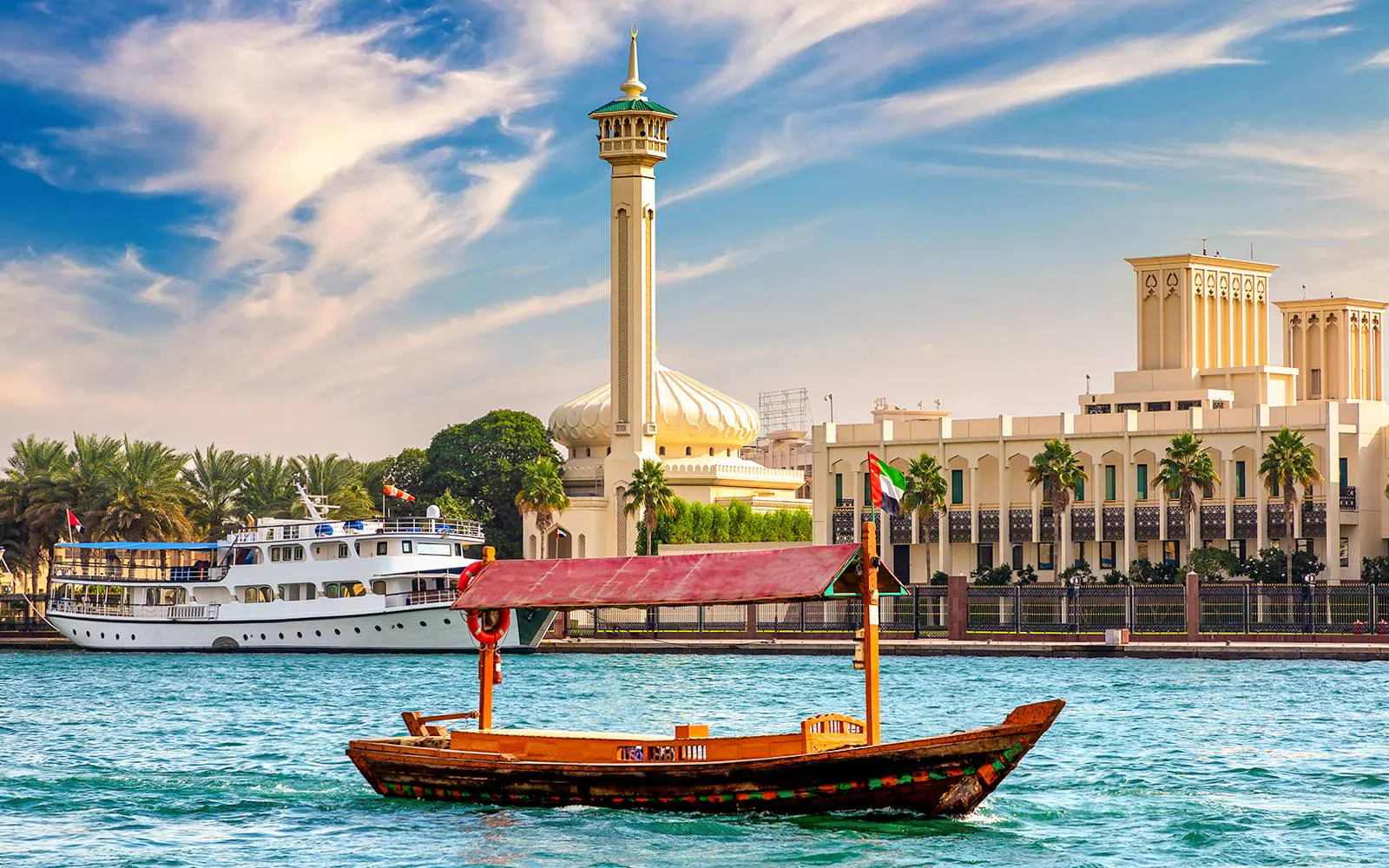
In the old part you walk through the Al Fahidi district (Bastakiya) and cross the Creek in a traditional abra. In the new part you stop for photos in front of Burj Al Arab, Jumeirah Mosque, Zabeel Palace and Dubai Frame.
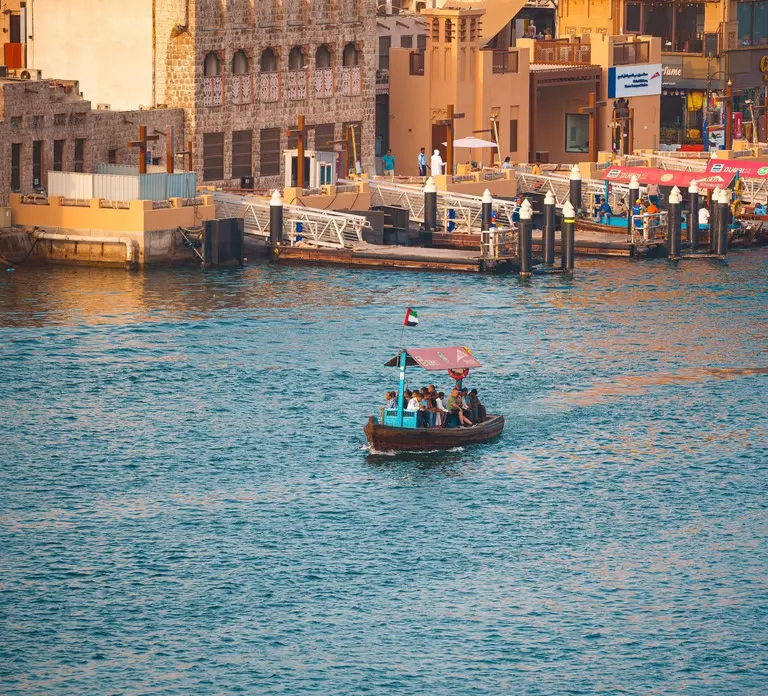
The Creek is where Dubai began. It is an arm of water separating Bur Dubai from Deira, with abras crossing back and forth. The pearling fleet returned to the Creek at the end of the diving season, and cargo ships arrived here from Africa and India. Between 1959 and 1961 it was dredged deeper on the orders of Sheikh Rashid bin Saeed Al Maktoum, so that larger ships could enter, and that was a turning point in Dubai's growth as a trading city.
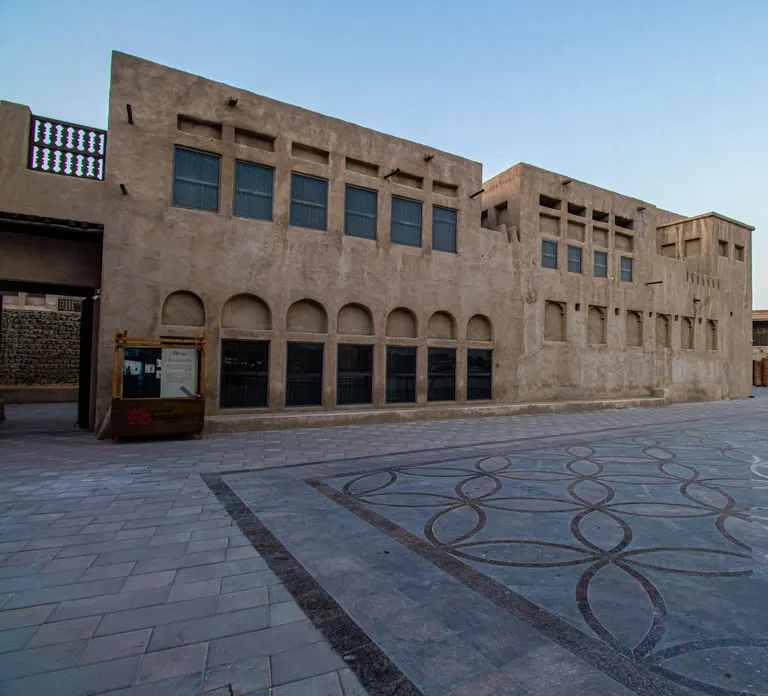
The Al Fahidi district, formerly known as Bastakiya, preserves life in Dubai from the mid-19th century to the 1970s. The houses are built of stone, gypsum, teak and palm fronds, topped with wind towers (barjeel) that cooled the rooms before the age of air conditioning. When plans to demolish the district were on the table, Prince Charles, today King Charles, wrote to the Ruler of Dubai asking him to preserve it. Today it holds galleries, museums and cultural centres.
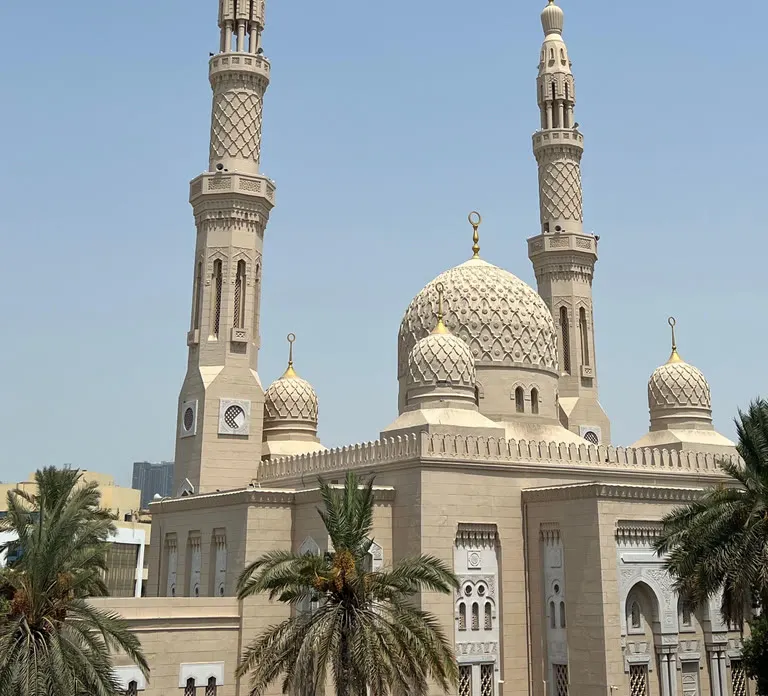
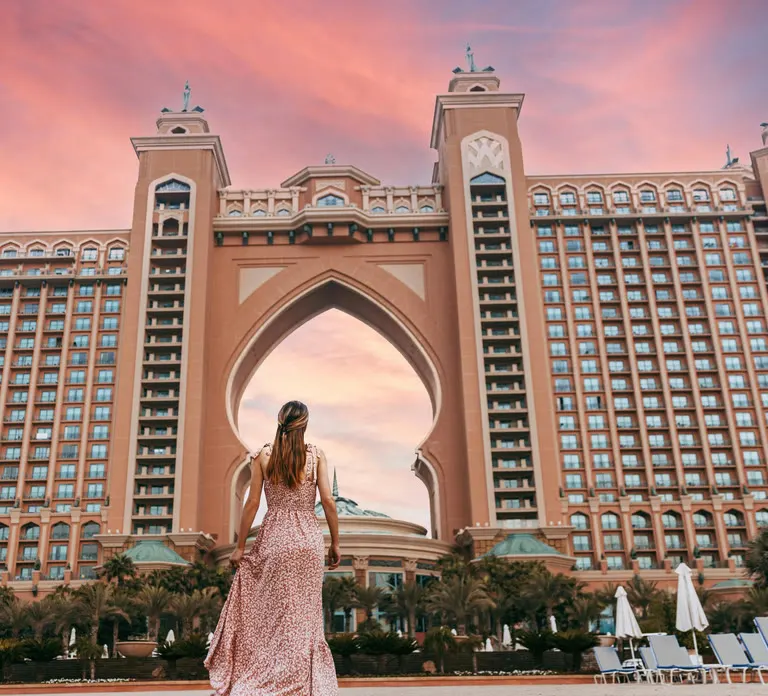
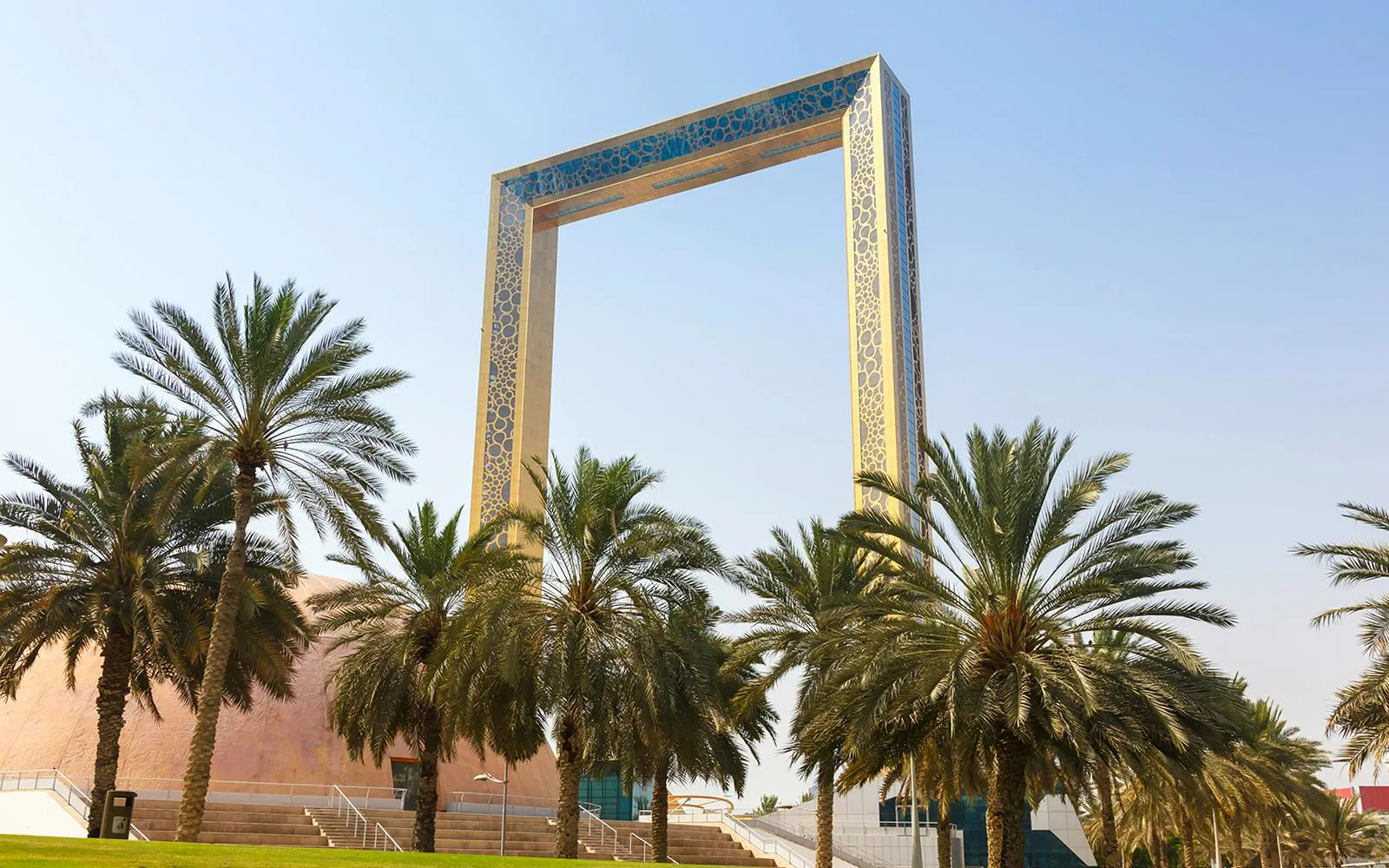
In the new part of the tour you pass the city's landmarks. Jumeirah Mosque is built in the Fatimid style and is one of the few mosques in Dubai open to non-Muslim visitors. Zabeel Palace is one of the residences of the Ruler of Dubai and is closed to the public so you see it only from outside. Dubai Frame, a 150-metre frame in Zabeel Park, opened to the public on 1 January 2018. Burj Al Arab, the sail-shaped hotel, opened in 1999. Some tours also stop in front of the Museum of the Future or at The Pointe, with its view of Atlantis on the Palm.
What does the tour look like? You are picked up from your hotel in an air-conditioned vehicle, and a guide explains the city's history and what you can see through the window along the way. Most of the time you are driving, with short stops for photos and walking. At the end you are returned to your hotel, or dropped at Dubai Mall, depending on the option you chose. The exact list of stops varies between tours.
It suits families and anyone who wants an overview of the city in a few hours, with a guide to explain it. Tip: choose the option that ends at Dubai Mall, and carry on from there to an evening at the fountains.
Along Jumeirah, some tours pass the Etihad Museum. It stands next to Union House, where the leaders of the Emirates signed the agreement founding the country on 2 December 1971. The museum opened to the public in January 2017. Its entrance is shaped like a parchment, like the document the agreement was signed on, and its golden columns represent the signatories' pens. A shallow pool marks Jumeirah's original 1971 shoreline.
In the 1950s Dubai was a small town, in three districts: Bur Dubai, Deira and Shindagha. Life centred on the Creek. Merchants' houses with wind towers (barajeel) stood along it, and many of them have since been demolished. Anyone who crosses the Creek by abra today is crossing the place where the city began.
The Al Fahidi district sits on the edge of the Creek, next to the court (diwan) of the Ruler of Dubai. Its position on the water helped it manage Dubai's overseas trade. The houses have few front windows, and those are narrow and tall, to protect privacy. The lanes wind between the houses.
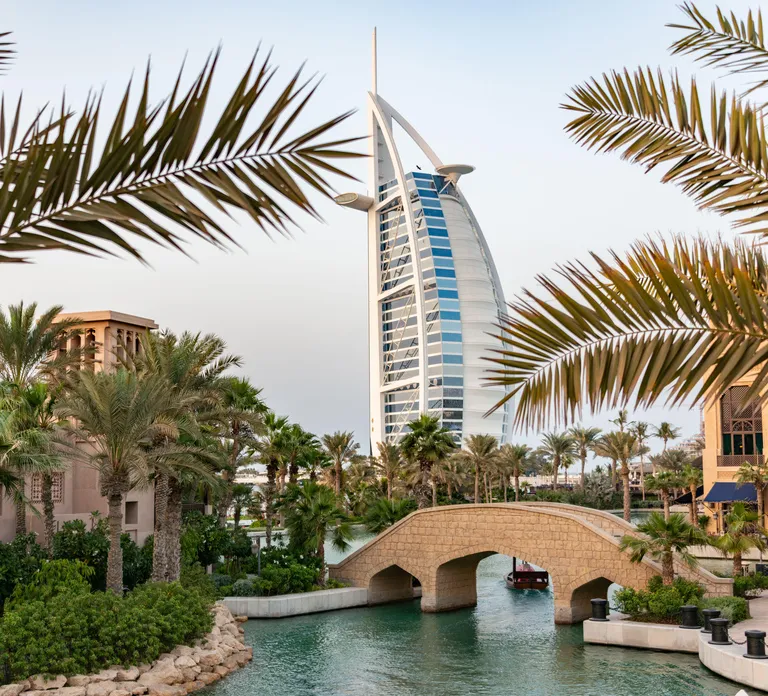
Burj Al Arab grew out of the wish of Sheikh Mohammed bin Rashid Al Maktoum to create a global symbol for Dubai. The design of the hotel draws on the sail of a traditional dhow, and the concept is by the British architect Tom Wright. The hotel is 321 metres tall and stands on a man-made island about 280 metres from the shore. More than 230 concrete piles, each of them driven 40 metres into the seabed, support the island. A private, curving causeway links it to the mainland.
Zabeel Palace is surrounded by gardens and faces Zabeel Park, the park where the Dubai Frame stands. Visitors who have not been invited cannot go in or come close, so it is seen from a distance.
The guided visit to Jumeirah Mosque is run by the Sheikh Mohammed Centre for Cultural Understanding, which has operated since 1998. It includes a tour of the mosque, an explanation of Islamic traditions and Emirati culture, and refreshments.
What is included
Included
- Hotel pick-up in a shared transfer
- Guide
- Abra ride on the Creek
- Photo stops at Burj Al Arab and Jumeirah Mosque
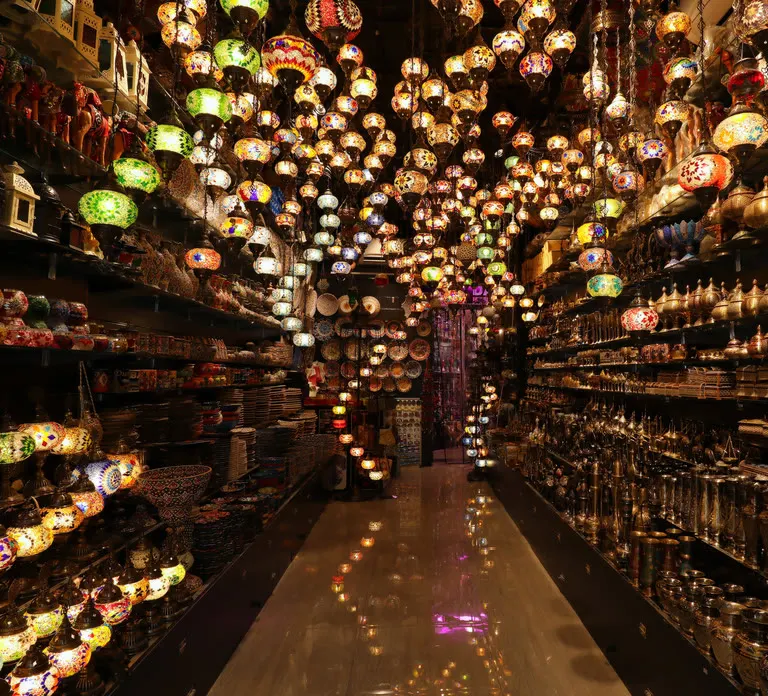
- A pass through the spice and gold souks
- Air-conditioned vehicle
- A visit to one of the old houses in Al Fahidi
Not included
- Entry to paid attractions, such as going up the Dubai Frame
- Meals
- Personal expenses
- Tips
What you will see and do
- Abra ride: crossing the Creek in a traditional wooden boat, between Bur Dubai and Deira.
- Al Fahidi (Bastakiya): narrow lanes and old houses with wind towers.
- Jumeirah Mosque: a mosque in the Fatimid style, one of the symbols of the Jumeirah district. Photo stop from outside.
- Burj Al Arab: a photo stop in front of the sail-shaped hotel, on Jumeirah Beach.
- Dubai Frame: the golden frame, 150 metres high, in Zabeel Park. Photo stop from outside.
- Zabeel Palace: one of the residences of the Ruler of Dubai. You see the gates and gardens from outside.
- Old and new Dubai: in a few hours you see both sides of the city, with a guide explaining as you go.
- The prayer hall of Jumeirah Mosque: a roof resting on many columns, and a mihrab at the centre of the wall that faces the qibla.
- The Gold Souk and the Spice Souk: two neighbouring markets in the Al Ras area of Deira, on the edge of the Creek.
Who it suits
Good for…
- Anyone visiting Dubai for the first time.
- Families with children from age 3, since most of the time is spent in the vehicle.
- Anyone who wants to see a lot of places in a short time, with commentary.
- Anyone who does not want to drive or plan transport themselves.
Less suited to…
- Anyone who already knows Dubai well.
- Anyone who wants to go deep into museums and attractions, rather than just stop for photos.
- Wheelchair users: some of the tours are not accessible.
When to go
The tour runs all year, but the most comfortable time is October to April, when it is pleasant to walk outside at the stops. Summer is very hot, so a morning tour is better, and most of the time is spent in an air-conditioned vehicle. It is worth setting the tour for the first or second day of the trip, to get to know the city and decide where to come back to later.
Getting there
- Hotel pickup on a shared transfer is included in the ticket, across most areas of Dubai.
- Some tours do not offer pickup from outlying areas such as Jebel Ali, Discovery Gardens, Expo City and Silicon Oasis. From there you make your own way to a nearby meeting point.
- Before the tour you will be contacted to confirm the pickup time and place.
- On the option that ends at Dubai Mall, getting back to your hotel is at your own expense, by metro, taxi or Careem.
Good to know
- Modest dress: shoulders and knees covered, especially near mosques.
- Adults from age 11, children from age 3.
- A hat, water and sunscreen.
- Zabeel Palace is closed to visitors. You see it from outside only.
- The stops are short and most of the time you are seated in the vehicle. Comfortable shoes are enough.
- We will confirm the cancellation terms of the tour you choose in writing when you book.
- Al Fahidi can be visited independently every day, between 7:00 and 20:00. These are the neighbourhood's own hours, not the tour's hours.
- Modest dress is requested for the guided visit to Jumeirah Mosque. Women are asked to bring their own head covering, and head coverings, abayas and kanduras are also available on site.
Buy online
Book and pay right here on the site · secure paymentFrequently asked questions
How long is the tour?
Do you go inside Dubai Frame?
Is it suitable for children?
What do you see on a Dubai city tour?
Is there hotel pickup?
What language is the tour in?
Do you go inside Jumeirah Mosque?
What is the difference between a city tour and an old Dubai tour?
What is the Etihad Museum you pass?
What is sold in the Spice Souk and the Gold Souk?
How long does the guided visit to Jumeirah Mosque last?
Can I cross the Creek by abra on my own too?
Keep exploring
More experiences in Dubai




Where to stay
Recommended hotels in Dubai



The perfect combination
Also in Abu Dhabi




Plan smart
From the magazine
More inspiration