

Bur Dubai and Deira · walking tour
Food Tour in Old Dubai
Walk between the souks beside the Creek and taste Emirati, Lebanese and Iranian food along with street food, with a local guide.

Tickets and prices
| Option | Price |
|---|---|
| Shared food tour in Old DubaiA walking tour through the souks, meeting at a metro station, tasting four cuisines | 260 AED per person |
| Shared food tour + transferThe same shared walking tour, with hotel pickup and return | 334 AED per person |
| Street food tour – half a day, with pick-upA three-course meal at three different places, a creek crossing and hotel pickup | 680 AED per person |
- Area
- Bur Dubai and Deira, around the Creek
- Type
- A walking tour, or half a day with pick-up
- Cuisines
- Emirati, Lebanese, Iranian, street food
- Recognition
- Lonely Planet, Best in Travel 2026
What an Old Dubai food tour looks like
A local guide leads you through the alleys and markets around the Creek, in Bur Dubai and Deira.
You stop at small restaurants and stalls and taste something different at each one.
Between stops you hear about the history of the place.
Come hungry, in comfortable shoes.
A food tour in Old Dubai is the tastiest way to get to know the older part of the city. You walk with a local guide through the lanes and the souks around the Creek, stopping at small restaurants and stalls where locals eat. At every stop you taste something different, and between stops you hear about the history of the place.
These tours have earned international recognition. In October 2025 the cultural food tours of Old Dubai were named one of the 25 leading experiences in the world on Lonely Planet's Best in Travel 2026 list. It is the first time a specific area of Dubai has received such recognition. In the older neighbourhoods, Bur Dubai and Deira, the restaurants favour local ingredients, a fair price and authenticity.
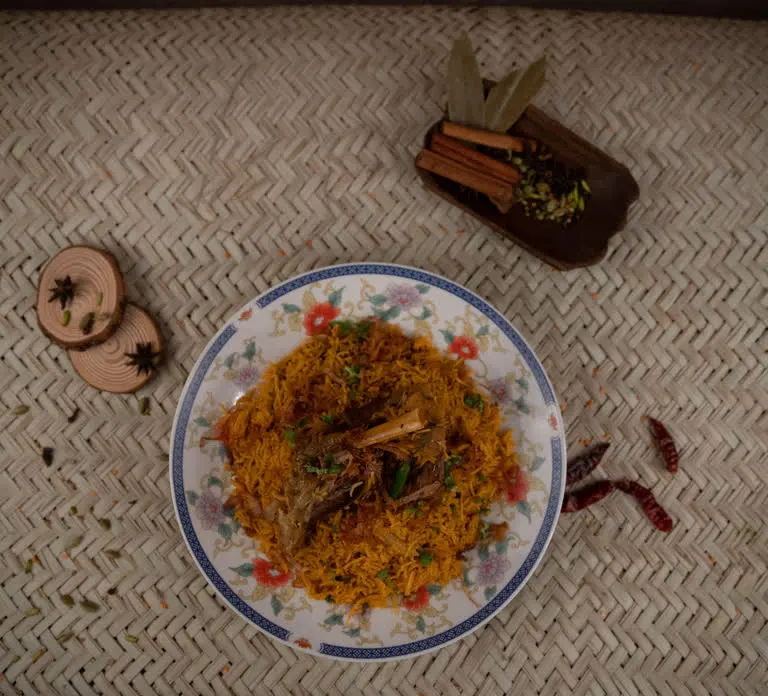
What do you eat? Do not miss the Emirati dishes: machboos (spiced rice with meat or fish), luqaimat (sweet dough balls), regag (thin, crisp bread) and chebab (a kind of breakfast pancake). Alongside them are regional classics, such as shawarma, falafel and grilled fish along the Creek. Dubai is home to residents from about 200 nationalities, and you taste it in the food.
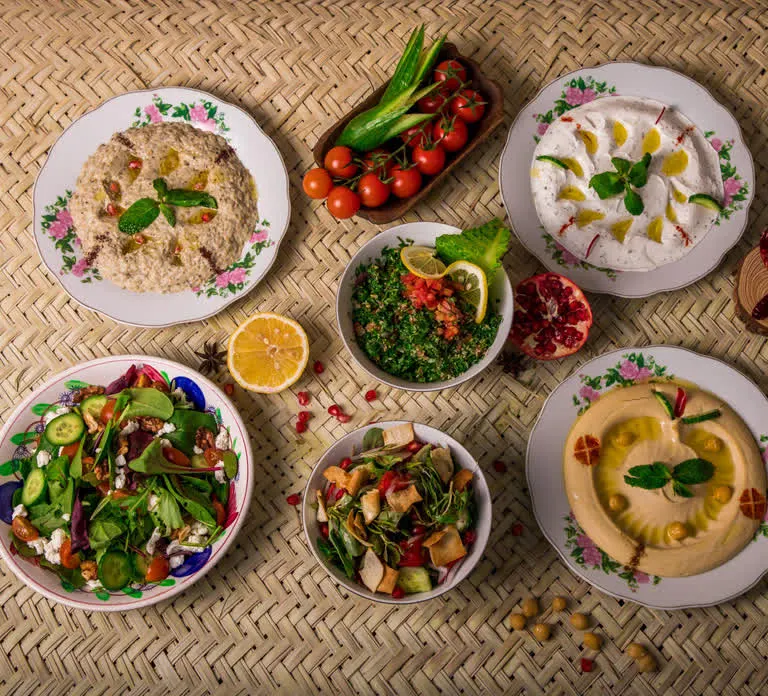
What does the shared tour look like? You meet next to a metro station and start with Lebanese food: hummus, moutabal and shawarma. From there you move on to Iranian kebabs, to street food tastings such as sambousek and karak tea, and finish with an Emirati meal of machboos, with sweets and Arabic coffee. Along the way you pass through the Gold Souk and the Spice Souk of Deira.
On the longer, half-day tour, you eat a three-course meal at three different places, cross the Creek, and eat with your hands, the way the Bedouin did. There are also private tours with 10-12 tastings, which include tea with camel milk, camel milk chocolate, dates and falafel.
Tip: Old Dubai is very easy to walk, and it is worth crossing the Creek on a traditional abra. In the early evening the weather is more pleasant and the souks are full of life.
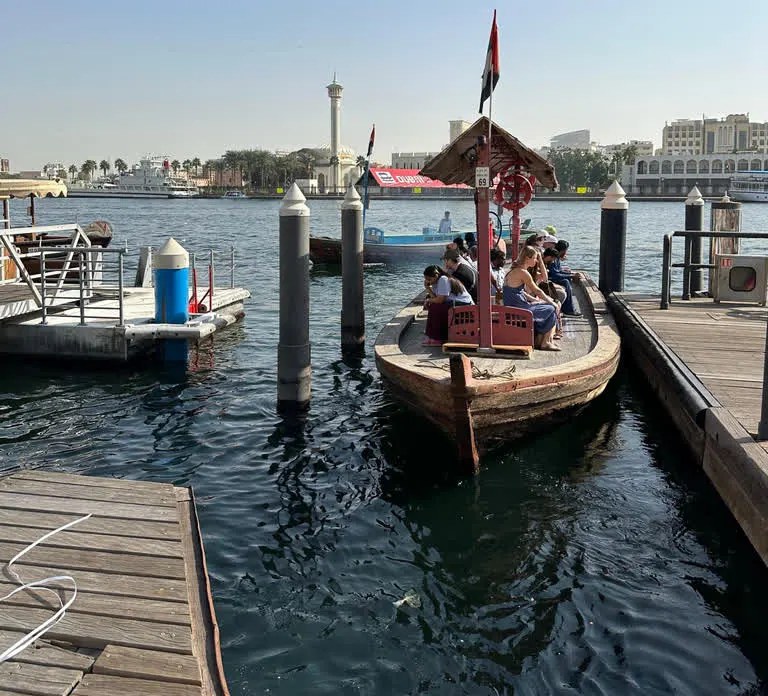
The Creek is a waterway about 14 kilometres long that separates Deira from Bur Dubai. The abra is the city's most traditional means of transport, and its name comes from an Arabic verb meaning 'to cross'. The authority describes the traditional abra as half boat, half raft, and says it is the most popular way to cruise the Creek.
The abra station at the Old Souk in Deira is one of the busiest in the city. It is linked to the station in Bur Dubai, which is near the Textile Souk and the Al Fahidi Historical Neighbourhood.
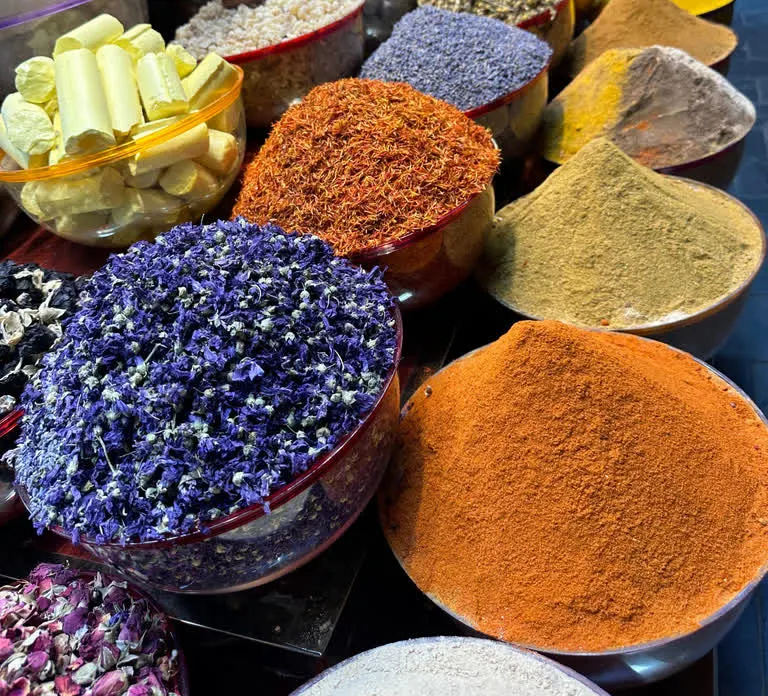
The Old Souk in Deira has two main sections: the Spice Souk and the Gold Souk. The Spice Souk sells spices, herbs, dried fruit and seasonings, including saffron, cinnamon, cloves and cardamom. It was the Gold Souk that earned Dubai the nickname 'City of Gold'.
The Al Fahidi Historical Neighbourhood, formerly called Al Bastakiya, lies on the bank of the Creek in Bur Dubai. People lived there until the early 1970s, and it was declared a heritage site in the 1980s. The houses were built from coral stone taken from the Creek, and from mud. Above the master bedroom stood a wind tower, a barjeel, which worked as the traditional air conditioner of the time. Today the neighbourhood has galleries, museums and cultural societies.
A few details about what you eat. Machboos is cooked in a spiced broth, and dried lime, loomi, gives it a sour, floral note. The everyday versions are chicken and lamb, and there is a fish version too. Luqaimat are small, crisp on the outside and soft on the inside, drizzled with date syrup, and eaten hot.
Arabic coffee, gahwa, is light and golden, and it is brewed with cardamom. It is served in small cups without a handle, called finjan, and always with dates, which balance the bitterness. It is one of the first things offered to a guest at home, at a business or at the start of a meal.
Karak tea arrived in the Emirates with the Indian community in the 1960s, around the time oil was discovered in the region. 'Karak' means 'strong' in Hindi. Tea leaves are brewed with spices and simmered with evaporated milk. It is served in small cups, and it counts as a hospitality drink at weddings, offices and gatherings, alongside red tea and Arabic coffee.
What is included
Included
- A local guide
- Tastings at several restaurants and stalls, according to the tour
- Arabic coffee, karak tea and sweets, on the shared tour
- A walk through the gold souk and the spice souk
- Water
- Pick-up and drop-off, on the ticket with transfer and on the half-day tour
Not included
- Shopping and additional purchases
- Tips
- Transfer, on the ticket without transfer
What you will see and do
- Four cuisines in one tour: Lebanese, Iranian, Emirati and street food.
- Machboos and Emirati sweets: with Arabic coffee at the end of the tour.
- The Spice Souk and the Gold Souk: a guided walk between the stalls.
- Dubai Creek: an abra crossing on some of the tours.
- Tea with camel milk and camel milk chocolate: on the private tours.
- Lonely Planet: the food tours of Old Dubai on the Best in Travel 2026 list.
- Arabic coffee in a finjan: a small cup without a handle, with dates alongside.
- Karak tea: a drink that arrived with the Indian community in the 1960s and became part of everyday life in the Emirates.
- The Spice Souk: saffron, cinnamon, cloves and cardamom in the lanes of Deira.
Who it suits
Good for…
- Anyone who loves food and wants to get to know the city through it.
- Anyone looking for the old, authentic side of Dubai, away from the malls.
- Families with children from age 6 who like to taste.
- Second-time visitors to Dubai who have already seen the big attractions.
Less suited to…
- Anyone who struggles to walk for a few hours.
- Anyone looking for a gourmet meal at a single restaurant.
- Anyone who does not like tasting unfamiliar dishes.
When to go
The best hours for a food tour in Old Dubai are the early evening, when the heat drops and the souks come to life. The most comfortable season is the cooler months, November to March. In summer it is better to choose an evening tour, and to drink plenty of water.
Getting there
- Metro: the Green Line reaches Old Dubai, at the Al Fahidi and Al Ghubaiba stations.
- The shared tour meets next to a metro station in Old Dubai. We will send you the exact meeting point with your booking confirmation.
- Abra: traditional boats cross the Creek between Bur Dubai and Deira.
- On a ticket with transfers, and on the half-day tour, there is hotel pick-up and the return.
Good to know
- The tour is on foot. Comfortable shoes, a hat and sunglasses.
- Come hungry: there are plenty of tastings.
- A vegetarian option is available on some tours. Tell us about any dietary restrictions when you book.
- Age: on the shared tour from 6.
- With street food it is better to pick busy stalls that prepare the food in front of you.
- Arabic coffee: you hold your cup out to get a refill. When you have had enough, tilt it gently from side to side.
- On the traditional abra between Bur Dubai and Deira you pay in cash.
- The abra is still part of the city's public transport network, and not only an attraction.
Buy online
Book and pay right here on the site · secure paymentFrequently asked questions
What do you eat on a food tour in Old Dubai?
How long does a food tour in Dubai take?
Where does the tour take place?
Is it suitable for vegetarians?
Is the food kosher?
When is the best time for a food tour in Old Dubai?
How do I get there?
What is an abra?
How do you drink Arabic coffee?
What is the difference between Arabic coffee and karak tea?
What do they sell in the Spice Souk in Deira?
What is Al Fahidi?
Keep exploring
More experiences in Dubai



Where to stay
Recommended hotels in Dubai




The perfect combination
Also in Abu Dhabi






Plan smart
From the magazine
More inspiration