

Closed until 2027
Museum of the Future
Closed for refurbishment from September 2026. It will reopen in the first quarter of 2027 with new exhibitions.
Updated: 26.9.2026
Closed
Temporarily closed, reopening in the first quarter of 2027.
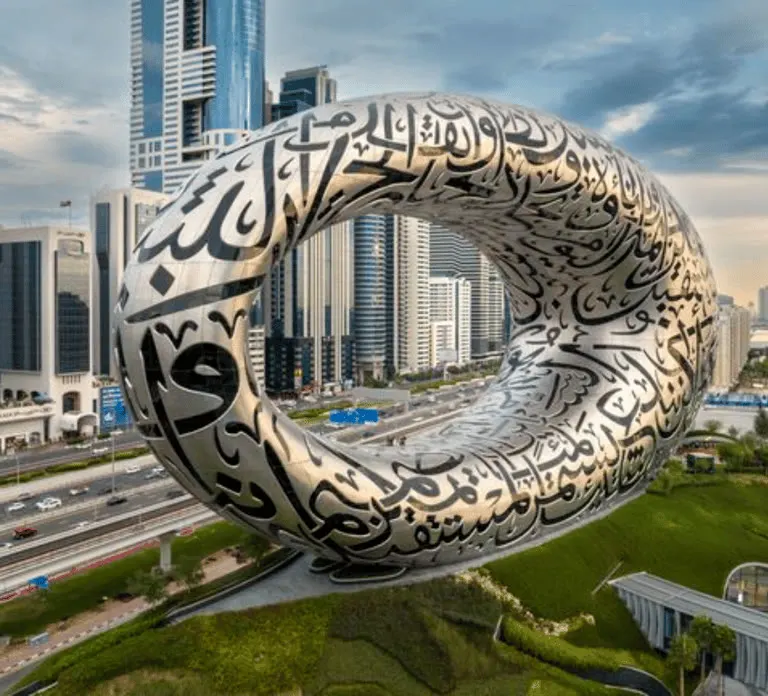
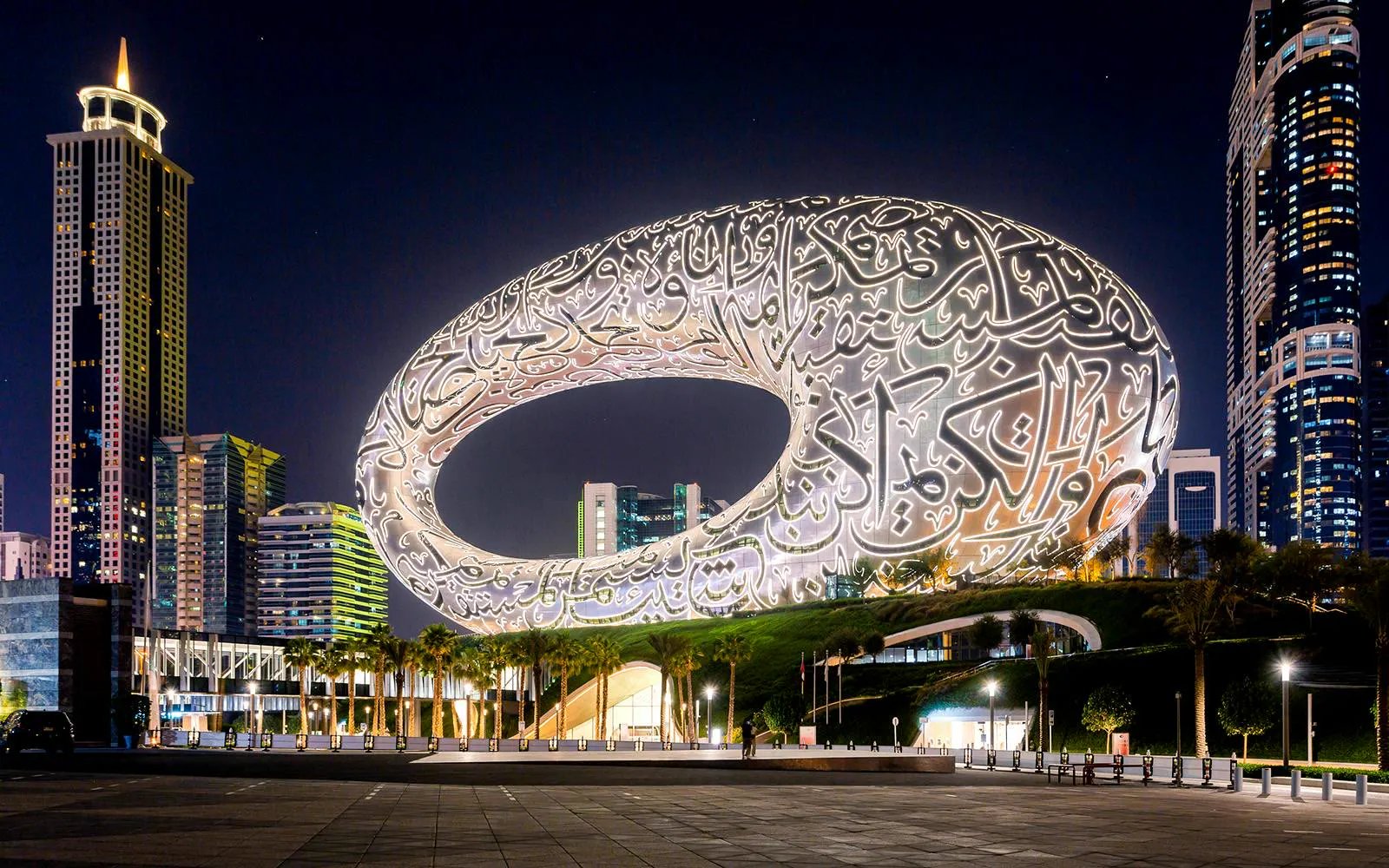
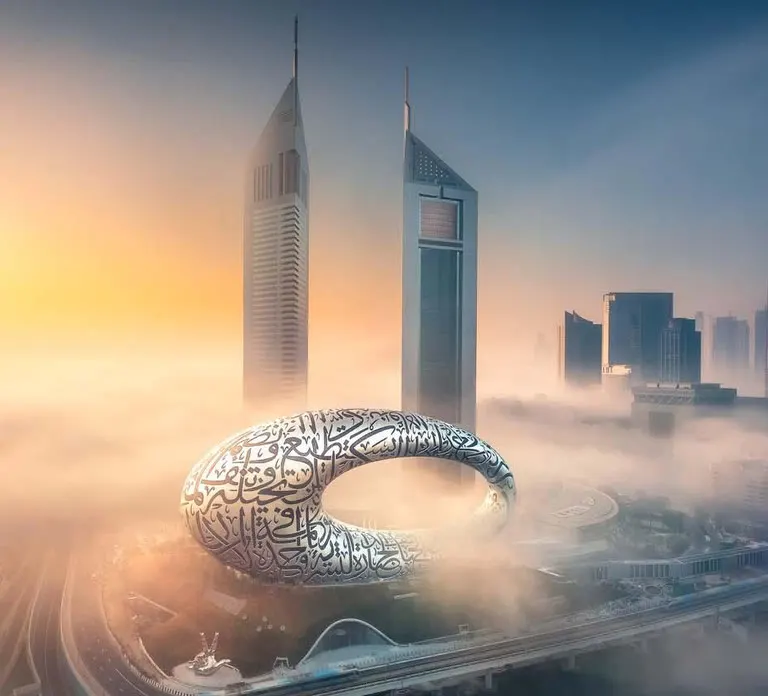
The Museum of the Future in Dubai is one of the buildings most associated with the city: a silver ring with no corners, covered in Arabic script, beside Sheikh Zayed Road.
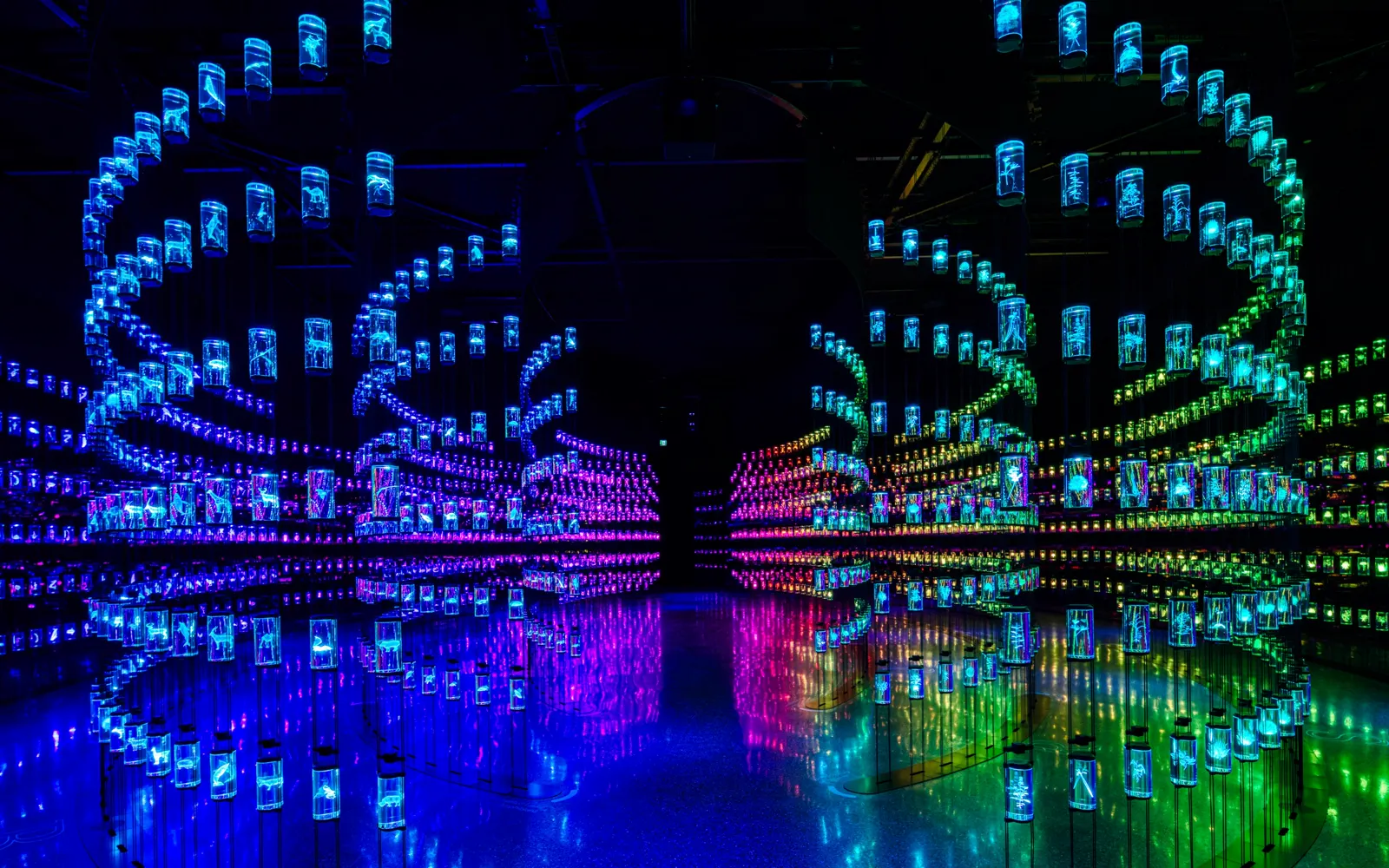
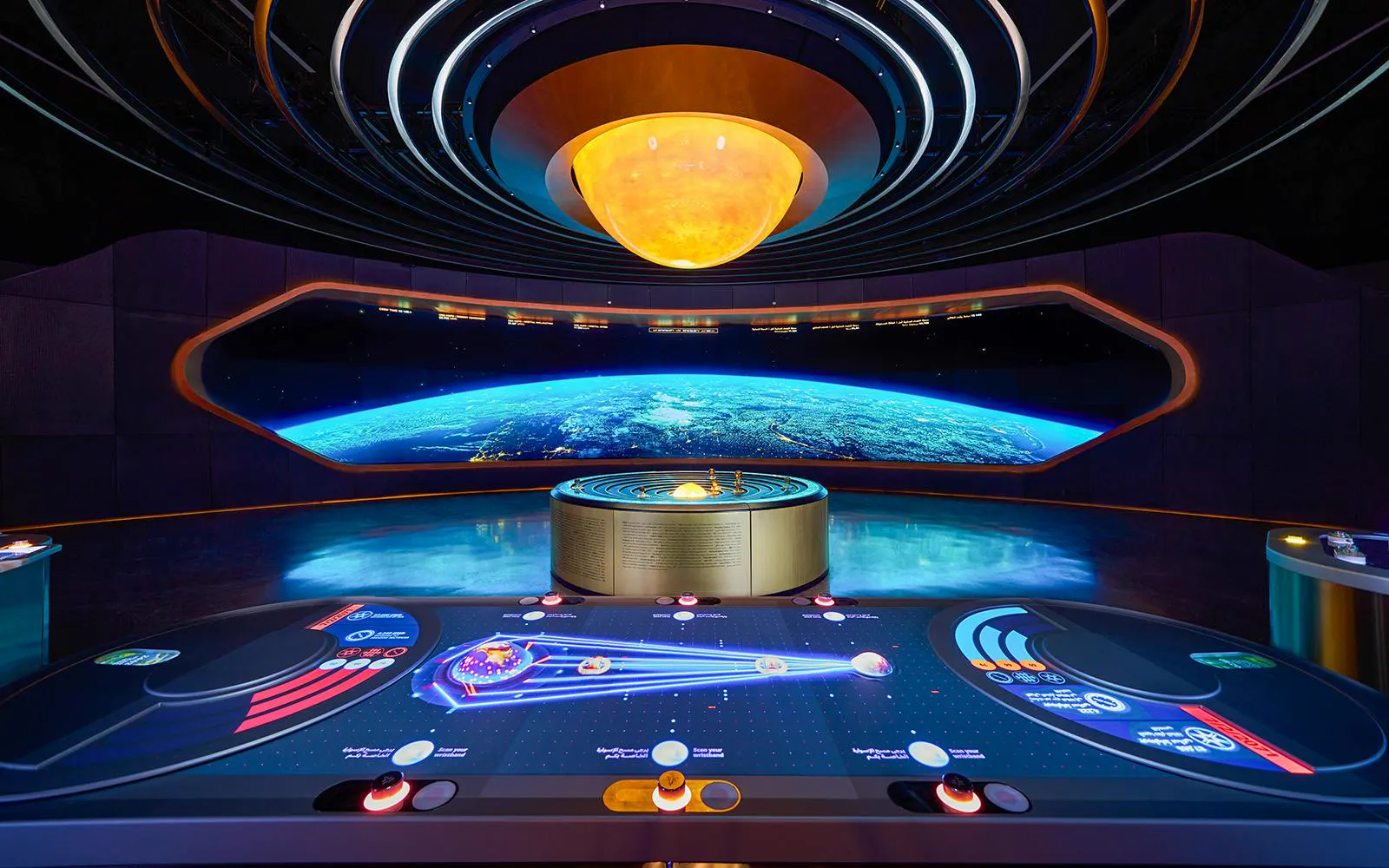
This is not a museum of objects from the past. Its exhibitions deal with the world a few decades from now: space, nature, technology and health, through interactive spaces.
The museum has been closed for refurbishment since September 2026, and according to the official announcement it will reopen in the first quarter of 2027 with new exhibitions. In the meantime you can see and photograph the building from the outside.
The museum opened to the public on 22 February 2022, and the reopening falls in its fifth year. This is the biggest change to the exhibitions since it opened. The current exhibitions and labs will be replaced by entirely new ones, and will not return in their previous form. The intention is for visitors to be active participants in the experience, not just spectators.
The building itself stays as it is. It is 77 metres high, it has 7 floors, and it is built without internal columns. It was designed by the architecture practice Killa Design, with the engineering firm Buro Happold. The facade is made of 1,024 stainless steel panels, produced with the help of robots, over an area of about 17,000 sq m.
The Arabic script on the facade is also the building's windows. It was designed by the Emirati artist Mattar bin Lahej, and includes quotations from Sheikh Mohammed bin Rashid Al Maktoum about the future and innovation. The shape carries meaning: the green hill it stands on symbolises the Earth, the ring stands for human creation, and the empty space at its centre for the future still waiting to be discovered.
The museum is an initiative of the Dubai Future Foundation, and it is also defined as a research lab: it has laboratories, classrooms and display spaces for technologies such as artificial intelligence and virtual reality. In its first year a million people from 163 countries visited, and even then it had won 10 international awards for its content and its design. By February 2026, close to the closure, the number of visitors had reached almost 5 million.
The museum also serves as a meeting place. By 2026 it had hosted more than 620 events, conferences and talks, and more than 220 workshops and study programmes for students and professionals. Among them is the Dubai Future Forum. In 2023 it received LEED Platinum green certification, and more than 30% of its energy consumption comes from solar power.
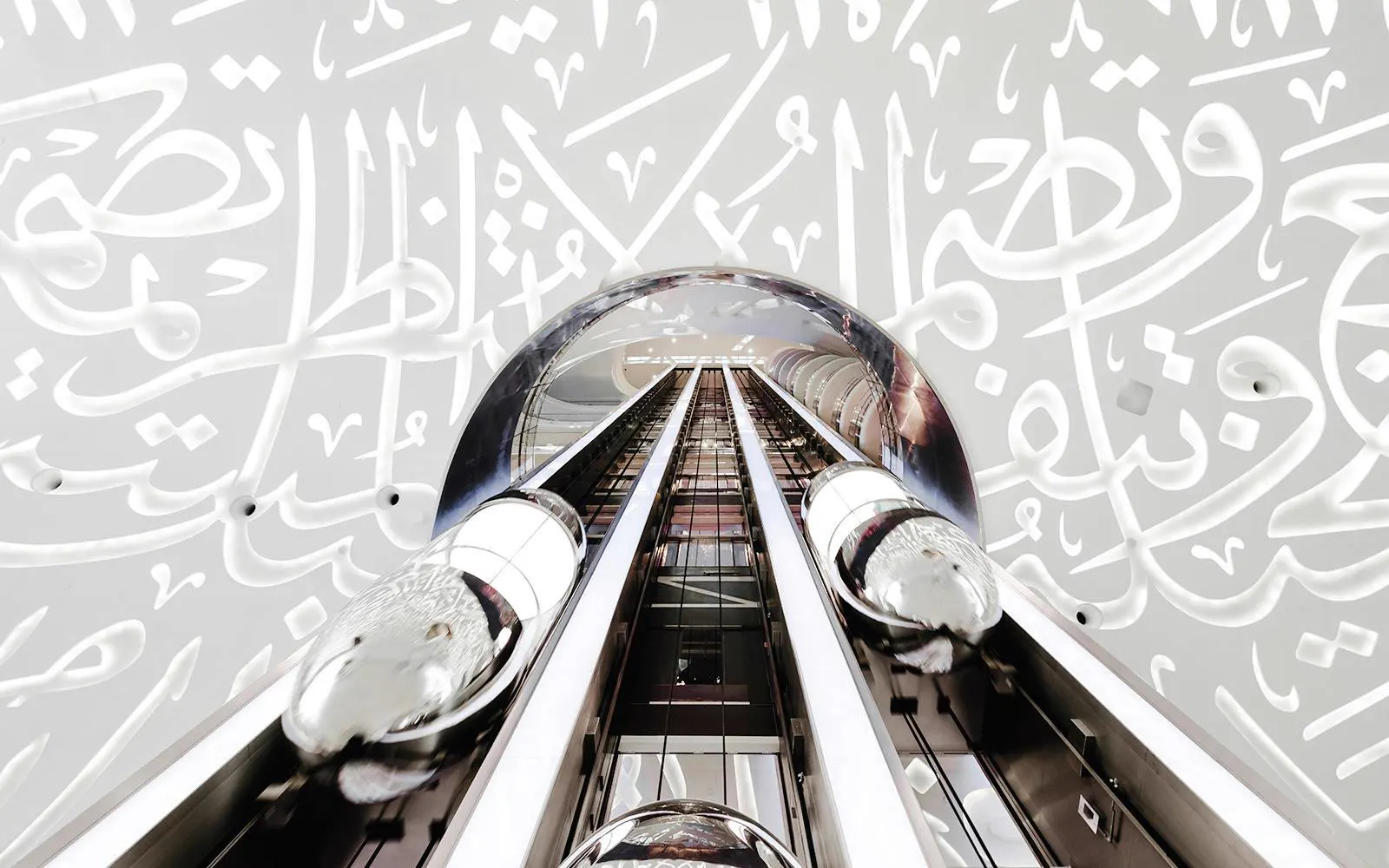
Anyone who visited before the refurbishment mostly remembers OSS Hope: a lift that simulated a flight to a space station, and from there a tour of the station itself. It was one of the most talked-about spaces in the museum. According to the official announcement, these spaces will not return in their previous form, and new exhibitions will take their place.
After the reopening too, the visit is expected to suit families, teenagers and anyone interested in technology and science. Until then, anyone in the Sheikh Zayed Road area can stop and photograph one of the most photographed buildings in Dubai.
What you will see and do
- The ring: a 77-metre structure, with no corners and no internal columns.
- The Arabic script: calligraphy by Mattar bin Lahej that covers the facade and also serves as the windows.
- The facade: 1,024 stainless steel panels, produced with the help of robots.
- The green hill: the building stands on a hill covered in plants, which symbolises the Earth.
- The bridges: one bridge links the museum to Emirates Towers metro station, and another to the Jumeirah Emirates Towers.
- Solar power: the museum receives about 4,000 megawatt-hours a year from a nearby solar array.
- The script on the facade: about 14,000 metres of Arabic calligraphy running around the whole ring.
- The garden around the building: about 80 plant species, with an automatic irrigation system.
Who it suits
Good for…
- Anyone visiting Dubai from 2027 with an interest in technology, science and the future
- Families with children and teenagers, after the reopening
- Architecture and photography enthusiasts, already now, from the outside
Less suited to…
- Anyone visiting Dubai before the reopening who wants to go inside
- Anyone looking for a history museum with objects from the past
- Anyone who visited before the refurbishment and expects the same exhibitions. They will not be back
When to go
Until the reopening in the first quarter of 2027 the museum can only be seen from the outside. Tickets will go on sale close to the opening date, and it is worth following the official announcements before fixing a date. Anyone arriving before then can add a stop by the building to a visit to the Sheikh Zayed Road area and Emirates Towers.
Getting there
- Metro: Emirates Towers station. A bridge 212 metres long links the station to the museum.
- The museum is on Sheikh Zayed Road, beside the Emirates Towers, and connected to them by a bridge 69 metres long.
- Taxi or Careem: type "Museum of the Future" in the app.
Good to know
- The museum is currently closed. There are no tickets until a reopening is announced.
- You can see and photograph the building from the outside.
- The closure is temporary, for a few months only.
- During the closure some spaces are open for certain activities and events, but the main exhibitions are closed.
- The exhibitions shown before the refurbishment will not return in their previous form. After the reopening, new exhibitions and labs will be on show.
- The refreshed spaces are planned to be accessible to people with disabilities.
- During the closure the seventh floor is not open. The auditorium continues to host events, and the museum's online shop is operating.